



























Dr. Foluke Areola Makes History as First African President of the World Aquaculture Society, Outlining Vision for Sustainable Global Food Security

Distinguished Nigerian fisheries leader steps into global governance to amplify African voices, foster youth and women empowerment, and drive innovation across international aquatic food systems.
In a historic milestone for international aquatic agricultural governance, Nigerian fisheries and aquaculture authority Dr. Foluke Omotayo Areola has officially assumed office as the President of the World Aquaculture Society (WAS). Formally inaugurated on June 2, 2026, during the World Aquaculture 2026 conference in Singapore, Dr. Areola becomes the first African professional to hold the highest executive office in the organization’s distinguished history. Her election represents a transformative moment for global aquaculture, signaling a heightened international focus on sustainable aquatic food systems, inclusive governance, and the vital role of the Global South in feeding the world’s growing population.
Dr. Areola brings to the global presidency more than four decades of exemplary leadership, academic rigor, and policy expertise. A native of Nigeria whose deep passion for aquatic resources stems from her rural upbringing where fish served as a primary dietary staple, Dr. Areola built her career on the conviction that sustainable aquaculture is essential for poverty alleviation, nutritional security, and community resilience. Her extensive professional background spans key government directorships, international consultancy, research, and non-governmental sector advocacy.

A Legacy of Pioneering Public Leadership and Policy Reform
Dr. Areola’s academic foundation includes advanced studies in fisheries and aquaculture sciences at the University of Ibadan in Nigeria, Humberside College of Higher Learning in Grimsby, England, and a PhD in Fisheries from Lagos State University. Her technical proficiency has been further sharpened through high-level international executive trainings, including Israel’s MASHAV/CINADCO intensive aquaculture program, Sanitary and Phytosanitary measures coursework through the USDA and Nigeria Agricultural Quarantine Service, and South Africa’s Science-Policy Lab (S-PoL) on Innovations for Sustainable Aquatic Food Systems.
Throughout her career within Nigeria’s Federal Department of Fisheries, Dr. Areola shattered administrative glass ceilings. She served as Acting Federal Director of Fisheries, Acting Director of Fisheries and Aquaculture, and held the historic distinction of becoming Nigeria’s first Director of Fisheries Quarantine Services. In these positions, she spearheaded regulatory reforms, fortified aquatic animal health and biosecurity protocols, and championed public-private stakeholder collaboration. She also made history as the first female National President of the Fisheries Society of Nigeria (FISON), where she secured a crucial World Bank Micro, Small, and Medium Enterprises (MSME) grant to deliver nationwide best-practice aquaculture training programs.
Reflecting on her trailblazing administrative journey and the structural barriers she faced in traditionally male-dominated sectors, Dr. Areola noted: “Serving in a pioneering leadership role within Nigeria’s fisheries administration was both a privilege and a responsibility. The challenges included limited funding, inadequate infrastructure, weak policy implementation systems, low levels of technological adoption, and the need to overcome gender-related barriers in traditionally male-dominated leadership spaces. However, I truly appreciate the mentors who shaped me into the professional I have become over the years, and hence my strong inclination towards mentoring others.“
Empowering Africa and Mobilizing Global Communities
Following her retirement from government service, Dr. Areola transitioned into international consultancy, leading impactful initiatives with global organizations including the Food and Agriculture Organization (FAO), African Union Interafrican Bureau for Animal Resources (AU-IBAR), WWF Norway, and the Fisheries Committee for the West Central Gulf of Guinea (FCWC). Notably, she co-authored the first Aquaculture Welfare Training Guides for Nigeria, which have since been adopted as landmark educational benchmarks across the African continent.
Her commitment to elevating African expertise led her to serve as President of the World Aquaculture Society African Chapter (WAS-AC) over the past two years. Under her dynamic tenure, WAS-AC achieved a remarkable 454% membership growth within a single year. She actively expanded student access through sponsored memberships, elevated African representation on the global WAS Board, and organized flagship continental events, including the annual Aquaculture Africa Conferences (AFRAQ) and the World Aquaculture Safari 2025 in Uganda.
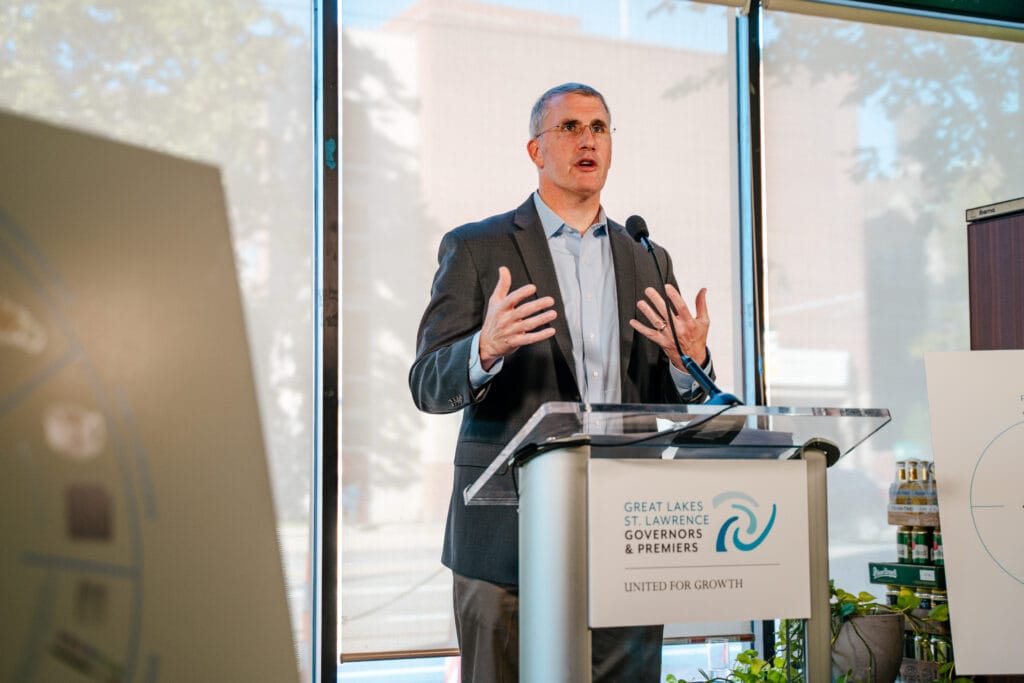
Dr. Areola delivering an opening remark at the Opening Ceremony of the World Aquaculture Safari, Uganda 2025.
Regarding her decision to seek the WAS global presidency and her historic election victory, Dr. Areola expressed profound gratitude and a firm commitment to collaborative stewardship: “It was both humbling and historic. My election reflected the growing global recognition of Africa’s contributions and potential in aquaculture. It also demonstrated confidence in inclusive leadership, diversity, and the importance of bringing broader global perspectives into international professional governance. For me, it was not just an individual achievement but a victory for Africa, women, and emerging aquaculture professionals across the Global South… My role is to be a leader who is humble enough to recognize the talent in others so that together we fulfill our purpose of bettering the experience of His creation.”
Addressing Sectoral Challenges and Aligning with UN Mandates
As WAS President, Dr. Areola emphasizes that unlocking Africa’s vast aquaculture potential—and ensuring global food security—requires targeted investments to solve persistent systemic bottlenecks. She identifies three primary hurdles facing producers in emerging economies: restricted access to quality seed, feed, and affordable financing; weak technical extension networks; and fragmented market infrastructure, including insufficient cold-chain logistics.
Dr. Areola advocates for robust public-private partnerships, climate-smart production technologies, and digital extension systems to bridge these gaps. Furthermore, aligning her leadership agenda with the United Nations’ declaration of 2026 as the International Year of the Woman Farmer, Dr. Areola is issuing a global call to action to break down institutional barriers for women in agriculture and aquatic food chains.
“Women are central to food systems, family welfare, nutrition, and community resilience. Across Africa and the world, women fish farmers and aquaculture professionals continue to make invaluable contributions despite numerous constraints. Governments and institutions must invest more deliberately to empower women by expanding access to land, financing, technology, education, markets, and leadership opportunities.”
To the rising generation of scientists and entrepreneurs, her message remains clear: “Believe in your capacity, remain committed to excellence, and never underestimate the value of persistence, integrity, and continuous learning… Africa must not only participate in global aquaculture — Africa must help shape its future.”
Looking Ahead: World Aquaculture Tanzania 2026
Dr. Areola will officially preside over the upcoming World Aquaculture Tanzania 2026 (WA26T), held in joint partnership with AFRAQ2026 from December 1 to 4, 2026, in Dar es Salaam, Tanzania. The landmark event will gather international scientists, policymakers, industry pioneers, and small-scale farmers to discuss sustainable blue economy solutions and advance global scientific exchange.
About the World Aquaculture Society (WAS)
The World Aquaculture Society (WAS) is the premier global non-profit organization dedicated to advancing the sustainable development of aquaculture through scientific research, technical exchange, educational outreach, and international networking. With thousands of members spanning more than 100 countries, WAS connects academia, government entities, commercial producers, and development organizations to address critical global food security challenges.
Photos: World Aquaculture Society Secretariat — African Chapter
For more information:
World Aquaculture Society Secretariat — African Chapter
Email: africanchapter@was.org
Website: www.was.org/meeting/code/AFRAQ26
Apa Reaksi Anda?
 Suka
0
Suka
0
 Kurang Suka
0
Kurang Suka
0
 Setuju
0
Setuju
0
 Tidak Setuju
0
Tidak Setuju
0
 Bagus
0
Bagus
0
 Berguna
0
Berguna
0
 Hebat
0
Hebat
0