































Do Cats Miss You When You’re Gone? The Truth According to a Feline Behaviour Expert

If you’ve ever returned home to a cat who greets you at the door, flops dramatically at your feet, or scolds you with a series of indignant meows, you’ve probably wondered: Did you miss me? The short answer is yes—many cats do miss their people. The longer, more interesting answer is how and why they miss us, and what that tells us about the social lives of cats.

Illustration by Michelle Simpson
Cats Are Not the Aloof Loners We Once Thought
For decades, cats were labeled as solitary, independent animals who merely tolerated human companionship. Modern behavioural science tells a very different story.
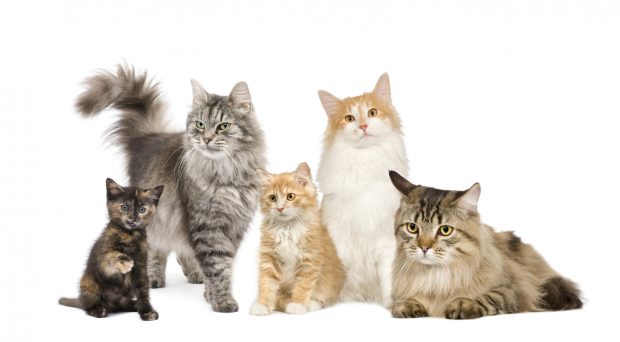
Cats are indeed solitary hunters, meaning they hunt alone rather than cooperatively like wolves. But hunting style does not equal social preference. When food resources are abundant—as they are in our homes—cats form rich, complex social relationships with both cats and people. In free-living cat colonies, researchers observe stable social groups where cats develop preferred social partners, often referred to as affiliates. These relationships may look like:
- A “best friend” pair who groom each other frequently
- A caretaker dynamic, where one cat consistently comforts or protects another
- A mentor-like relationship between an older and younger cat
- A bonded pair that sleeps together, rubs bodies, or shares space with each other peacefully
These roles are not random. They’re chosen—and they matter.
Cats Form Similar Bonds with Humans
What surprises many people is that cats can—and do—apply this same social framework to humans. From a cat’s perspective, you’re not just a food dispenser with opposable thumbs.
You may be:
- Their primary attachment figure
- A preferred social partner
- A source of safety and emotional regulation
- A predictable, comforting presence in an otherwise chaotic world
Scientific studies using the secure base test (similar to those used with human infants and dogs) have shown that many cats display secure attachment to their owners. When their person leaves, these cats show signs of stress; when the person returns, they relax and resume normal behaviour. That’s not indifference. That’s attachment.

rai106/Shutterstock
Can Cats Have Separation Anxiety?
Yes—cats can experience separation-related distress, and in some cases, full separation anxiety. This doesn’t always look like dramatic howling or destruction (though it can). In cats, signs may include:
- Excessive vocalization when alone
- Changes in appetite
- Overgrooming or stress-related skin issues
- Litter box problems
- Withdrawal or clinginess when the owner returns
Some cats become noticeably more affectionate when their person comes home, while others act aloof—an emotional strategy known as avoidant coping. (In other words, “I missed you terribly, but I refuse to discuss it.”)
How Cats Experience Missing You
Cats don’t sit by the window counting the minutes until you return, but they do notice absence and disruption of routine.
Cats thrive on predictability. When a key social partner disappears, it creates uncertainty. For cats who are strongly bonded to their owners, that absence can feel unsettling—especially if the cat relies on that person for play, affection, or emotional security.
Many cats respond by:
- Sleeping more than usual
- Waiting near doors or favoured resting spots
- Becoming less playful
- Showing heightened excitement when their person returns
That excited greeting—tail up, chirping, rolling, rubbing—is not accidental. It’s a reunion behaviour.
Why Greeting Behaviour Matters
When cats greet their humans enthusiastically, they’re doing what they would do with a preferred feline affiliate. In cat-to-cat relationships, friendly reunions involve:
- Nose touching
- Body rubbing
- Tail wrapping
- Gentle vocalizations
When your cat rubs against your legs, head-bunts your face, or follows you from room to room after you’ve been away, they’re engaging in social reaffirmation—essentially saying, You’re back. We’re okay again. I especially like to promote head-bunting with my cats as I have found this to promote even more bonding with them and assuredness that I am their person.
What is Bunting?
- Bunting = a friendly, affiliative behaviour
- Cats gently press, rub, or bump their head, cheeks, or forehead against people, other cats, or objects.
It’s very different from an aggressive head butt.
Why Do Cats Bunt

Kristi Blokhin/Shutterstock
Bunting is all about scent and social bonding. Cats have scent glands on the forehead, cheeks, lips, and chin.
When a cat bunts you, they’re:
- Marking you as “safe” and familiar
- Reinforcing social bonds
- Showing trust and affection
- Sometimes initiating interaction
- In feline social groups, bunting is a high-trust behaviour
Can Owners Do It Back?
Yes—but carefully and respectfully. Acceptable ways for humans to “return” bunting:
- Gently offering your forehead or cheek, staying still, and letting the cat initiate contact
- Softly leaning your head in place without pushing
- Using your hand or fingers to mimic cheek rubbing instead (often safer and clearer)
What not to do:
- Don’t push your head into the cat
- Don’t force contact
- Don’t do it with a cat that’s fearful, overstimulated, or unfamiliar
Many cats enjoy a calm, slow reciprocal motion—but the key rule is: the cat should always control the interaction.
Individual Cats, Individual Feelings
Not all cats miss their owners in the same way. Social behaviour in cats exists on a spectrum influenced by:
- Early kitten socialization
- Genetics
- Past experiences
- Household stability
- The quality of the human-cat relationship
Some cats form intense bonds with one person. Others distribute their affection more broadly. A few genuinely prefer solitude. None of these responses are “wrong.” What matters is recognizing that cats are emotionally complex animals capable of forming deep social attachments—even if they express those attachments subtly.
So… Does Your Cat Miss You?
If your cat is bonded to you, the answer is very likely yes. They may miss your presence, your voice, your routines, and the emotional security you provide. They may not miss you in a human, nostalgic sense—but they absolutely notice when you’re gone and respond when you return. And if your cat pretends they don’t care at all? That, too, is very on-brand cat behaviour. After all, missing someone doesn’t mean admitting it. . . .
This article originally appeared in the award-winning Modern Cat magazine.
Subscribe today!
The post Do Cats Miss You When You’re Gone? The Truth According to a Feline Behaviour Expert appeared first on Modern Cat.
Apa Reaksi Anda?
 Suka
0
Suka
0
 Kurang Suka
0
Kurang Suka
0
 Setuju
0
Setuju
0
 Tidak Setuju
0
Tidak Setuju
0
 Bagus
0
Bagus
0
 Berguna
0
Berguna
0
 Hebat
0
Hebat
0