






























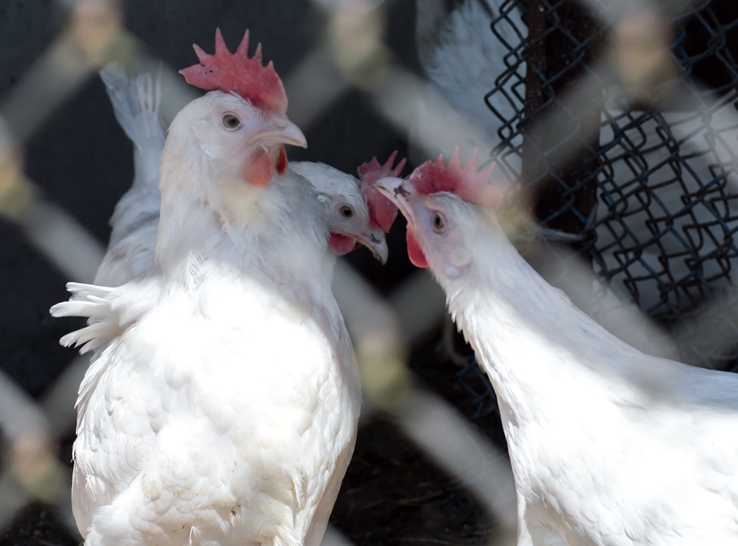






Disciplined rotation key to keeping anticoccidials effective

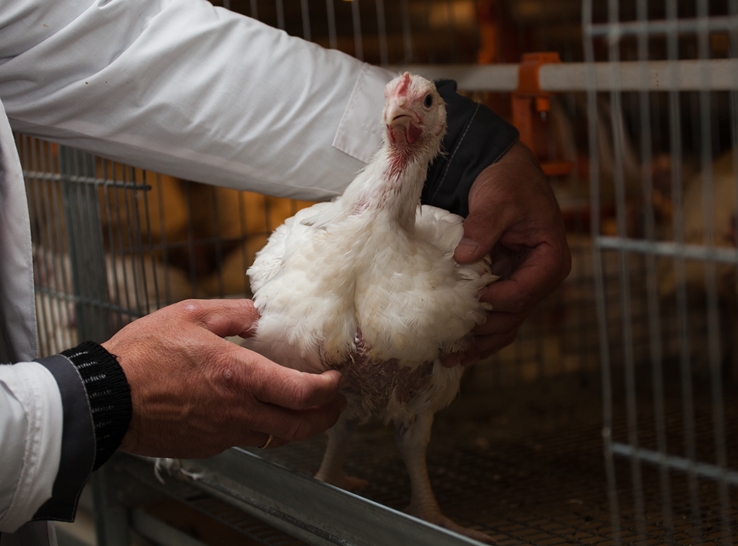
Coccidiosis remains the number one disease challenge facing the poultry industry, and it rarely operates alone. Its close relationship with necrotic enteritis means that consistent control affects not only intestinal health but overall flock performance.
In the opening session of Phibro Academy’s three-part webinar series, “Coccidiosis Tools and Strategies,” Greg Mathis, PhD, president of Southern Poultry Research, Inc., focused squarely on anticoccidials and the importance of long-term planning.
His central message was straightforward: the industry must preserve the tools it already has. And this requires disciplined rotation and shuttle programs, rather than heavy reliance on any single product.
A limited arsenal
US producers currently have 12 approved anticoccidial drugs: seven chemicals, four ionophores and one combination product. Most are more than 50 years old.
“We only have 12 drugs. They’re over 50 to 60 years old, and that is really all that we have,” Mathis said. The fact that many remain effective is a testament to rotation and shuttle strategies. But history shows what happens when those principles slip.
When success leads to overuse
Mathis pointed to ionophores in the 1970s and 1980s, diclazuril after its US introduction in the 1990s and clopidol after its return to the market. In each case, strong efficacy and favorable economics encouraged extensive use.
With diclazuril, global experience had already shown that resistance could develop if overused. “It was such a great drug…of course, that led to using it extensively, and that led to resistance,” he noted.
Clopidol followed a similar pattern. After several years off the market, sensitivity had largely returned. The plan was conservative use, but repeated exposure again reduced effectiveness. The lesson is clear: short-term gains can erode long-term sustainability.
Why rotation works
Anticoccidial resistance is believed to arise from the selection of pre-existing mutants. The longer and more intensely a product is used, the stronger the selection pressure. “Rotation programs and a change of mode of action eliminate this pressure to select these pre-existing mutants,” Mathis explained.
True rotation requires a meaningful change in the mechanism of action of a given molecule. Moving from a chemical to an ionophore, or shifting between ionophores from different classes, alters the biological pressure on the parasite population. Continuing exposure to the same molecule — even at different inclusion levels — extends that pressure. “If we didn’t rotate and shuttle, [all the anticoccidial drugs] would be gone,” Mathis warned.
Ionophores: decreased sensitivity, not total resistance
Ionophores remain critical tools. Extensive historical use has reduced sensitivity in some operations, yet Mathis emphasized that total resistance to ionophores has not been noted to date.
Ionophores provide both direct control and immunological control. They allow controlled cycling of coccidia, supporting immunity while limiting clinical disease. That dual action complicates the interpretation of lesion scores. Lesions may be present, yet performance remains acceptable because immunity is developing.
Even without total resistance, however, reduced sensitivity reinforces the need to rotate away periodically.
Synthetic anticoccidials: powerful but vulnerable
Synthetic anticoccidials often deliver strong coccidicidal activity. That potency can suppress infections rapidly — but it can also accelerate resistance if mismanaged. “To some degree, resistance has developed to each and every anticoccidial,” Mathis noted.
Some synthetic anticoccidials are stage-specific in their activity, which highlights why program design must consider species composition, timing and challenge pressure. Season, housing, litter conditions and market age all influence outcomes. Rotation strategy must reflect biology — not simply cost or return on investment.
The role of sensitivity testing
Anticoccidial sensitivity testing (AST) remains a valuable planning tool, but interpretation requires context. “You can’t just take an AST result and generalize it,” Mathis cautioned.
Dose, species mix and challenge level all influence results. With ionophore anticoccidials in particular, lesion scores alone may not tell the full story because of their immunological component. Performance indicators such as feed conversion and weight gain must be evaluated alongside lesion scoring.
Vaccination, bio-shuttle programs
Vaccination provides another strategic lever. By introducing drug-sensitive strains, vaccines can displace resistant field populations.
Mathis described how diclazuril resistance declined in complexes that transitioned to vaccination, effectively replacing resistant strains with sensitive ones.
Bio-shuttle programs — using a low dose of an anticoccidial to modulate vaccine cycling — can help manage peak oocyst shedding and potentially reduce necrotic enteritis risk. Timing is critical to avoid interfering with immunity development.
Long-term thinking is essential
Managing coccidiosis purely for immediate performance gains increases the risk of losing sensitivity across a limited arsenal of drugs.
“We have only so many drugs,” Mathis reminded attendees, stressing that preserving them requires discipline, strategic rotation and a willingness to prioritize sustainability over short-term advantage.
This article is based on the first session in Phibro Academy’s three-part webinar series, “Coccidiosis tools and strategies.” To access the full webinar series, click here.
Editor’s note: Content on Modern Poultry’s Industry Insights pages is provided and/or commissioned by our sponsors, who assume full responsibility for its accuracy and compliance.
The post Disciplined rotation key to keeping anticoccidials effective appeared first on Modern Poultry.
Apa Reaksi Anda?
 Suka
0
Suka
0
 Kurang Suka
0
Kurang Suka
0
 Setuju
0
Setuju
0
 Tidak Setuju
0
Tidak Setuju
0
 Bagus
0
Bagus
0
 Berguna
0
Berguna
0
 Hebat
0
Hebat
0