

































Kogut: What ‘gut health’ really means for broiler performance
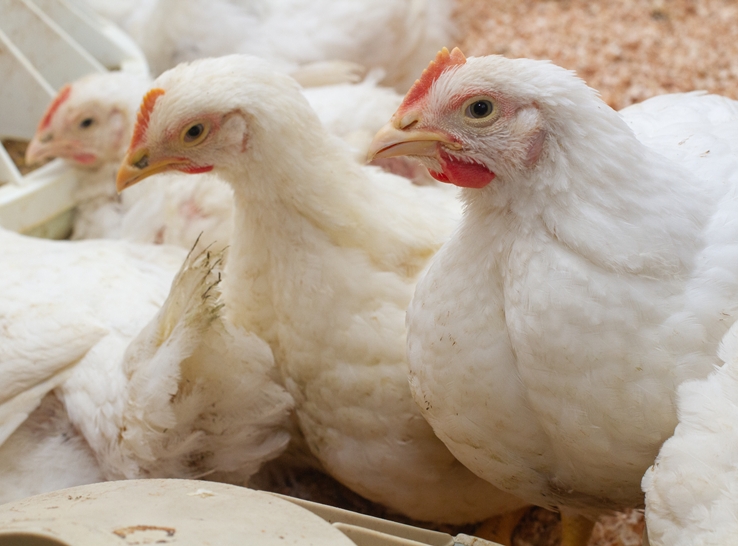
Gut health is often discussed in poultry production. But according to immunologist Michael Kogut, PhD, lead research microbiologist at the USDA-ARS, College Station, Texas, the term is really about gut homeostasis, which enables birds to maximize performance and reach their full potential.
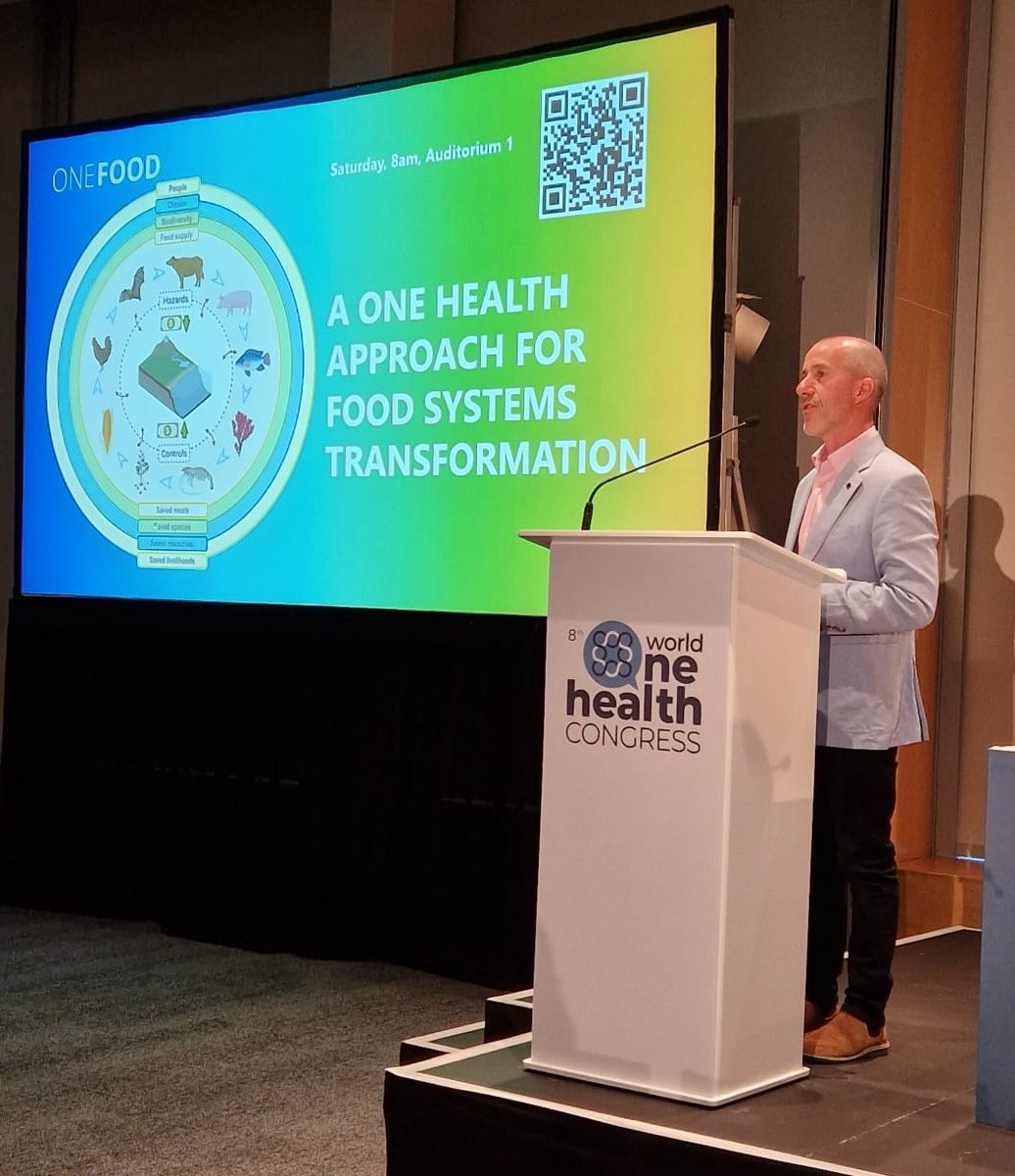
Kogut presented his thoughts on gut health, intestinal integrity and biomarkers during the 2025 Poultry Science Association annual meeting.
“Birds have been selected for their ability to grow,” he said. “When we’re talking about a healthy bird, we’re talking about how close to that potential the bird has come.”
Gut health is crucial, Kogut noted, because it determines a bird’s ability to reach its genetic potential.
Gut ecosystem
Kogut emphasized that the gut must be viewed as a complete ecosystem that includes both the microbiota and the bird itself, not just bacteria.
“When we’re talking about the gut, we really need to talk about both systems together — the host and the microbiota,” he said.
The host side includes epithelial cells, immune cells, mucus layers and the enteric nervous system. These layers work together to regulate digestion, nutrient absorption, immune tolerance and protection against pathogens.
Kogut pointed out that different regions of the gut have distinct roles. The upper gut, including the duodenum and jejunum, is where most digestion and nutrient absorption occur, despite having relatively low microbial populations. The lower gut contains far more bacteria, but immune activity there is reduced.
“This is the ecosystem under homeostatic conditions,” he said.
Inflammation comes first
Kogut stressed that microbe disruption doesn’t occur on its own.
“Dysbiosis, by definition, is the disruption of the population of microbes. But it doesn’t occur if you don’t have a dysfunctional change in the intestine itself.”
In other words, inflammation comes first. And he emphasized, “dysbiosis almost never induces inflammation. Rather, inflammation induces dysbiosis.” When inflammation damages epithelial cells and tight junctions, the gut barrier weakens, allowing bacteria to leak from the intestine. This can lead to “leaky gut.”
“When you have bacterial translocation, obviously you are now going to stimulate the immune system,” he explained. Once bacteria enter circulation, they can contribute to systemic problems, including joint and leg issues.
Fiber’s role in the gut
Kogut noted that dietary fiber plays a significant role in gut integrity, but quality matters. He compared the positive and negative effects of dietary fiber on intestinal integrity.
He contrasted beneficial fiber with poorly fermentable or highly viscous fiber sources, explaining that high-quality fiber can:
- Stimulate gut development
- Improve intestinal structure and function
- Provide substrate for beneficial microbes
In contrast, poor-quality fiber can:
- Increase digesta viscosity
- Slow feed passage
- Reduce nutrient absorption
- Trigger inflammation and leaky gut
In some cases, poor fiber quality has also been linked to gizzard erosion, further compounding digestive challenges.
Measuring gut health
Because gut health is directly tied to performance, producers often ask Kogut how to objectively measure it.
Kogut’s recent research may have the answers. He examined the potential of biomarkers as tools to detect intestinal inflammation before performance losses occur. Historically, he explained, studies relied on invasive methods such as histology or gene expression, which require euthanizing birds. He noted that these approaches are impractical for field use and often lack baseline reference values, making interpretation difficult.
Kogut’s approach focused on noninvasive markers that are measurable in feces or blood.
Noninvasive indicators
Kogut examined birds fed high levels of rice bran to induce chronic, diet-driven inflammation and observed birds with no visible disease or performance loss. “The kicker was there was no gross pathology,” he said. But despite this, biomarkers revealed ongoing inflammation.
Kogut said the most promising non-invasive indicators included:
- Calprotectin, a marker of innate immune activation
- Lipocalin, an acute-phase inflammatory protein
- Hypoxia-inducible factors, which reflect metabolic stress
“Calprotectin is the No. 1 marker for inflammatory bowel disease in humans due to its sensitivity and non-invasive nature,” Kogut explained.
Interestingly, Kogut’s research showed that these biomarkers increased before observable performance problems, suggesting they could serve as early warning signals in broiler flocks.
Chronic inflammation unnoticed
Kogut highlighted that chronic gut inflammation often goes unnoticed because it doesn’t resemble acute disease.
He pointed out that early inflammation involves macrophage-driven responses but over time shifts to T-cell–driven responses, with different cytokines becoming active as time passes. “These are not cytokines you normally see. The cytokines IL-1 beta and TNF are no longer involved when it comes to chronic inflammation.”
This response shift helps explain why flocks can appear healthy while efficiency quietly declines.
Looking ahead
Although the results of his research are promising, Kogut cautioned that more data are needed. “We have measured 200 birds. There is not enough data generated yet that we can say that these are definitive biomarkers.”
He also emphasized that establishing normal ranges for biomarkers is important and requires larger datasets. “We think we can get there. It’s just a matter of doing experiments to develop that range,” he said.
For producers, the message is clear: Gut health isn’t about avoiding disease alone. It’s about maintaining intestinal balance, preventing silent inflammation and keeping birds on track to reach their genetic potential.
Biomarkers may soon give producers tools to detect problems before performance drops, turning gut health from a buzzword into a measurable management strategy.
The post Kogut: What ‘gut health’ really means for broiler performance appeared first on Modern Poultry.
Apa Reaksi Anda?
 Suka
0
Suka
0
 Kurang Suka
0
Kurang Suka
0
 Setuju
0
Setuju
0
 Tidak Setuju
0
Tidak Setuju
0
 Bagus
0
Bagus
0
 Berguna
0
Berguna
0
 Hebat
0
Hebat
0