





















































%20and%20Batch%20Production%20Records%20(BPR).png)
















Drs. Ansari and Davidoff on leading the shift to value-based care
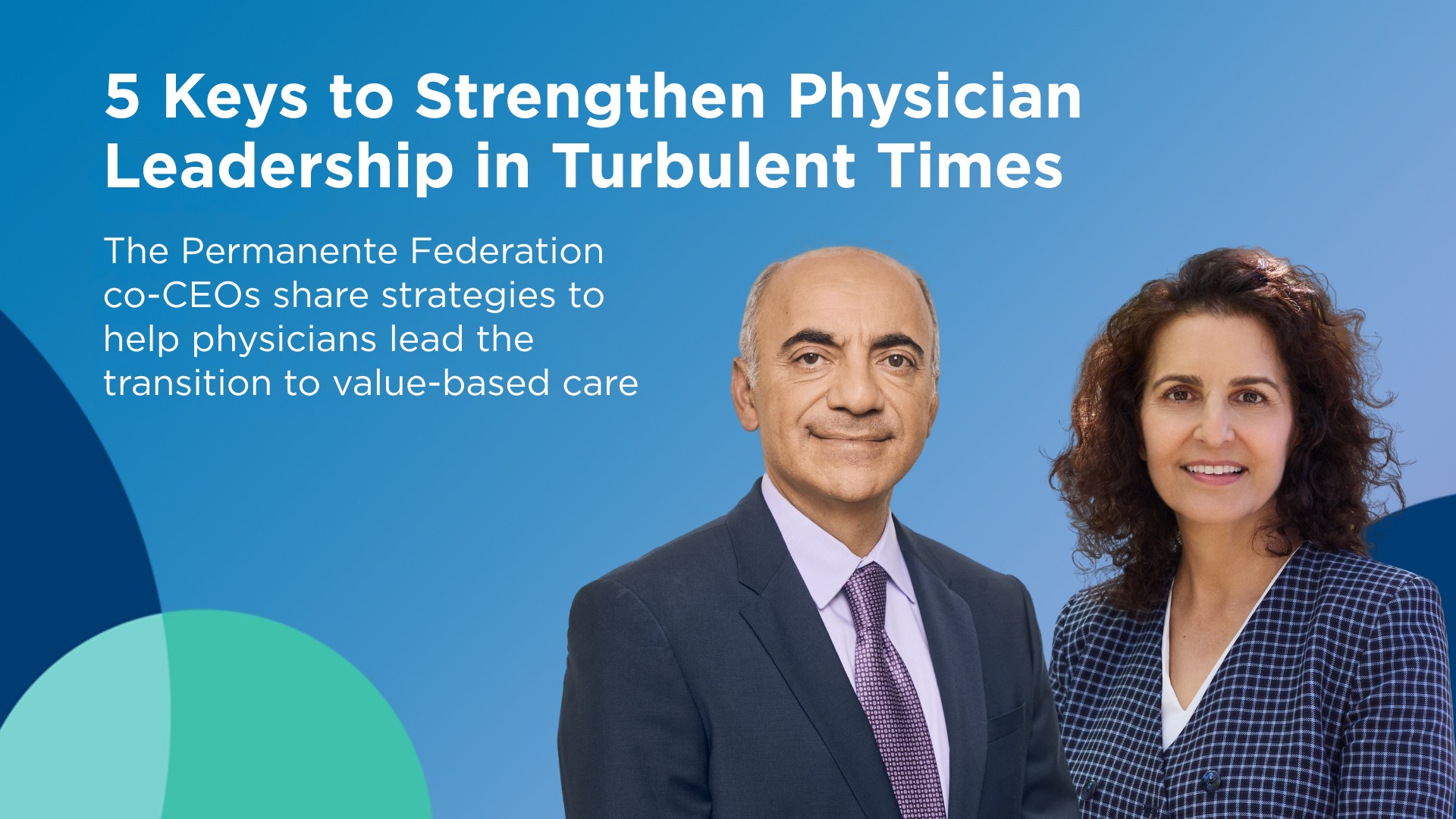
In a health care landscape marked by uncertainty and profound transformation, physician leadership can provide as a steady compass, guiding the path toward value-based care. In a recent Medical Economics commentary, Maria Ansari, MD, FACC, and Ramin Davidoff, MD, co-CEOs of The Permanente Federation, wrote that this moment calls on physicians and clinicians not only to heal, but to help shape the future of care itself.
That future is already taking shape. Over the next decade, $1 trillion in annual spending is expected to shift from fragmented, transactional health care systems to more efficient, digital-first, value-based care models. Dr. Ansari and Dr. Davidoff wrote that leading this transition will require a safe, supportive environment where clinicians are heard and empowered to help reshape the industry.
Drs. Ansari and Davidoff wrote that the shift to value-based care will succeed only if physicians and care teams deliver meaningful value for patients and the health system. To support that effort, the co-CEOs outlined five strategies physician leaders can use to help clinicians lead this transformation.
- Listen first, then lead. Earning trust through servant leadership starts with listening to clinicians’ perspectives then using their feedback to implement meaningful changes, such as the deployment of ambient AI for notetaking during clinic visits. Such ambient AI listening has been shown to save doctors up to an hour a day at the keyboard and reclaim valuable time otherwise lost to manual data entry. This shift helps reduce administrative tasks that contribute to burnout.
- Build trust through transparency. By sharing the data and the reasons for evolving policies, and by openly acknowledging uncertainties, leaders can provide concise, relevant communication to demystify policies. This transparency empowers clinicians to share accurate, evidence-based information with patients.
- Ensure safety to enhance care quality. Maintaining calm and safe clinical environments requires training in de-escalation techniques, security measures, community outreach, and prompt responses to safety concerns, enabling clinicians to focus on what matters most: patient health.
- Cultivate resilience, advance career growth. Reducing administrative burdens and offering mental health and leadership development programs can strengthen clinician well-being and improve retention. It also supports value-based care leadership, which is a key driver for system transformation.
- Empower clinicians to tackle tough challenges. Physicians and clinicians who feel supported and empowered have shown they can lead innovation such as cancer screening programs, point-of-care testing, remote patient monitoring, and AI-driven patient communication tools that improve patient experience and care efficiency.
As health care shifts to value-based care, success will depend on building systems that harness physician expertise and use technology to refocus care on patients.
Read the full commentary here.
The post Drs. Ansari and Davidoff on leading the shift to value-based care appeared first on Permanente Medicine.
Apa Reaksi Anda?
 Suka
0
Suka
0
 Kurang Suka
0
Kurang Suka
0
 Setuju
0
Setuju
0
 Tidak Setuju
0
Tidak Setuju
0
 Bagus
0
Bagus
0
 Berguna
0
Berguna
0
 Hebat
0
Hebat
0