






















































%20and%20Batch%20Production%20Records%20(BPR).png)














Ag Genomics Begins to Bear Fruit
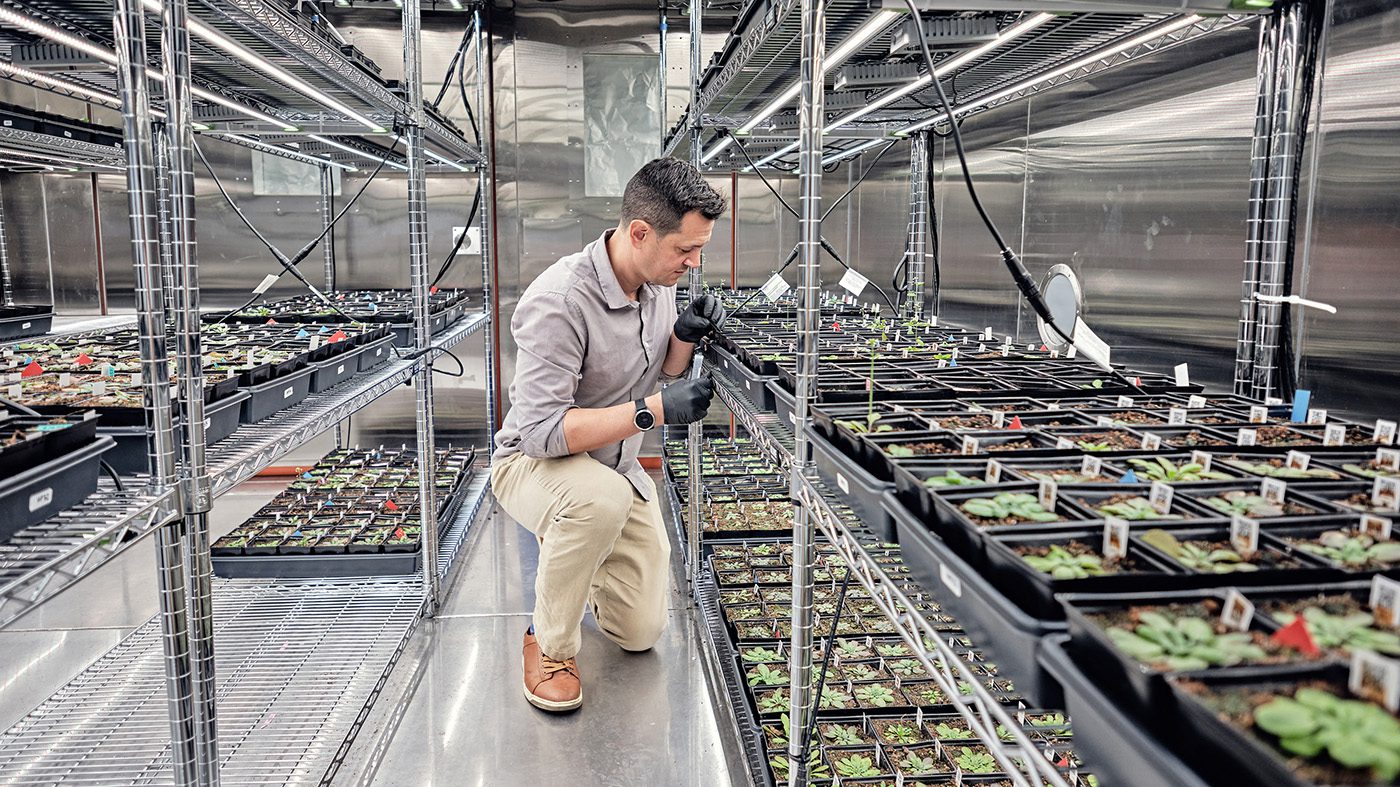
Agrigenomics is, to use an analogy, spring looking toward summer. Wielding modern genomics tools fine-tuned to agriculture, along with AI-driven insights from field technologies and satellites in low Earth orbit, traditional agriculture is transitioning to precision farming and the bounty it brings. Insights are compressing 30 years of field trials into a single growing season and enabling growers to express specific traits without introducing foreign genes and without hit-and-miss Mendelian hybridization.
This intensive application of science starts with comprehensive soil analyses and extends, not only to the major row crops, but also to such lesser-studied areas as fruits and forestry.
It’s all about the soil

CEO, Miraterra
Healthy, productive crops all need a good growing environment. “Soil is the most complex, beautiful system on the planet,” Nate Kelly, CEO, Miraterra, points out. Yet, “The soil measurement system in place today is quite archaic,” with manual systems and complex chemistries.
Miraterra’s lead technology is the Digitizer. With shifted-excitement Raman difference spectroscopy as its core, it also employs lasers and advanced signal processing to remove the noise that previously made Raman spectroscopy untenable for soil samples. Robust modeling transforms those data into a molecular fingerprint of soil to 30 ppm, with significantly enhanced resolution anticipated. The Digitizer shortens analysis time from hours to minutes, and makes toxic chemical analysis unnecessary. “Today, we measure texture, organic matter, and carbon and—soon—nutrients,” Kelly says.
After acquiring Trace Genomics and its large soil microbiology data set last year, the company can identify approximately 400,000 different biological components of soil, “things like nitrogen fixers, phosphorus solubilizers, pathogens, and nematodes,” Kelly says.
“Soil is too complex [chemically and biologically] to stick a simple probe in the ground and try to get a reading,” Kelly says. “My aspiration is to cut the cost [of soil analysis] by about 90%, to democratize measurement,” Kelly says. “That means turning a $40 analysis into one that costs less than $5.”
CRISPR: Beyond corn and soy
CRISPR technology is being applied to agrigenomics with the same revolutionary results it created for medicine. As the basis of Pairwise’s Fulcrum Platform, it is expanding agrigenomics well beyond the major crops of corn and soybeans.

CTO, Pairwise
Fulcrum technology produced the world’s first seedless blackberry—now in field trials—and a more compact blackberry plant that is commercialized in the Americas. With this compact Fontana blackberry, “Growers can plant more blackberry plants per acre, which helps them be more efficient and produce more yield,” Ryan Bartlett, PhD, CTO, says. A thornless blackberry plant is on the horizon.
The goal is to “make growers more sustainable and efficient, and to give consumers the opportunity to consume more healthy things, like blackberries,” Bartlett says. Fast, precision editing will also help plant breeders quickly adjust to climate change.
Fulcrum features plant-specific CRISPR editing that fine-tunes gene expression rather than simply turning genes on or off. The platform includes additional gene editing tools, enzymes, and trait libraries to help breeders design and test changes and quickly advance specific phenotypes into field trials.
Bartlett calls this “traditional breeding on an accelerated basis.” With Fulcrum, these new blackberries were produced in about three years. Using traditional Mendelian breeding would have taken 10 to 40 years.
Pairwise is also working with “additional permanent crops like cherries,” Bartlett says. “There haven’t been a lot of advancements in the past 50 years.” That may soon change, as Pairwise is working with Sun World to develop a pitless cherry.
New opportunities
“Accelerating timelines and lowering the cost of crop improvement [will] unlock expansive opportunities in agriculture, new species, new geographics, and new traits,” Brad Zamft, PhD, CEO and co-founder of Heritable Agriculture, says.
Heritable focuses on breeding indoor vegetables and forestry, although it also develops fruits and row crops with strategic partners. “The majority of the unmet need comes from placing existing plants in the right places and determining what crosses would make them better,” Zamft says.
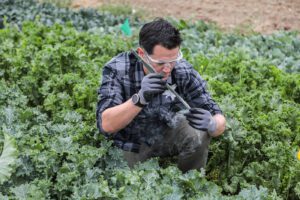
CEO, Heritable Agriculture
Consider strawberries. “We think we’re going to bring a new strawberry variety to the market—start to finish—within four years. The status quo is around a decade.” Heritable can identify desired traits, determine the genes involved, and validate them in growing plants within 18 months, versus 3 to 12 years using traditional methods. Currently, Heritable is adapting genetics from Consorzio Italiano Vivaisti’s (CIV’s) strawberries to grow indoors in Canada.
To speed the process, Heritable uses digital field trials and an AI engine developed in-house specifically for agrigenomics. Potential applications are global. “We have scalable integration of weather and soil to 10-meter resolution anywhere in the world,” Zamft says.
Increasingly accurate correlations of genes to phenotypes shorten the development timeline, Zamft adds. For example, three of the top eight genes Heritable’s team discovered for flowering time in corn proved causative, and three of three in a flavor project for leafy greens. In contrast, he cited a literature analysis that reported that out of 1,671 unique genes that were field-tested across multiple traits, only 22 were identified as validated leads.
To produce and commercialize these innovations, Heritable relies on an alliance of partners in which each partner brings vital strengths to the endeavor, from genomics through production, distribution, and sales. The company also engages in trait development with seed developers and growers, and recently launched a software-as-a-service platform to enable users to predict plant performance under multiple variables.
The company is also active in commercial forestry, using AI to help breeders make placement and breeding decisions that could shorten the breeding cycle by more than half.
Gene editing = no GMOs
Verinomics built its foundation on plant genomics, computational biology, and trait mapping to enable breakthroughs in multiple crops. Most recently, it developed Nonpareil+, a self-pollinating Nonpareil almond variety that may increase per-acre productivity by 30%.
That anticipated productivity gain is directly tied to self-pollination. Because the Nonpareil variety—which is the dominant commercial almond variety in California—is self-incompatible, it requires cross-pollination. That, in turn, requires planting alternating rows of other almond varieties as pollinators and then renting beehives (at about $400 per acre) to pollinate the orchard.

Founder, Verinomics
“There’s no way to create a self-compatible Nonpareil using conventional breeding,” Stephen Dellaporta, PhD, founder of Verinomics and professor at Yale University, points out. Therefore, using Verinomics’ Genesis gene editing platform, “we identified the self-incompatibility gene and edited it to a self-compatible gene.” The resultant Nonpareil+ is genetically identical to the Nonpareil except that it is self-pollinating.
Growers are beginning to plant it this year, with the expectation of reducing or eliminating the need for multi-variety almond orchards and bee hives. If it works as expected, growers can harvest all the trees at once, rather than needing separate harvests for multiple varieties.
Almonds aren’t the only crop on Dellaporta’s mind. Back in the lab, “we just completed 60 whole genome sequences, assemblies, and annotations,” he says. The company works with partners to address concerns in multiple crops, making adaptations without introducing foreign DNA.
The bacterial disease known as citrus greening is an example. It’s killed millions of acres of citrus trees, according to the U.S. Department of Agriculture. “There’s no known resistance within the domesticated citrus germplasm,” Dellaporta says. Crossing a wild-type, resistant citrus with a domesticated citrus would take decades to produce a resistant, domesticated citrus, he points out. “Gene editing may create a modification to allow the plant to be resistant without losing varietal identity.”
Precision farming can bring incredible benefits to agrigenomics, just as precision genomics is doing for medicine. As agrigenomics begins to bear fruit, developers can look forward to a genomics-fueled bounty very, very soon.
The post Ag Genomics Begins to Bear Fruit appeared first on GEN - Genetic Engineering and Biotechnology News.
Apa Reaksi Anda?
 Suka
0
Suka
0
 Kurang Suka
0
Kurang Suka
0
 Setuju
0
Setuju
0
 Tidak Setuju
0
Tidak Setuju
0
 Bagus
0
Bagus
0
 Berguna
0
Berguna
0
 Hebat
0
Hebat
0