


















































%20and%20Batch%20Production%20Records%20(BPR).png)

















BIO 2026: American biotech leadership protects patients and national security
U.S. biotech leadership is essential to ensure patients have access to the best medicines and America can maintain its national security. But that leadership is not guaranteed.
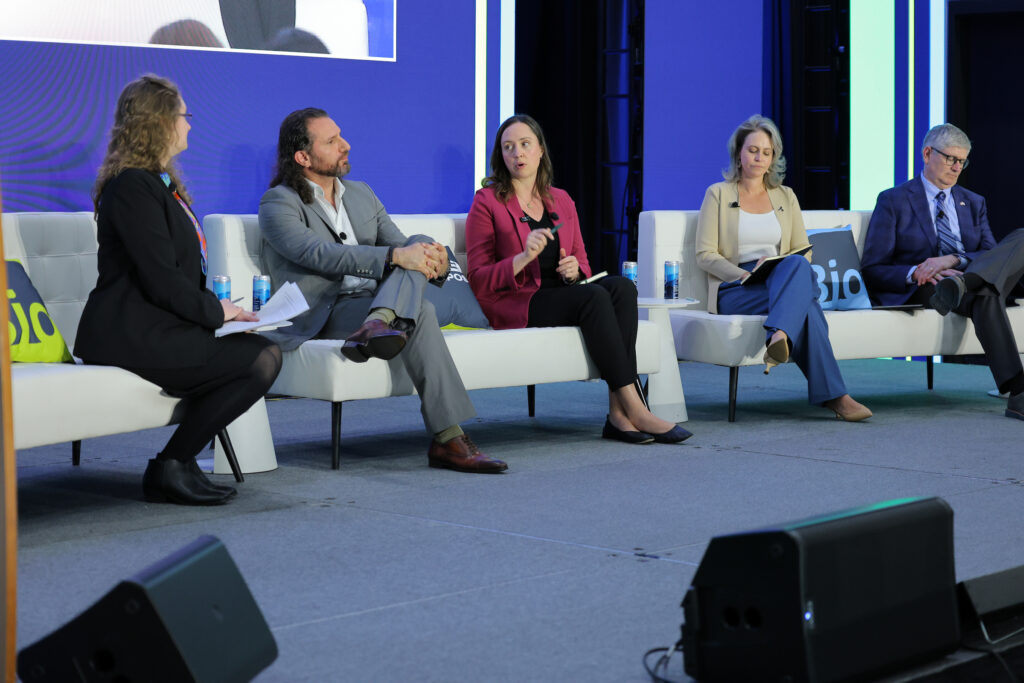
“We need to close the gaps in biotech policy to make sure we are maintaining American leadership and enabling our companies in partnership with other stakeholders, such as government, to be able to meet urgent patient needs,” according to Kelly Seagraves, VP of National Security & International Affairs at the Biotechnology Innovation Organization (BIO).
At the 2026 BIO International Convention, Seagraves led representatives from government and industry on a panel exploring challenges to the predominance of American biotech. Their conversation echoed themes addressed the day before in a fireside chat focused on funding medical countermeasures needed to address biological threats.
Both discussions underscored the need for public-private cooperation to ensure that the biotech industry can help maintain American security.
As Seagraves explained in an interview ahead of BIO 2026, when America leads in biotech innovation and drug discovery, patients in the U.S. will be the first to access new treatments. From a national security standpoint, biotech superiority means America can rapidly respond to a public health crisis or a bioterrorism threat and provide its military with the best medical support, Seagraves added.
The need for a strong American biotech industry was the subject of a report commissioned by Congress and produced by the National Security Commission on Emerging Biotechnology (NSCEB).
Government action needed
Caitlin Frazer, Executive Director of the NSCEB, urged government action to ensure the recommendations in the NSCEB report are implemented.
“As unsexy as bureaucracy sounds, it is really about getting the United States government into gear, making sure that somebody is looking after whether the regulatory framework can catch the innovations coming out of ARPA-H, making sure that there’s somebody for the biotech industry to talk to about the capabilities that they’re developing in a national interest,” said Frazer, who also urged industry action. “There are ample opportunities to be a part of the advocacy effort to Congress.”
The Advanced Research Project Agency for Health (ARPA-H) is a federal government agency that advances the development of high-impact solutions to challenging health problems. Rafid Fadul, ARPA-H’s Chief Medical Officer, represented the agency on the panel.
Some of the NSCEB report’s 49 recommendations have been implemented, but legislative and executive actions are still needed, Frazer said. One key step would be establishing “a national biotechnology coordinator at the White House, to create and implement an interagency strategy,” Frazer said.
“Probably the most important thing that we propose empowering this person to do is to streamline biotechnology product regulation.”
The value of a coordinator was underscored by Megan Frisk, Chief Strategy Officer of Alloy Therapeutics’ Vigilance Division, which is focused on readiness solutions for the company. Frisk previously worked for the National Security Council at the White House as a director for biotechnology risk.
“You have all these different departments and agencies. Some live on the ‘promote’ side, some live on the ‘protect’ side,” she said. “They have different budgets. They have different authorities. They have different missions. And frankly, they don’t always need to work with each other, so you have to create this environment.”
What the biotech industry can do
Mike Gaffney, CEO of Cellphire Therapeutics, Inc., and a member of BIO’s Board, spoke about the challenges of securing the support needed to bring a product to market – particularly around clinical trials. Cellphire makes solutions to treat hemorrhaging, offering an alternative to Liquid Stored Platelets (LSP), which have a short shelf life. Cellphire offers a transformational innovation for victims in mass casualty events or military personnel wounded on the battlefield.
“Local trials take too long, they cost too much, and patients aren’t getting the benefit of what the industry can provide,” he said. According to Gaffney, biotech is a “core customer” of the U.S. Food and Drug Administration (FDA), which regulates clinical trials, so the industry has a powerful voice to demand change.
“We’re the ones employing people. If we’re not engaged in that conversation, then we’re not doing our jobs right,” he explained.
Public-private partnership
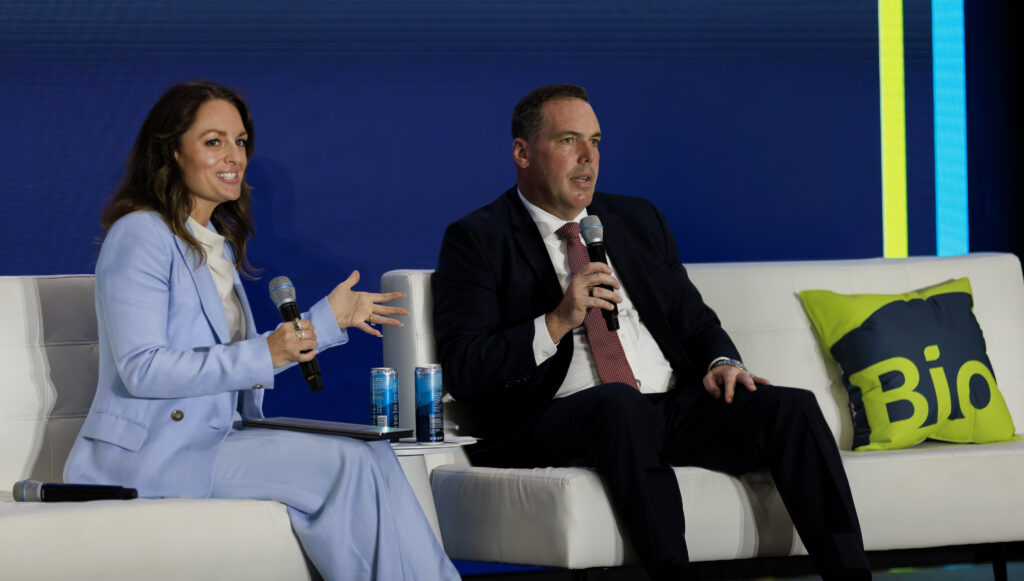
The challenges around developing biotech solutions for emergency preparedness was covered in the fireside chat between Emily Wheeler, BIO’s VP of Infectious Disease Policy, and Mark O’Neill, Chief of Staff for Administration for Strategic Preparedness and Response (ASPR).
O’Neill said the government wants to fund biotechs developing medical countermeasures to address biosecurity risks. These companies should engage with the Biopharmaceutical Manufacturing Preparedness (BioMaP) Consortium and the Rapid Response Partnership Vehicle (RRPV), he said.
“Many of the medical countermeasures needed to protect the nation against CBRN (Chemical, Biological, Radiological, and Nuclear) threats and emerging infectious diseases do not have a sustainable commercial market,” said Wheeler. “Public-private partnerships are therefore essential to ensure these products can be developed, manufactured, and maintained as part of our national preparedness and biodefense infrastructure.”
The post BIO 2026: American biotech leadership protects patients and national security appeared first on Bio.News.
Apa Reaksi Anda?
 Suka
0
Suka
0
 Kurang Suka
0
Kurang Suka
0
 Setuju
0
Setuju
0
 Tidak Setuju
0
Tidak Setuju
0
 Bagus
0
Bagus
0
 Berguna
0
Berguna
0
 Hebat
0
Hebat
0