













































Biodentine in modern endodontics: how vital pulp therapy is changing the way we treat teeth
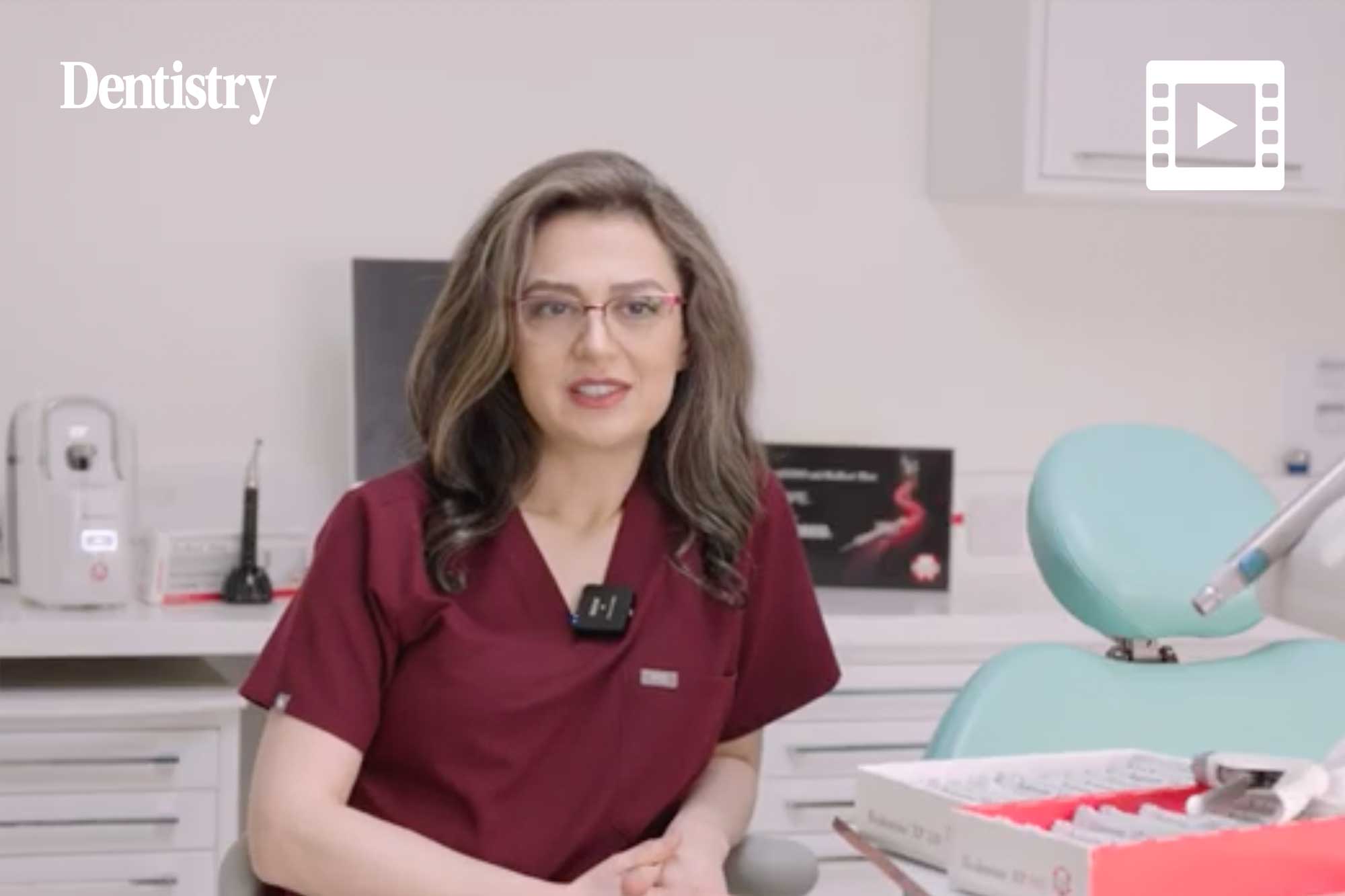
In March, we visited Dr Mitra Elli at Boutique Dental 23 in Wigan to discuss her clinical approach to vital pulp therapy and her use of Biodentine in everyday practice.
During our time at the practice, Dr Elli shared her experience of incorporating Biodentine into treatment planning, highlighting its role in supporting pulp preservation and promoting predictable outcomes. The discussion focused on how vital pulp therapy can offer a conservative and biologically driven alternative for patients, helping to maintain tooth vitality wherever possible.
Vital pulp therapy is no longer a niche concept in endodontics. As materials evolve and clinical evidence grows, dentists now have more predictable ways to preserve the dental pulp and avoid unnecessary root canal treatment. In this expert interview, Dr Mitra Elli, specialist endodontist, explains why Biodentine has become a cornerstone of her approach to minimally invasive dentistry – and how it is changing outcomes for both clinicians and patients.
The shift towards preserving the pulp
For decades, deep caries and pulp exposure often led directly to root canal treatment. While root canal therapy remains highly effective, it is not without compromise, structural weakening of the tooth, and an increased risk of fracture are well‑documented consequences.
As Dr Elli explains in the video, there is no better root filling than the dental pulp itself. The pulp is a living, immune‑active tissue capable of forming dentine, responding to bacterial challenge, and protecting the tooth from within. Preserving it whenever possible aligns perfectly with the principles of modern, minimally invasive dentistry.
This is where vital pulp therapy – and the materials that make it predictable – come into focus.
Why Biodentine was designed for vital pulp therapy
Biodentine was developed specifically as a pulp therapeutic material, but its unique formulation allows it to function as both a therapeutic agent and a restorative material. According to Dr Elli, this dual role is what truly sets Biodentine apart.
Unlike traditional materials such as calcium hydroxide, Biodentine provides:
- High biocompatibility with pulpal and periodontal tissues
- Bioactivity, promoting dentine bridge formation and tissue healing
- Excellent sealing ability without polymerisation shrinkage
- Mechanical properties similar to dentine, allowing dentine replacement.
Because Biodentine is composed largely of highly pure, synthetic tricalcium silicate, it delivers consistent biological performance and predictable clinical results.
Beyond vital pulp therapy: versatility in clinical practice
Although vital pulp therapy remains the primary indication, Dr Elli highlights that her use of Biodentine extends far beyond this single application. In daily specialist practice and dental hospital settings, Biodentine is successfully used for:
- Regenerative endodontics
- Perforation repair
- Internal resorption management
- External cervical resorption (ECR), where sub‑crestal internal repair is possible
- Complex cases involving periodontal communication.
In challenging anatomical situations – where achieving a seal is notoriously difficult – Biodentine’s flow characteristics and handling properties allow it to adapt to irregular spaces and create a reliable seal. Its biocompatibility means that even when in contact with soft tissues, healing is supported rather than compromised.
Aesthetic stability without discolouration
One limitation of older calcium silicate‑based materials, such as some formulations of MTA, is the risk of tooth discolouration caused by radiopacifiers. Biodentine avoids this issue by using zirconium oxide, which is colour‑stable and highly biocompatible.
For anterior teeth or aesthetically sensitive cases, this makes Biodentine a far more predictable choice when managing pulp exposures or deep carious lesions.
Case selection: the key to success
While Biodentine has expanded the range of teeth suitable for vital pulp therapy, case selection remains critical. Dr Elli emphasises that no single test can definitively assess pulpal health. Instead, clinicians must synthesise multiple factors, including:
- Detailed pain history
- Sensitivity testing
- Clinical examination
- Radiographic findings
- Patient‑level factors such as caries risk and periodontal stability.
In some situations, vital pulp therapy may still be inappropriate for those with uncontrolled caries, or patients with unstable periodontal conditions. However, Biodentine allows clinicians to give teeth a chance in cases which may previously have been deemed unsalvageable.
Avoiding unnecessary root canal treatment
One of the most compelling arguments Dr Elli presents is the avoidable overtreatment that occurs in general practice when suitable pulp‑protective materials are unavailable. Teeth that could have survived with vital pulp therapy are often extirpated prematurely.
Root canal treatment, while effective,
- Sacrifices tooth structure
- Alters dentine biomechanics
- Removes the tooth’s natural immune defence
- Increases long‑term fracture risk.
With Biodentine, clinicians can confidently practise selective caries removal, preserve dentine, and avoid pulpal exposure – dramatically extending the lifespan of natural teeth.
Biodentine and selective caries removal
Current European Society of Endodontology (ESE) guidelines favour selective caries removal over indirect pulp capping. In deep carious lesions, caries is removed to firm dentine, and biodiversity‑friendly materials are placed to seal and arrest the lesion.
Biodentine excels in this role because it:
- Provides an exceptional seal through micromechanical and chemical bonding
- Exhibits antibacterial properties due to its highly alkaline pH
- Releases calcium and silicate ions, promoting remineralisation
- Does not shrink, maintaining marginal integrity over time.
This approach supports the philosophy of ‘less is more’ – preserving tooth structure while maintaining pulpal vitality.
The bio‑bulk fill technique: simpler and more predictable
Dr Elli describes a clinical workflow shift she has adopted: the bio‑bulk fill technique.
Rather than layering multiple materials, Biodentine is used to fill the cavity with minimal manipulation. Its flow allows it to adapt naturally to cavity walls and irregularities. After an initial setting time of approximately 12 minutes, the tooth can be temporised or restored in stages.
- Filling entirely with Biodentine and reassessing after two weeks to six months.
This allows symptom review, sensibility testing, and final enamel replacement under optimal conditions – making it both clinically efficient and biologically sound.
Supporting minimally invasive dentistry
What ultimately makes Biodentine such a powerful tool is the confidence it gives clinicians. As Dr Elli explains, simply having the material available changes decision‑making. Complex cases feel manageable. Conservative options become viable.
In an era where dentistry is increasingly focused on preservation rather than replacement, Biodentine supports treatments that serve patients best – by keeping teeth alive, functional, and structurally sound for as long as possible.
Watch the full video interview above to hear Dr Mitra Elli share her clinical insights and real‑world experience with Biodentine in modern endodontic practice.
This article is sponsored by Septodont.
Apa Reaksi Anda?
 Suka
0
Suka
0
 Kurang Suka
0
Kurang Suka
0
 Setuju
0
Setuju
0
 Tidak Setuju
0
Tidak Setuju
0
 Bagus
0
Bagus
0
 Berguna
0
Berguna
0
 Hebat
0
Hebat
0