





































%20and%20Batch%20Production%20Records%20(BPR).png)








Biomanufacturing Could Reshape Organ Transplantation
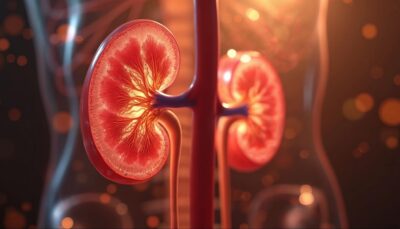
A persistent global shortfall has long defined the organ transplantation landscape, but a new generation of biofabrication and biomanufacturing technologies is positioning the field for a shift from scarcity to scale. As Boyang Wang, founder and CEO of Immortal Dragons, puts it bluntly, “There is a structural shortage,” even as transplant numbers reach record highs.
In 2024, approximately 174,000 solid-organ transplants were performed worldwide, yet nearly 668,000 patients remained on waitlists, Wang says. The mismatch is stark—and deadly. “We have a therapy that works, but the input—organs—is fundamentally scarce and cannot be scaled,” Wang says, underscoring the central limitation of modern transplantation systems.
This imbalance is driving a paradigm shift toward what Wang describes as a “replacement strategy” for medicine. Rather than attempting to repair every failing biological pathway, the idea is to replace entire organs. “The human body has hundreds of ways to fail, but only one way to work correctly,” he explains. “Trying to patch every individual failure mode is inherently inefficient.”
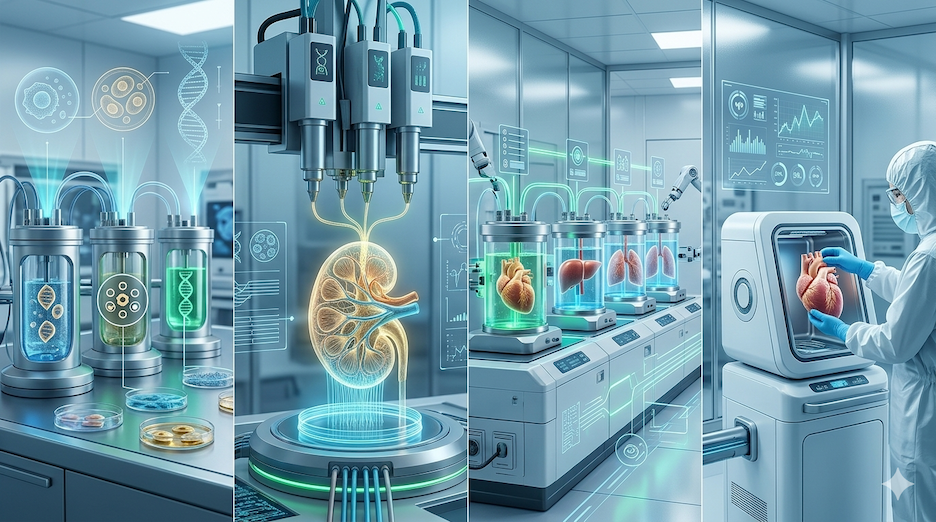
At the center of this shift lies bioprocessing. The challenge is no longer just proving that engineered tissues can work, but manufacturing them reproducibly at scale. Early progress is evident in simpler tissues. Bioengineered vascular grafts, for example, have already demonstrated that “engineered tissues can be manufactured, regulated, and used in real patients,” marking an inflection point for the field, Wang notes.
Scaling up to full organs, however, remains a formidable engineering problem. “The main blockers are vascularization and hierarchy,” Wang says, referring to the difficulty of building thick tissues with complex, multi-scale blood vessel networks. Without this architecture, engineered organs cannot sustain long-term function in vivo.
Reproducibility presents another major hurdle. Moving from bespoke, lab-built constructs to standardized, GMP-grade products requires precise control over every step of the manufacturing process. “We need reproducible, GMP-grade biofabrication processes that can deliver organs as ‘products,’ not artisanal one-offs,” Wang emphasizes.
Parallel advances in xenotransplantation are helping to expand supply in the near term. Gene-edited pig organs have shown increasing promise, with recent cases demonstrating months of sustained function in human recipients, Wang points out. These efforts, combined with advances in immunomodulation, could extend organ lifespans and broaden clinical applicability.
Still, biology remains a constraint. “Even when you get an organ, it’s not a generic spare part,” Wang notes, pointing to immune rejection, compatibility challenges, and the burden of lifelong immunosuppression. These factors limit both access and long-term outcomes.
Logistics also impose hard limits. Traditional donor organs degrade quickly, creating tight time windows for transplantation. “Organs can only stay viable for a very short cold ischemia window,” Wang says, underscoring how geography and coordination directly impact patient survival.
Despite these challenges, momentum is building. “We’re past the sci-fi stage and into early clinical reality,” Wang observes, pointing to both engineered tissues and xenotransplants entering human trials.
The road ahead will require advances not only in science but also in infrastructure. A future of scalable organ replacement will demand new regulatory pathways, reimbursement models, and healthcare delivery systems.
If successful, biomanufacturing could fundamentally reshape transplantation—transforming it from a donor-limited procedure into a scalable, industrialized therapy. Wang envisions a world where life-saving organs are not found, but made.
The post Biomanufacturing Could Reshape Organ Transplantation appeared first on GEN - Genetic Engineering and Biotechnology News.
Apa Reaksi Anda?
 Suka
0
Suka
0
 Kurang Suka
0
Kurang Suka
0
 Setuju
0
Setuju
0
 Tidak Setuju
0
Tidak Setuju
0
 Bagus
0
Bagus
0
 Berguna
0
Berguna
0
 Hebat
0
Hebat
0