





















































%20and%20Batch%20Production%20Records%20(BPR).png)














Standardizing Cell Therapy Production with Technology Facelift
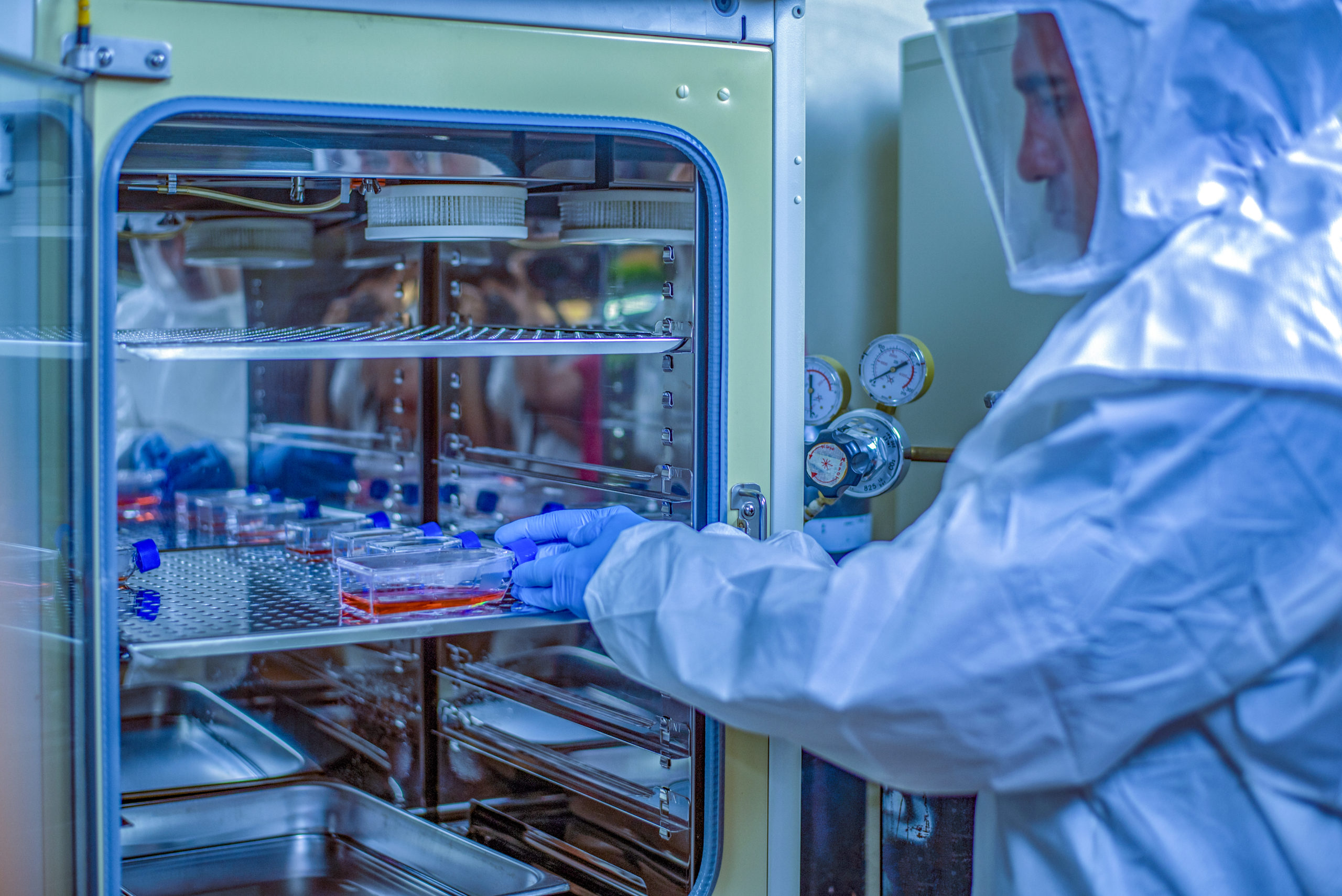
From a manufacturing standpoint, cell therapies are a disparate group of products, each requiring different starting materials and unique production processes. And, for an industry looking to standardize, this diversity is proving to be a challenge.
So says Marta Costa, PhD, a principal scientist at Portugal-based R&D non-profit, IBET, and co-author of a new study looking at efforts to make cell therapy production more time and cost efficient.
“Manufacturing cell therapies depends heavily on the cell type, therapeutic modality, and the clinical application, which makes production quite diverse. Different cell types have distinct requirements for cell sourcing, expansion, genetic engineering, and downstream processing,” she tells GEN.
Costa cites the differences between patient-specific autologous therapies—where cells are collected, modified, and reinfused—and allogeneic therapies—which are made from donor-derived or stem cell banks for multiple patients.
“Autologous manufacturing is individualized and tends to be decentralized, while allogeneic manufacturing explores scaled bioprocesses to produce larger cell batches in often centralized operations. Besides, even within the same therapeutic class, manufacturing can vary according to disease indication, donor material, genetic engineering strategy, and quality requirements,” she says.
Technology
Despite these challenges, industry’s ever-present desire for efficiency means standardization efforts continue. The current focus is on using closed, automated, and modular platforms to create reproducible workflows, Costa adds.
“Key enabling technologies of next-generation cell therapies will likely explore automated and closed platforms to reduce the risk of variability introduced by manual operations, reduce labor intensity, and, overall, improve consistency in operations that range from the initial cell isolation and selection of starting material up to fill-and-finish.
“In addition, tools like bioreactors, particularly when combined with process analytical technologies, provide tighter control over culture conditions and offer the opportunity to not only monitor but also adjust operations to ensure final cell quality,” she says.
Digital standardization
Digital technologies, such as electronic batch records, are also changing production, according to Costa, who says, “These strategies contribute not only to improve efficiency but also to enhance reproducibility, decrease COGs, and ensure compliance.”
In the future, artificial intelligence will also have a role to play, Costa says, as cell therapy firms will use the technology to make production more reproducible and data-driven.
“Although AI is unlikely to eliminate biological variability, its value probably lies in increasing process understanding and control. Examples of strategies already in place exploring AI are in predictive process control to optimize conditions before failures occur and in cell quality prediction, reducing reliance on end-point testing,” she said.
AI could also help manufacturers determine which quality attributes have the biggest impact on therapeutic efficacy, according to Costa.
“Identification of critical quality attributes is also another capability where AI could play a significant role, helping manufacturers understand which variables most strongly affect therapeutic performance.
“And, of course, automation is already viewed as a practical pathway toward standardization because it reduces operator-to-operator variation, contamination risk, and batch failures,” she says.
The post Standardizing Cell Therapy Production with Technology Facelift appeared first on GEN - Genetic Engineering and Biotechnology News.
Apa Reaksi Anda?
 Suka
0
Suka
0
 Kurang Suka
0
Kurang Suka
0
 Setuju
0
Setuju
0
 Tidak Setuju
0
Tidak Setuju
0
 Bagus
0
Bagus
0
 Berguna
0
Berguna
0
 Hebat
0
Hebat
0