


















































%20and%20Batch%20Production%20Records%20(BPR).png)















The Downside Of Band-Assisted Jumps
This week in the world of sports science, here’s what happened…
- The downside of band-assisted jumps
- Sunglasses and blankets: the key to winning a European track and field medal?
- Can smelling chocolate boost performance?
The downside of band-assisted jumps
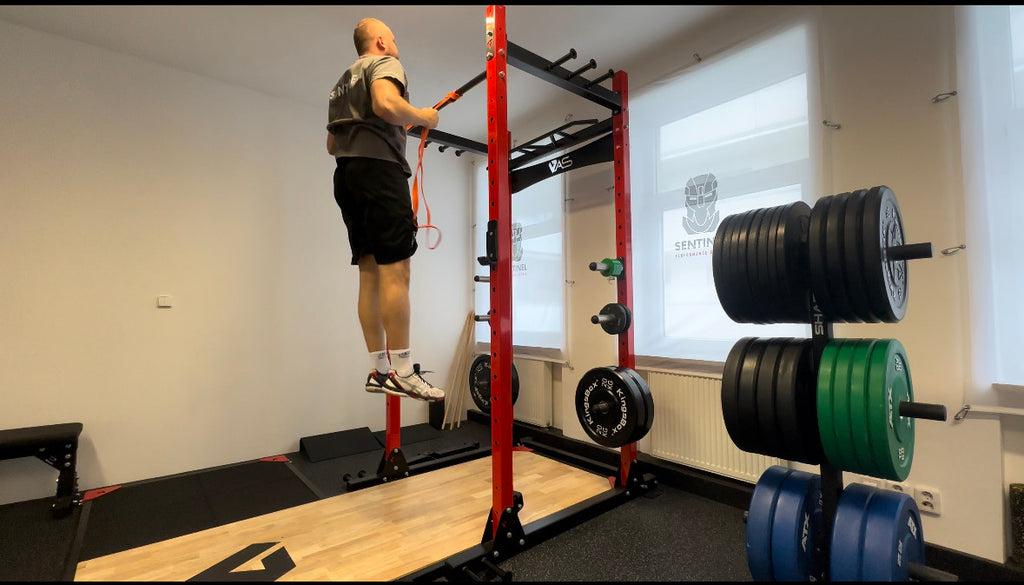
Leading S&C coach and sport scientist Eamonn Flanagan published a very insightful post on X about the potential negative effects of chronic use of band-assisted jumps. Flanagan outlines that while band-assisted jumping can improve take-off velocity and lower-limb rate of force development, the bands can also alter what happens during the eccentric phase of a jump. Essentially, the band assists you on the way up but resists you on the way down.
This resistance can slow the rate of eccentric unloading and increase the time between the unloading phase and eccentric braking phase. Flanagan suggests that altering this eccentric phase may interfere with the natural stretch-shortening cycle and potentially reduce the stimulus placed on this important mechanism.
So, while band-assisted jumps can improve take-off velocity, lower-limb rate of force development and overall jump performance, Flanagan raises an important consideration: a faster take-off doesn’t necessarily mean the stretch-shortening cycle is receiving a better stimulus. If assisted jumps make up a large proportion of an athlete’s plyometric training over a prolonged period, there may be a risk of under-stimulating the stretch-shortening cycle.
In other words, band-assisted jumps can certainly have their place, but coaches may need to consider how often and for how long they use them, rather than simply viewing greater take-off velocity as an inherently better training stimulus.
Sunglasses and blankets: the key to winning a European track and field medal?
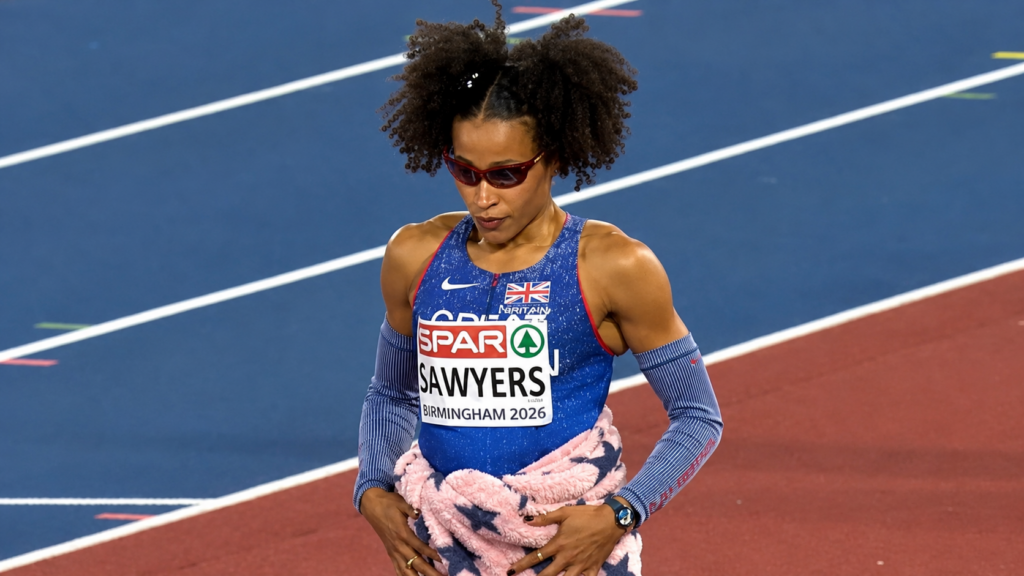
British track and field star Jazmin Sawyers recently won a silver medal in the long jump at the European Championships. However, she also created a lot of buzz online with her unusual routine, with Sawyers approaching the run-up wearing sunglasses and a blanket wrapped around her lower body. She then takes off her sunglasses and pulls off the blanket immediately before her jump.
While this routine is certainly a little unusual, it is believed that Sawyers wraps herself in a blanket between long jump attempts to stay warm, only taking it off immediately before jumping, as there can often be long waits between attempts. Meanwhile, it is believed that she wears the sunglasses to help her switch off from what is happening around her and stay in her own zone.
Interestingly, in an interview from way back in 2016, a young Sawyers spoke about wanting to stop focusing on jumping distances and instead focus on the process. So, if being wrapped up in a blanket and wearing sunglasses helps her avoid distractions and getting caught up in the stress of competition, then why not? Taking off the sunglasses and blanket could then serve as a metaphorical switch back into competition mode, allowing her to refocus on the process of executing her best long jump.
Who are we to criticise her routine? It certainly isn’t affecting her performance! If any of our readers have any unusual pre-performance rituals, please let us know!
Can smelling chocolate boost performance?
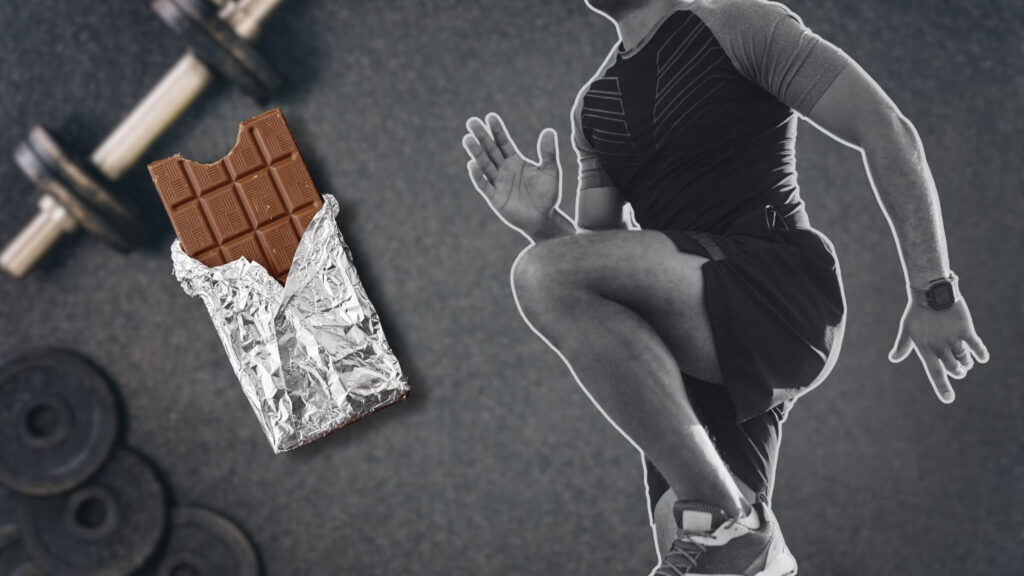
A bizarre study investigating the effects of smelling chocolate has sparked plenty of discussion. Researchers recruited 23 resistance-trained men who, following an overnight fast, performed repeated sets of leg extensions under three different conditions: smelling dark chocolate, smelling milk chocolate, or smelling water as the control condition.
Interestingly, participants who smelled dark chocolate completed significantly more repetitions than during the control condition. They also reported feeling less hungry and more satiated. Those who smelled milk chocolate also completed more repetitions than the control group, although the improvement was smaller and, unlike dark chocolate, milk chocolate did not appear to suppress appetite.
The researchers proposed several possible explanations for these findings. One theory is that the aroma of dark chocolate may help suppress appetite, making fasted exercise feel psychologically easier. Another is that chocolate is a highly rewarding smell, with the aroma potentially stimulating brain regions involved in motivation and reward, allowing participants to sustain effort for longer. However, the exact mechanism remains unclear.
While the findings are certainly thought-provoking, they should be interpreted with caution. The study involved just 23 participants, all of whom were young, resistance-trained men, and performance was assessed using only a single exercise. As a result, it remains unclear whether similar effects would be seen in other populations, sporting activities or real-world training environments.
Nevertheless, the study highlights an intriguing area for future research and raises the question of whether the sense of smell could one day become another tool for enhancing training and athletic performance.
From us this week:
>> New course: Micronutrients for Athletes
>> New podcast: How Elite Athletes Respond Under Pressure
>> New infographic: Chronological, Biological, and Technical Age
>> New article: Hydrotherapy
Access to a growing library of sports science courses
SFS Academy is an all-access membership to premium sports science education.
With SFS Academy, you’ll learn from some of the best coaches around the world as they teach you how to apply the latest research and practice with your athletes.
The post The Downside Of Band-Assisted Jumps appeared first on Science for Sport.
Apa Reaksi Anda?
 Suka
0
Suka
0
 Kurang Suka
0
Kurang Suka
0
 Setuju
0
Setuju
0
 Tidak Setuju
0
Tidak Setuju
0
 Bagus
0
Bagus
0
 Berguna
0
Berguna
0
 Hebat
0
Hebat
0