






































































Early-Life Stress Leaves Epigenetic “Scars” That Prime Stress Sensitivity
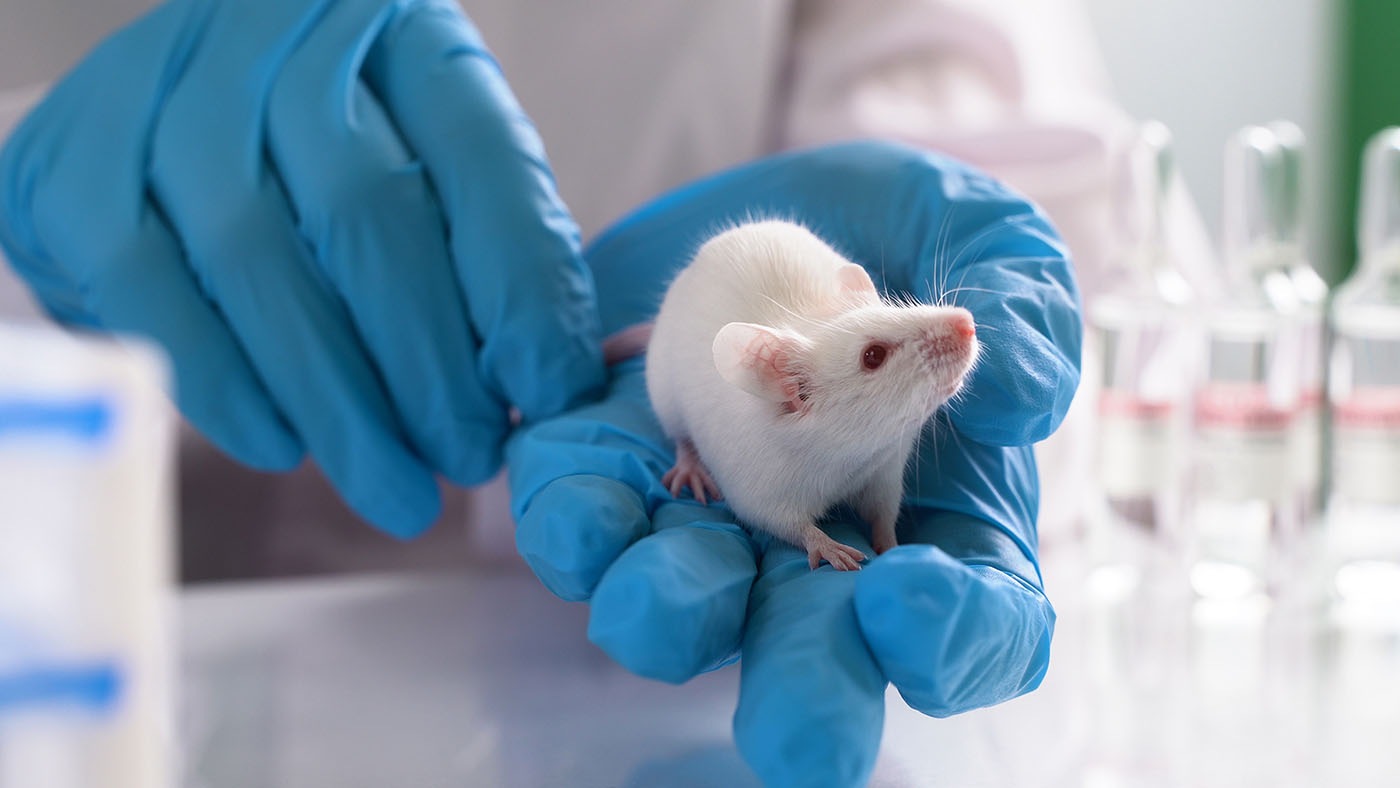
Experiencing severe stress during childhood can make a person more vulnerable to anxiety, depression, and other mood disorders when faced with hardships as an adult. Researchers at Washington University School of Medicine (WashU Medicine) in St. Louis and Princeton University have now uncovered how trauma early in life can leave a lasting effect on the brain. Scientists already knew that stress early on in life changes the activity of genes in the brain. The team’s newly reported study in mice indicated that this is due to alterations in how brain cells package DNA, which leaves the brain’s genetic stress response vulnerable to being turned on easily and reducing tolerance to stress.
“We have uncovered a new biological process linking experience of early-life adversity to this long-term vulnerability to mental illness,” said Meaghan Creed, PhD, associate professor of anesthesiology at WashU Medicine. “This finding reveals a physical scar left by trauma experienced during development inside brain cells, providing scientists with a concrete biological target to develop new treatments and interventions.”
Creed is co-corresponding author of the researchers’ published paper in Neuron, titled “Early-life stress alters H3K4me1 in VTA to prime stress sensitivity,” in which they say that their findings “… link early-life stress experience to long-term stress hypersensitivity within the brain’s dopaminergic circuitry, providing a mechanism by which early-life stress increases risk for mood and anxiety disorders later in life.”
More than half of the world’s children are exposed to early-life stress (ELS) from abuse, household dysfunction such as violence or drug use, or other traumatic experiences. Accumulation of four or more such experiences can trigger much higher risks for long-term mental and physical health challenges in adulthood. “Early-life stress (ELS) is a risk factor for mental health and substance use disorders due to increasing sensitivity to subsequent stressors,” the authors noted.
The researchers set out to understand how trauma during early development physically changes the brain to make it more sensitive to stress later in life. They focused on a region of the brain called the ventral tegmental area (VTA), where brain cells that produce the chemical messenger dopamine are responsible for processing important things in the environment, including rewards and adversity. When these brain cells are activated abnormally, which can happen in response to stress, they disrupt how the brain processes rewards, leaving individuals vulnerable to anxiety and depression.
“The ventral tegmental area (VTA) is a key dopaminergic brain region and has been extensively implicated in the pathophysiology of mood, anxiety, and substance-use disorders,” the team explained. “Stress-induced adaptations in gene expression and cellular activity in the VTA have been causally linked to changes in motivation, reward learning, and stress response.”
Focusing on these dopamine-producing neurons, the team zoomed in on epigenetic molecular tags that direct the cell’s machinery to turn genes on and off, which affects cells’ activity. “We used a combination of bottom-up mass spectrometry, viral-mediated epigenome editing, RNA sequencing, patch-clamp electrophysiology of dopamine neurons, and behavioral quantification in a mouse model of early-life stress, focusing on the ventral tegmental area (VTA), a key dopaminergic brain region,” they stated.
Inside cells, DNA is coiled like a slinky, explained senior and co-corresponding author Catherine Jensen Peña, PhD, an assistant professor at the Princeton Neuroscience Institute. The DNA coils are wrapped around histone proteins that help determine how tightly or loosely the coil is wound. When this genetic slinky is compressed, its genes are turned off, but as the DNA coil stretches and opens, the genes are more easily accessible to be turned on.
The researchers found that an enzyme called SETD7 was more abundant in the dopamine neurons of young mice that had experienced stress, compared with its abundance in mice reared in a typical environment. SETD7 helps place a chemical tag, H3K4me1, on the genetic slinky, marking the structure for uncoiling, which in turn makes the cell more reactive to everything going on in the environment, explained Peña.
The researchers then artificially boosted levels of SETD7 in young, stress-free mice. Even without early-life stress, these mice grew up with a stretched-open DNA structure in their dopamine-producing brain cells, making it easier to turn on the genes that respond to stress. The animals had a lower tolerance for stress in adulthood. The researchers found that, as adults, the mice that had boosted SETD7 levels when they were young had more reactive dopamine neurons and exhibited more anxious behavior compared to mice with normal levels of SETD7 throughout their lives.
Conversely, when the researchers blocked the SETD7 enzyme from adding too much of the H3K4me1 tag after early-life stress, the slinky remained closed, shielding mice from becoming hypersensitive to stress later in life. Despite experiencing both early-life and adult stress, mice with their SETD7 levels dampened were able to remain as social and exploratory as unstressed mice, and their dopamine neurons were active at normal levels.
In their paper, the team wrote in summary, “Mimicking early-life stress through postnatal overexpression of Setd7 and enrichment of H3K4me1 in the VTA sensitizes transcriptional, physiological, and behavioral responses to adult stress, while Setd7 knockdown ameliorates the impact of early-life stress.”
“There are currently no treatments for what early-life stress does to the brain, partially because we have not had a clear picture of what molecular mechanisms to target,” Peña said. “This work is exciting because it reveals a clear mechanism, and also helps explain why the impact of stress is both latent and broad. Additionally, if we can step in with supportive care, therapy, or social resources to buffer children during those sensitive windows of development, we may be able to protect the epigenome—preventing the genetic slinky from locking into an open position and perhaps giving the developing brain a chance to build natural resilience.”
The post Early-Life Stress Leaves Epigenetic “Scars” That Prime Stress Sensitivity appeared first on GEN - Genetic Engineering and Biotechnology News.
Apa Reaksi Anda?
 Suka
0
Suka
0
 Kurang Suka
0
Kurang Suka
0
 Setuju
0
Setuju
0
 Tidak Setuju
0
Tidak Setuju
0
 Bagus
0
Bagus
0
 Berguna
0
Berguna
0
 Hebat
0
Hebat
0