



















































%20and%20Batch%20Production%20Records%20(BPR).png)
















FDD Conclave – Mumbai Connect: Reimagining formulation R&D
Formulation and drug delivery is key to translate scientific discovery into real-world therapeutic impact. As India’s pharma sector enters a phase defined by greater complexity, accelerated timelines, and heightened regulatory scrutiny, the role of formulation R&D is being fundamentally redefined.
In this context, Express Pharma hosted the FDD Conclave – Mumbai Connect, around the theme ‘Speed, Scale, and Science: Rethinking FR&D,’ bringing together key stakeholders from India’s pharma and formulation development ecosystem for a day of insightful discussions, strategic dialogue, and knowledge exchange.
Lighting the path forward
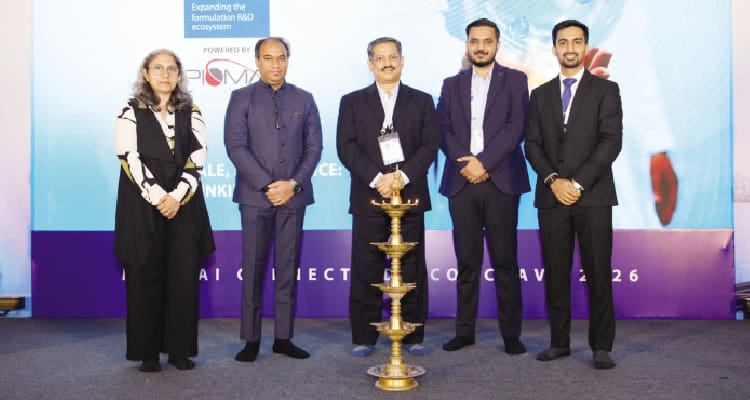
The conclave kick-started with a ceremonial lamp lighting led by Dr Santosh Indraksha, Deputy Drugs Controller (India), CDSCO, DGHS, MoH&FW, Government of India; Dr Pavan Bhat, CEO, Inventia Healthcare; Jaynil Doshi, Director – Techno Commercial, Pioma Chemicals; Sumeet Sharma, Vice President – Sales, Cilicant and Viveka Roychowdhury, Editor, Express Pharma.
Setting the tone for the event, Dr Indraksha brought the regulatory perspective into focus while delivering the Chief Guest address. He stressed that as pharma products become more complex—ranging from modified-release formulations and combination products to advanced drug delivery systems—the regulatory environment is evolving in parallel. Expectations around data integrity, risk management, lifecycle approach, and global harmonisation are becoming more stringent.
Dr Indraksha highlighted the importance of embedding quality-by-design (QbD) principles early in the development process, ensuring that quality is built into the product rather than tested at the end. He also emphasised the need for stronger alignment with international standards, reflecting India’s growing integration into global supply chains.
Elevating R&D to strategic core
The transition of R&D from a functional role to a strategic imperative formed a central theme of the conclave. In the session, ‘Leadership lens: Making R&D a boardroom conversation,’ discussions revolved around how organisations are rethinking the role of formulation development in driving business outcomes.
The session was moderated by Viveka Roychowdhury. She was joined by Dr Pavan Bhat, and Dr Santosh Indraksha. The central thread was that leadership in pharma, particularly within R&D rarely follows a linear path. As highlighted by the panellists, real growth often begins when professionals move beyond narrowly defined roles, taking initiative and embracing opportunities that stretch their capabilities.
The conversation also underscored a critical shift in how innovation is evaluated. While strong science remains foundational, it is no longer sufficient on its own. For R&D to deliver meaningful value, it must align closely with market needs, commercial viability and timing. Innovation, therefore, must be viewed through a more integrated lens—where scientific excellence is complemented by strategic foresight and execution capability.
The panellists stressed the importance of fostering a culture where setbacks are openly discussed and converted into shared learning experiences, reducing the risk of repeated mistakes and strengthening institutional knowledge.
From a regulatory standpoint, Dr Indraksha highlighted the rapid digital transformation underway in India’s regulatory ecosystem. Initiatives such as unified licensing systems and single-window platforms are streamlining processes, enhancing transparency, and improving efficiency.
Complexity in modern formulation R&D
As the discussion moved towards more complex products, industry doyens dwelled on the challenges associated with formulation development are intensifying. The panel discussion on ‘Managing complexity in modern formulation R&D’ brought together experts including Dr Raveendra Pai, Sr VP – Formulation Development, Glenmark Pharmaceuticals; Dr Simta Jadhav, GM, Raay Neo Pharma; Dr Md Rizwan, Formulation Lead, Alkem Laboratories; Preeti Raut, Sr VP – Formulations Development, Cipla; Dr Sunil Pandey, Assistant VP, Head NDDS, Bharat Serum and Vaccines and Dr Premchand Nakhat, Head-Formulation and Technology Transfer, Inventia Healthcare.
The discussion was moderated by Dr Vandana Patravale, Professor of Pharmaceutics, Department of Pharmaceutical Sciences and Technology, Institute of Chemical Technology.
A key takeaway from the discussion was a reality check on complex generics. While often viewed as the next growth frontier, panellists emphasised that products such as injectables and drug-device combinations are far from easy wins. They demand significant investment, specialised expertise, and longer development timelines, making them highrisk, high-reward opportunities that require careful strategic planning.
The conversation also touched upon the growing role of digitalisation, particularly the gradual integration of artificial intelligence into formulation development. AI-driven predictive tools are beginning to support scientists by forecasting impurity profiles, excipient compatibility, and product behaviour, even before experimental work begins. While still evolving, these capabilities are expected to enhance decisionmaking and reduce development uncertainties over time.
However, technology alone cannot solve the challenge of speed. The panel strongly emphasised that faster time-tomarket is fundamentally driven by collaboration. Cross-functional alignment between formulation, analytical, and process teams—combined with experienced talent—plays a crucial role in navigating complexity efficiently and avoiding costly delays.
Panellists also highlighted that strong, well-structured documentation is often underestimated, yet it is essential for successful technology transfer and commercialisation. Clear communication of processes, parameters, and learnings helps minimise errors, reduce repeat work, and improve overall efficiency during scale-up.
Collectively, the discussion highlighted that managing complexity in formulation R&D is not about any single lever—it requires a synchronised approach across science, technology, collaboration, and strategy.
Formulation frontiers: Coating, packaging and nitrosamine focus
FDD Conclave – Mumbai Connect saw several technical ses56 EXPRESS PHARMA sions that informed the audience on issues pertinent to the current times.
S Mukherjee, GM – Marketing at Dhara Lifescience, through his presentation shed light on the evolving advantages of faster coating technologies and the critical considerations that guide product selection in today’s competitive pharmaceutical landscape.
He emphasised that choosing the right coating solution goes beyond a single parameter. Instead, it requires a balanced evaluation of quality, service reliability, cost competitiveness, supply consistency, and product efficacy. Overall, the session reinforced that while faster coating technologies offer clear operational advantages, their true value can only be realised through informed selection, rigorous evaluation, and uncompromising compliance standards.
The next session was led by Dr Vivek Jha, Head – R&D, Cilicant and Dhairy Sharma, Manager – Technical Sales, Cilicant. Their presentation on ‘Can FREXIL minimise nitrosamine risk?’, discussed how packaging is becoming an integral part of product design. From ensuring stability and extending shelf life to improving patient compliance and usability, packaging is playing a far more active role than ever before.
The discussions highlighted the importance of early integration between formulation and packaging teams, enabling more holistic product development. This approach not only enhances performance but also reduces the risk of late-stage challenges, which can be costly and time-consuming to resolve. Another presentation by Dr Ravleen Singh Khurana, MD, Nitika Pharmaceutical Specialities, addressed the growing concern around nitrosamine impurities and the critical role of excipients in risk mitigation.
He stressed that excipients, often considered inert, can contribute to nitrosamine formation due to the presence of precursor substances such as nitrites and amines, even at trace levels. As a result, controlling nitrosamine risk has emerged as a significant industry challenge, demanding greater scrutiny across the formulation lifecycle.
Dr Khurana emphasised the need to proactively integrate nitrosamine risk mitigation strategies during excipient development itself, rather than addressing the issue downstream. This includes robust design approaches to control reactive species and minimise impurity formation.
His insights underscored a key shift in formulation thinking—where excipients are no longer passive components, but active contributors to product quality and safety.
In another insightful session, Dr Abhijit V Gothoskar, Technical Expert, Sigachi Industries, drew attention to the often underappreciated role of excipients in influencing formulation performance and impurity risks. He noted that excipient functionality is not always fully understood, despite its critical impact on product quality.
Highlighting microcrystalline cellulose (MCC) as a time-tested, multifunctional excipient, he emphasised the need to revisit its role in the context of nitrosamine concerns. Dr Gothoskar pointed to co-processing MCC with antioxidants as a promising approach to help control nitrosating agents, signalling a shift towards more proactive and design-driven excipient strategies.
In another presentation on ‘Modulation of drug release by methacrylate copolymers in matrix systems’, Kumar N Fadadu, Technical Manager (F&D), Vikram Thermo (India), discussed the role of methacrylate copolymers in controlling drug release within matrix systems.
He highlighted that polymers such as Drucoat RL and RS can effectively function as binding agents to modulate drug release, with combinations of these polymers offering better control. Importantly, he noted that drug release is inversely related to polymer concentration, making precise formulation design critical for achieving desired release profiles. Jaynil Doshi, Director Techno Commercial, Pioma Chemicals, also gave a presentation that introduced Hydrocel as a versatile platform of cellulose-based excipients designed for modern formulation needs.
He highlighted that Hydrocel brings together six functional cellulose excipients under a single brand, enabling broad applicability across pharmaceutical formulations. Derived from high-quality wood pulp, these excipients offer high purity, low impurity levels, and consistent performance. Additionally, their regulatory readiness—supported by US DMF certification and pharmacopeial compliance— positions them as reliable solutions for global markets.
Collaboration as a cornerstone of innovation
The informative sessions were complemented with insightful panel discussions. One of them was on “Strengthening FR&D collaboration with CDMOs and CROs”. It explored how companies are increasingly relying on external partners to access specialised capabilities, accelerate timelines, and manage costs.
The panel discussion, moderated by Dr Kour Chand Jindal, Pharma Consultant, brought together industry experts including Minoo Biju, Head – Regulatory Affairs, Piramal Pharma Solutions; Rahul Rajmane, Associate Director R&D/ BD, Cipla Health; Dr Kavita Inamdar, Chief Technical Officer, Indoco Remedies; Vijayendrakumar Redasani, Founder & CEO, DelNova Healthcare; Vinod Raghuwanshi, Sr GM and Head Technical Services, Macleods Pharmaceuticals; Dr Shripad Gadhinglajkar, Sr GM – R&D, Franco Indian Pharmaceuticals and Rajesh Kulkarni, Pharmaceutical and Technical Consultant, to explore the evolving dynamics of working with CDMOs and CROs.
A key theme that emerged was the growing importance of speed to market, particularly in highly competitive generic segments, where timelines can directly impact commercial success. However, speed must be supported by strong fundamentals—panellists emphasised that technical expertise in complex formulations and robust analytical capabilities are essential for selecting the right partner.
The discussion also highlighted the value of a strong scientific talent pool and cross-functional expertise, enabling CDMOs and CROs to effectively navigate formulation, regulatory, and scale-up challenges. Beyond technical capabilities, success increasingly depends on the quality of collaboration. Transparency in communication, data sharing, and regular project monitoring were identified as critical factors in preventing delays and ensuring alignment throughout the development lifecycle.
Equally important is regulatory maturity and cultural fit, which contribute to smoother working relationships and more efficient execution. Panellists stressed that companies should move beyond transactional engagement and instead treat CDMOs and CROs as an extension of their FR&D teams, involving them early in the development process.
The discussion underscored the need to evaluate capacity, infrastructure, and scalability, ensuring that partners are not only capable of development but also aligned with future commercial manufacturing requirements. Overall, the session reinforced that successful partnerships are built on a combination of capability, collaboration, and strategic alignment.
Bridging academia and industry
At FDD Conclave Mumbai Connect, Prof Vandana B Patravale Professor of Pharmaceutics, Institute of Chemical Technology brought an academic perspective to the discussion, emphasising the need for stronger linkages between research institutions and the pharmaceutical industry.
She highlighted that India’s academic ecosystem holds immense potential, both in terms of talent and early-stage research. However, unlocking this potential requires structured engagement, translational research initiatives, and alignment with industry needs. By fostering closer collaboration, the industry can not only accelerate innovation but also ensure a steady pipeline of skilled professionals equipped to meet future challenges.
Preparing for formulation R&D’s future
The last panel discussion on “Building future-ready formulation teams” addressed the critical issue and explored how organisations can prepare their workforce for the demands of the FR&D’s future.
The panel discussion, moderated by Dr Ashok Omray, brought together a cross-section of industry leaders including Dr Vinay Patil, Sr VP Pharma (R&D), Raptakos Brett & CO; Avinash Velhal, Pharma R&D Leader; Dr Kuntal Ganguly, Head R&D, Albert David; OS Sadhwani, Former Joint Commissioner and Drugs Controller, Food and Drugs Administration, Maharashtra; Dr Samarth Kumar, Head Formulations Development – Injectables, Cipla; Babasaheb Aware, Sr GM – Formulation and Development, Indoco Remedies; and Dr Prashant Kumar Choudhari, GM -Head Formulation Development, Hyloris Pharmaceutical to examine what it takes to build futureready formulation teams.
A key takeaway was that the role of formulation leaders is rapidly expanding. Beyond core formulation expertise, leaders must now integrate quality, regulatory, manufacturing, and commercial perspectives to drive end-to-end product success. This shift is being accelerated by the industry’s move towards biologics, nanotechnology, and advanced drug delivery systems, which demand new capabilities and interdisciplinary thinking.
Despite these changes, the panel underscored that strong scientific fundamentals remain indispensable, forming the base for solving increasingly complex formulation challenges. At the same time, digital tools, AI, and data-driven development are becoming integral to R&D, moving from optional enhancements to core capabilities.
The discussion also highlighted the importance of continuous upskilling, particularly as emerging areas such as gene therapy and nanomedicine reshape the innovation landscape. Alongside technical skills, maintaining regulatory excellence and compliance remains critical to sustaining India’s global leadership in pharmaceuticals.
Panellists further emphasised that innovation thrives in environments where teams are encouraged to experiment, take calculated risks, and learn from failure. Ultimately, organisations that invest early in people, skills, and capability building will be best positioned to lead the next phase of formulation innovation.
Road ahead
Thus, the discussions at the FDD Conclave – Mumbai Connect point to a broader transformation within India’s pharma industry and formulation R&D sits at the heart of this transformation. It is the bridge between molecule and market, determining how effectively a drug can be developed, delivered, and commercialised.
The conclave concluded with a strong message that the future of pharma will not be built on scale alone, but on the ability to formulate smarter, collaborate deeper, and innovate faster.
swati.rana@expressindia.com
swatirana.express@gmail.com
The post FDD Conclave – Mumbai Connect: Reimagining formulation R&D appeared first on Express Pharma.
Apa Reaksi Anda?
 Suka
0
Suka
0
 Kurang Suka
0
Kurang Suka
0
 Setuju
0
Setuju
0
 Tidak Setuju
0
Tidak Setuju
0
 Bagus
0
Bagus
0
 Berguna
0
Berguna
0
 Hebat
0
Hebat
0