


















































%20and%20Batch%20Production%20Records%20(BPR).png)
















Haroli: Himachal’s next pharma play
In Haroli, a quiet industrial location is being positioned at the centre of India’s next pharmaceutical shift. The Bulk Drug Park coming up here is not just another infrastructure project—it is a strategic attempt to correct one of the most persistent gaps in India’s pharma story: dependence on imported APIs and intermediates.
Spread across 1,405.01 acres, the project carries a total investment of Rs 1,923 crore, including a Common Infrastructure Facility (CIF) cost of Rs 1,118.46 crore, and is being implemented by Himachal Pradesh Bulk Drug Park Infrastructure Ltd. (HPBDPIL).
For a country that leads in formulations but still imports critical inputs, Haroli represents a structural reset.
Closing the API gap
India’s pharmaceutical exports are anchored in finished formulations, but upstream dependencies continue to expose the supply chain to external shocks. The Bulk Drug Park scheme is designed to address this imbalance by building shared infrastructure that reduces manufacturing costs and improves scale efficiencies.
The logic is straightforward. If infrastructure costs can be pooled and optimised, domestic API production becomes more viable. Haroli is one of the first real tests of that model.
Why Haroli matters
The choice of Haroli is not incidental. The Himachal Pradesh government has positioned the park as a key lever to strengthen the pharma sector and reduce dependence on Chinese imports.
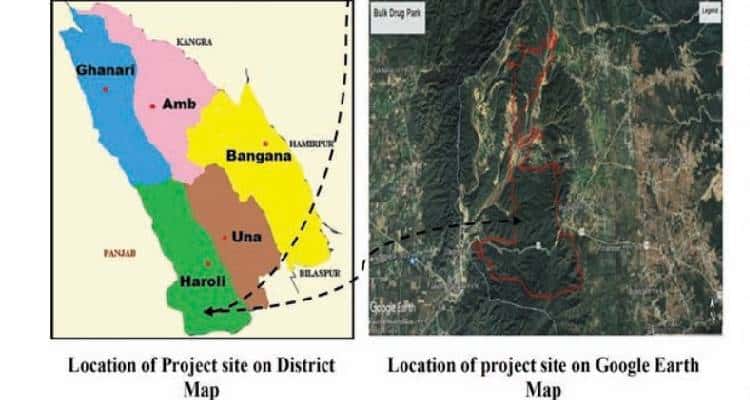
Located in Una district, the project sits within reach of an established pharmaceutical ecosystem, giving it access to industry networks while allowing for planned, large-scale infrastructure development. The intent is not just expansion— but integration of upstream capabilities into the broader pharma value chain.
The project blueprint
At its core, the Haroli Bulk Drug Park is defined by three numbers:1,405.01 acres of land, 1,923 crore total project cost and 1,118.46 crore allocated to common infrastructure (CIF).
These figures, approved under the central scheme, outline a project built on scale and shared efficiency.
The park is being executed by HPBDPIL, the designated state implementing agency, ensuring institutional oversight of infrastructure development and industrial rollout.
Infrastructure as the differentiator
Unlike traditional industrial estates, Haroli is being designed around a common infrastructure backbone.
The model focuses on creating shared facilities such as effluent treatment systems, utilities, and logistics support that individual manufacturers would otherwise have to build independently. By centralising these, the scheme aims to lower entry barriers and improve operational efficiency.
Execution gathers pace
The project has moved beyond approvals into execution. Infrastructure tenders covering roads, drainage, bridges, and water systems have been awarded, and work is in progress. Parallel development of utilities such as zero liquid discharge systems and steam infrastructure is also underway.
Site-level activities, including land preparation and grading, indicate that the project is transitioning from planning to physical development.
A strategic play, not just a park
Haroli is one of three bulk drug parks approved under the national scheme, alongside projects in Gujarat and Andhra Pradesh. Together, they represent a coordinated effort to reduce production costs, strengthen domestic manufacturing, and build resilience into pharmaceutical supply chains.
For Himachal Pradesh, this is also an opportunity to move up the value chain—from formulation manufacturing to integrated pharma production.
What will define success
The success of Haroli will not be measured by land allocation alone. It will depend on whether the shared infrastructure model translates into actual cost advantages and sustained industrial activity. If the park can enable competitive domestic production of APIs that are currently imported, it will validate the broader strategy behind the Bulk Drug Park scheme.
The bottom line
Haroli is not a quick win. It is a long-term industrial bet. With Rs 1,923 crore in project investment, Rs 1,118.46 crore committed to shared infrastructure, and a clearly defined policy objective, the foundations are in place. What follows now is execution. If delivered as intended, Haroli could mark a turning point shifting India from being a formulation powerhouse to a more integrated pharmaceutical manufacturing hub.
Opportunities and challenges
Haroli creates an opportunity for manufacturers to build API capacity within a cost-optimised, infrastructure-ready environment supported by government policy.
Timely infrastructure delivery and the ability to translate cost efficiencies into globally competitive production will determine the park’s long-term impact.
References
[1]https://indiainvestmentgrid.gov.in/opportunities/project/617853
[2]http://himachalpr.gov.in/One News.aspx?Language=1&ID=34 959 [3]http://himachalpr.gov.in/One PressRelease.aspx?Language=1&ID=42371
Kalyani.sharma@expressindia.com
journokalyani@gmail.com
The post Haroli: Himachal’s next pharma play appeared first on Express Pharma.
Apa Reaksi Anda?
 Suka
0
Suka
0
 Kurang Suka
0
Kurang Suka
0
 Setuju
0
Setuju
0
 Tidak Setuju
0
Tidak Setuju
0
 Bagus
0
Bagus
0
 Berguna
0
Berguna
0
 Hebat
0
Hebat
0