










































%20and%20Batch%20Production%20Records%20(BPR).png)












Human Cell Atlas at 10: A Decade of Discovery and the Road to HCA 2.0
The Human Cell Atlas (HCA) was co-founded in 2016 by Aviv Regev, PhD, currently the head, executive vice president of research and early development at Genentech and Sarah Teichmann, FMedSci FRS, professor at the University of Cambridge and vice president translational research at GSK.
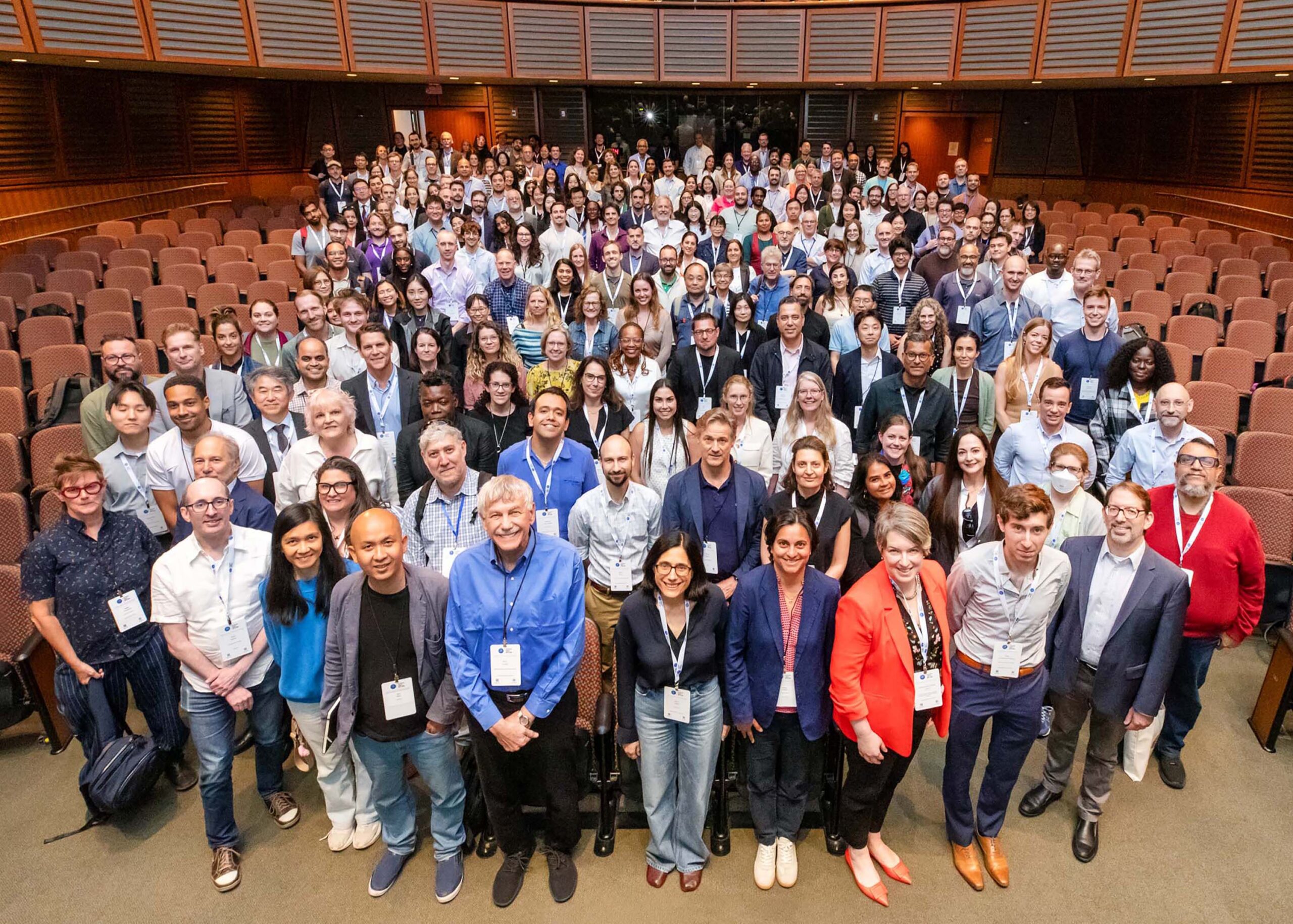
This year, the group celebrated its 10-year anniversary, at the annual meeting in June, held in Boston. The first day was focused on the successes of the past decade. The second day looked ahead to the future, and the impact the HCA will make on research and drug discovery. GEN spoke with Holger Heyn, PhD, ICREA professor at the Centro Nacional de Análisis Genómico (CNAG) and co-founder of Omniscope about the meeting and what the next 10 years may bring. Heyn has been with the HCA since (almost) the beginning and currently serves as the co-chair of the Standards and Technologies working group, co-chair of the Industry Partnership Program, an organizing committee member, and a member of the task force to design HCA 2.0.
LeMieux: Let’s start with the meeting, which covered a lot of ground. Can you share what the main takeaways were?
Heyn: The first day was about the past—the last 10 years. The second day was about the future. And the third day was reserved for working group meetings.

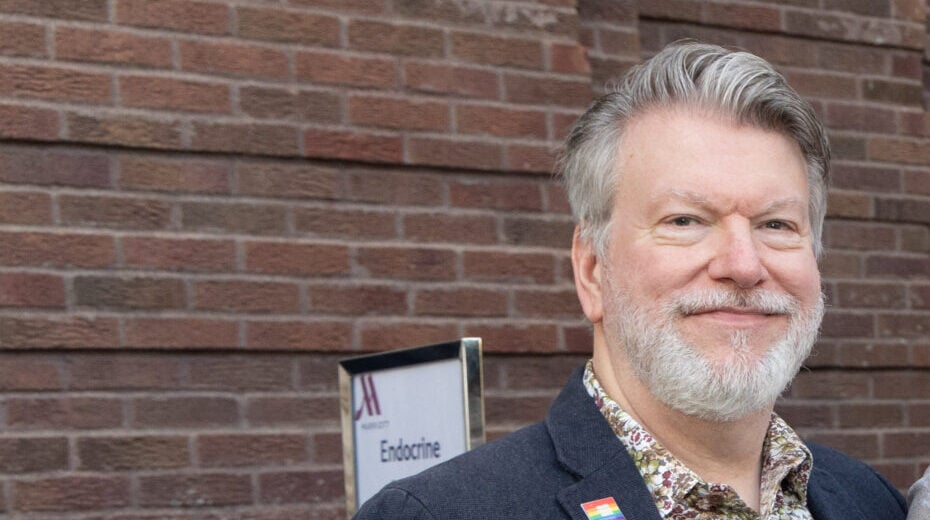
Co-founder, Omniscope
Talking about the past, the first day celebrated the completion of most organ and tissue atlases of the HCA. The HCA activities are broken down into 18 different biological networks (or bionetworks): lung, liver, heart, etc. All of those will have either published or submitted their atlases in 2026.
After 10 years, we have come a long way and we delivered what we set out to do, which was the generation of the HCA, single-cell resolved, for all main tissue and organ systems. That is exactly the mission of the HCA: completely grassroots—to deliver representative atlases of tissues and organs with openly available data. In total, we have already 450 publications, that have been cited 100,000 times, and a global representation with almost 4,000 members from a hundred countries. Recently, the representation from Africa and South America has grown a lot. The HCA is now a really global effort.
LeMieux: On the point of increasing the globalization of the HCA, how is the technology being democratized to reach more areas of the world?
Heyn: This has been approached in two separate ways. One was when my group published a method to cryopreserve cells, about eight years ago. It allowed researchers to put cells in the freezer and then thaw them to run them anywhere. The idea was to centralize data processing, so each hospital or each center does not need to have a single-cell instrument. More recently, we have been able to use formalin fixation, which allows researchers to fix and sequence later. Both technologies offer flexibility in terms of where the data is generated and to disconnect the sampling from the processing time. Being able to collect and store, then process later, makes single-cell analysis much more accessible.
In addition, there has been a drop of cost per cell. Although the assay is still costly, over the years, people get more cells per dollar, allowing the generation of scalable atlases. Now, most of these atlases are represented by millions of cells. Ten years ago, there was no way to afford that.
LeMieux: Now let’s move into the future. The first day of the meeting was called HCA 1.0. But now let’s talk about day two, or HCA 2.0.
Heyn: Day two was all about the future roadmap and where the project is going. Aviv Regev highlighted this in her talk. Even though the HCA is now split into phase one and phase two, the that was published 10 years ago in eLife laid everything out clearly. There are the two pillars, single-cell and spatial, to build atlases. Single-cell technology was available earlier and only now is spatial becoming scalable. The initial plan was always to do a single-cell and the spatial cell atlas—to profile cells in their tissue context. But technology had to catch up.
For HCA 2.0, we now have a five-year time frame where we scale the atlas in multiple different directions. One is the already mentioned spatially resolved atlases: we will use spatial methods, very advanced capture-based sequencing methods, and full transcriptome imaging-based methods. The focus of HCA 2.0 is to move away from cells in dissociation and toward generating spatial data at scale. With this, we can use the single cell references that we have generated in the past and map cells back into their natural context.
The second focus is the global representation. One area where this goal has been very nicely implemented is in Asia. HCA Asia is one of the largest, most active communities. In HCA 2.0, we aim at better diversity, representing not only blood, which is the best represented sample type right now, but also other major tissue types.
The third, and very important one, is opening from a healthy reference atlas to include a disease focus. We had a discussion with the HCA community at the meeting where to focus first. We asked, what are global disease burdens, what are local efforts we want to support, and what samples are available?
Disease also brings us closer to collaborating with pharma partners. We are in discussion with multiple partners to make our atlas generation efforts useful for diagnostics and drug development. For increasing impact, you eventually need commercialization and innovation on top of that. Pharma partners are already developing drugs using our healthy atlases. Now it will be crucial to align with these collaborators for diseased atlas efforts as well.
Fourth, imagine a Venn diagram with the single-cell atlases, spatial, disease, and genetic diversity. And now picture in the middle a small circle as a union: these are the foundation models. The HCA is generating a unique resource to build foundation models. Most foundation models to date are already built on single cells from our atlases. However, many recent initiatives are also building foundation models based on spatial data, in order to have the tissue context represented. To make these foundation models useful, you have to train them on a specific task. And this is where the disease context becomes important. With the healthy atlases, you have the representation of cellular biology of the human system. Fine tuning models can then be based on predictive tasks, such as drug target identification, prediction of therapy outcome, and patient stratification. This brings out the real value of those models, to make them actionable and to use them for predictive tasks.
LeMieux: It seems like every time I turn around there is a new virtual cell project, whether it’s being done by CZI or Tahoe or another group. So how do all of these come together with HCA?
Heyn: We are a virtual cell community. HCA is in active discussion with all of the stakeholders. We all have the same goal to build a virtual cell that is representative of biology and diseases. We all have very different approaches. The approach that the HCA is offering is that we use spatial technology to put cells back in their natural context and then to use such data to train models on the natural perturbation of interacting cells. But everyone has their own niche. There is no right or wrong for now. We are following strategies that will be complementary and synergistic in the future.
LeMieux: Moving toward disease, where do you think that the HCA will start to make inroads?
Heyn: Today it is still hard to say. We did some analysis, asking what our community chooses as diseases of interest? We also talked to the main stakeholders to make those atlases impactful. We are basically in the landscaping phase to see what disease areas are suitable for pilot flagship projects on specific tissues and diseases. But we already want to connect this initial phase to the end goal. Therefore, we need the different stakeholders on board to make informed decisions together with all parties.
There are two main objectives for a pharma company when using the atlases. One is to find new drug targets. The second is to predict toxicity to have on target and not off target effects. To do that, they need both a healthy reference and a disease cohort. Traditionally, you would have done a differential expression analysis to find something in the disease cohort that is missing in the healthy reference. Now you can actually map that out spatially at cellular resolution.
LeMieux: How much of a spatial focus do you think there will be in a decade from now?
Heyn: Over the next five years, there will be a heavy focus on spatial data generation. There will be large-scale, flagship projects using spatial technologies. Single-cell will not go away though. For immune related references, diversity, and certain diseases, you still need single-cell analysis. Spatial will be the driver though toward more clinical applications. Spatial is the way forward to really look at clinical cohorts and diseased tissue at scale and for digital pathology implementations.
The post Human Cell Atlas at 10: A Decade of Discovery and the Road to HCA 2.0 appeared first on GEN - Genetic Engineering and Biotechnology News.
Apa Reaksi Anda?
 Suka
0
Suka
0
 Kurang Suka
0
Kurang Suka
0
 Setuju
0
Setuju
0
 Tidak Setuju
0
Tidak Setuju
0
 Bagus
0
Bagus
0
 Berguna
0
Berguna
0
 Hebat
0
Hebat
0