













































%20and%20Batch%20Production%20Records%20(BPR).png)














Is your dental unit good for your health?
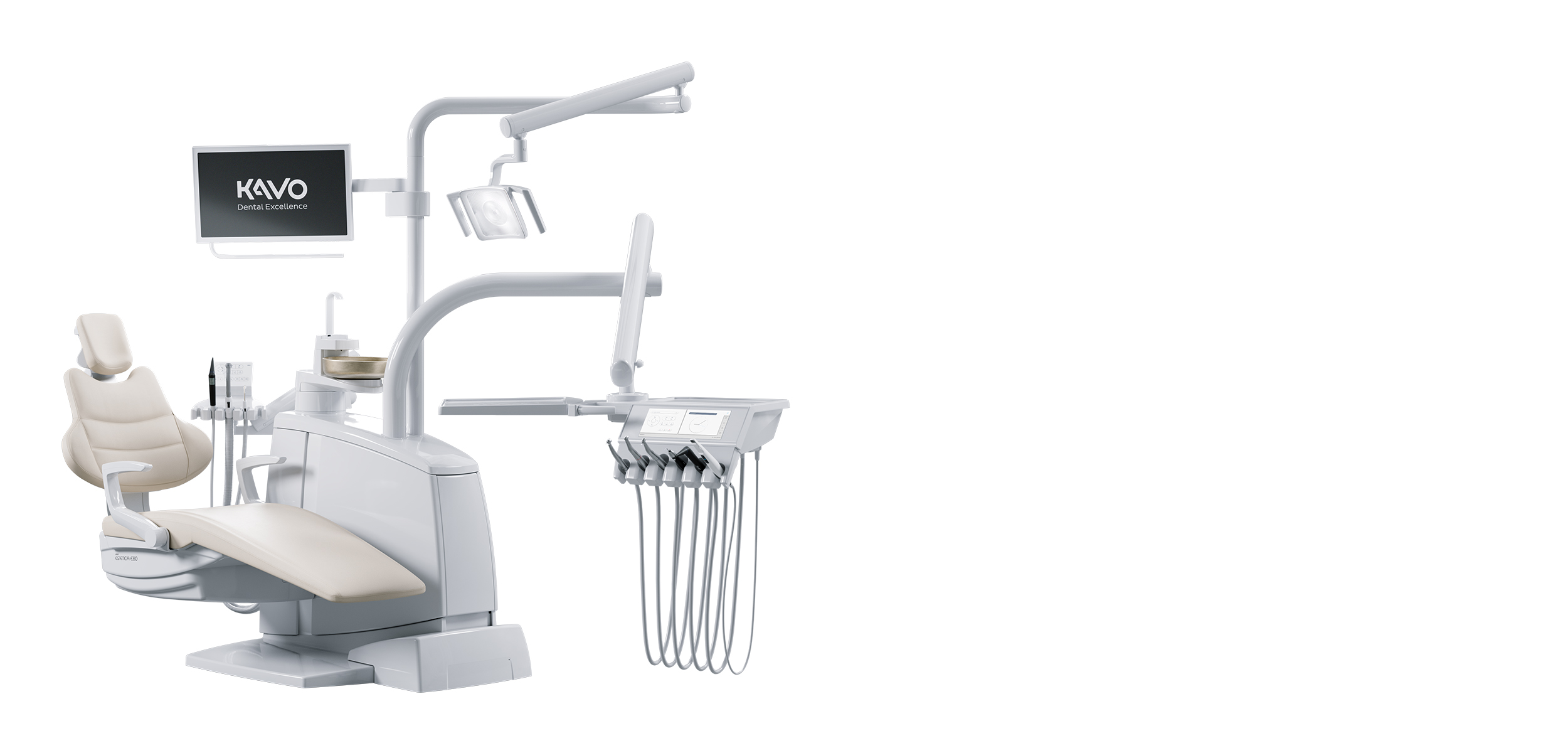
Dental units are one of the most critical investments for practices, directly influencing workflow efficiency, practitioner health and patient experience. Explore how KaVo dental units address three critical considerations – longevity, ergonomics and innovation.
Imagine sitting in your car for eight hours a day – that’s effectively what you’re doing with your dental unit. With increasing demands – from higher patient expectations to evolving digital workflows to clinic design and overall ambience – the choice of treatment centre has become a strategic decision for every dental practice.
Beyond the initial purchase price, factors such as longevity, ergonomics and innovation play a critical role in determining a dental unit’s long-term value. Established manufacturers such as KaVo have helped shape these priorities through decades of development in dental equipment design.
While often associated with the premium end of the market, KaVo units are competitively positioned, with complete, ready-to-use surgery packages available from around £12,500+VAT.
This article explores how these three considerations influence modern practice, and what dental professionals should look for when investing in a new dental unit.
A central investment in modern dentistry
The dental unit is more than just a chair – it is the operational hub of the surgery. Every procedure, from routine examinations to complex restorative work, depends on how effectively the unit supports both clinician and patient.
In today’s climate, dental practices face increasing pressure: tighter margins, higher patient expectations and a growing awareness of clinician wellbeing. Against this backdrop, the choice of dental unit becomes a strategic decision rather than a purely functional one.
Known for German engineering precision and forward-thinking design and with more than a century of innovation in dental technology, KaVo has established itself as a benchmark for quality, ergonomics and reliability in dental units. Its units are built to support long-term performance while enhancing everyday workflows.
KaVo has long positioned itself at the premium end of the market in terms of quality, but is now more competitive on price than ever before, with a focus on engineering quality and clinical usability.
For dental practices considering a new investment, three factors stand out as critical:
- Longevity
- Ergonomics
- Innovation.
- Ambidextrous
- Packages start from £12,500.
- Accessible all-rounder in prize-winning design
- Packages start from £19,395.
- Modern, award-winning chair with multiple configurations
- Packages start from £23,500.
The KaVo masterpiece
- Floating patient chair with horizontal movement and extensive integration options
- Packages start from £28,500.
Longevity: investing beyond the initial purchase
For many practices, the true cost of a dental unit is not measured at the point of purchase, but over its lifetime. Reliability, durability and serviceability all contribute to long-term value.
Dental units are subject to constant daily use, exposure to cleaning agents and repeated mechanical movement. High-quality materials and robust engineering are essential to ensure long-term performance.
Manufacturers with a strong heritage in equipment design, such as KaVo, have traditionally focused on durability as a core principle, recognising the demands placed on units in busy clinical settings. In fact, KaVo dental units are manufactured with more metal parts than many of its competitors.
Unexpected equipment failure can disrupt schedules, impact patient experience and reduce revenue. Dental units with proven capabilities that other dental units do not have, and reliability help mitigate these risks.
Access to service support, spare parts and trained engineers also plays an important role in maintaining performance over time. For practices, this translates into predictable maintenance cycles and reduced operational interruptions.
If your dental unit is connected to a servicing app like the new KaVo CONNECTme, for example, then this mitigates the risk of down time even more.
While premium units often come with a higher initial price point, many dental practices are increasingly evaluating total cost of ownership.
Factors such as longevity, energy efficiency and maintenance requirements can significantly influence long-term financial outcomes. In this context, a well-built unit that performs reliably over many years may offer greater value than lower cost alternatives that require earlier replacement or more frequent servicing.
Durability in a demanding environment
Reliability and reduced disruption
Lifecycle value over upfront cost
Ergonomics: protecting clinicians and enhancing workflow
Musculoskeletal disorders remain one of the most significant occupational risks in dentistry. Prolonged static postures, repetitive movements and awkward positioning all contribute to long-term health issues, making ergonomics a key consideration in equipment selection.
‘Dentistry remains a profession where physical strain is extremely common,’ says cosmetic dentist Devisha Patel. ‘Often, the focus within a practice is understandably centred around efficiency, productivity and patient flow, but ergonomics can sometimes become secondary.
‘Too often, clinicians only begin addressing ergonomics once pain or injury develops, rather than embedding healthy working practices from the outset of their careers.
‘Ultimately, supporting clinician wellbeing should be viewed as an investment, not only in the individual practitioner, but in the quality and sustainability of patient care.’
According to the manufacturer, the KaVo ESTETICA E70/E80 Vision are the only dental units on the market that are accredited to support healthy working postures.
Modern dental units are increasingly designed to support neutral posture and reduce unnecessary movement. Features such as optimised instrument positioning, adjustable delivery systems and flexible chair configurations can help clinicians maintain more comfortable working positions.
With patient access facilitated by a cleverly designed patient back rest for example as well as horizontal movement in some models.
These principles have been central to the design philosophy of leading manufacturers, including KaVo, where ergonomics has long been a focus of product development.
Small ergonomic improvements can have a significant cumulative effect.
Devisha sys: ‘Small compromises in positioning, equipment layout or operator posture repeated consistently throughout the day can have a significant cumulative impact over time.’
Reduced shoulder elevation, better lumbar support and improved access to the oral cavity all contribute to lowering physical strain during long clinical sessions.
For clinicians, this can mean improved comfort, reduced fatigue and potentially longer careers without injury-related limitations.
Ergonomics also extends to the wider dental team. Dental units that support effective four-handed dentistry allow clinicians and assistants to work in harmony, improving efficiency and reducing unnecessary movement.
‘The layout of the surgery, patient positioning and the integration of four-handed dentistry are all essential in supporting healthier working postures,’ says Devisha.
Clear access, intuitive layouts and adaptable configurations all contribute to smoother workflows.
KaVo units are designed to facilitate four-handed dentistry, with layouts that allow assistants to work comfortably without compromising access or visibility.
Ergonomics extends beyond the clinician. Patient comfort and stability are equally important.
Smooth chair movements, supportive upholstery, chair engineering that means the patient’s lower back is supported in all movements and adaptable headrests help position patients optimally while enhancing their sense of comfort and confidence. This can be particularly valuable for anxious patients or longer procedures.
Supporting natural working positions
Reducing physical strain over time
Facilitating efficient teamwork
Patient positioning and experience
Innovation: enabling the modern digital practice
As dentistry continues to evolve, innovation in dental units plays a key role in supporting new technologies, improving workflows and enhancing patient care.
Modern dental practices increasingly rely on digital systems, from imaging to patient communication tools. Dental units that integrate seamlessly with these technologies can streamline clinical processes.
KaVo has focused on creating integrated solutions that allow clinicians to access key functions and data directly from the treatment centre – for example, integrated surgical motor set ups, endo, prophylaxis and scaling, reducing the need for multiple standalone systems.
Ease of use is a defining feature of contemporary equipment. Touchscreen interfaces, programmable settings and multifunctional foot controls enable clinicians to operate the unit efficiently with minimal disruption to procedures.
These features not only save time but also contribute to a smoother, more focused clinical workflow, and set a tone of sophisticated dentistry for your patient.
Infection prevention remains a top priority in dental practice. Innovations in this area include automated hygiene systems, easy-to-clean surfaces and integrated flushing programmes.
Such features help practices maintain compliance with regulations while reducing the manual workload associated with cleaning and disinfection protocols.
Furthermore, KaVo’s dental units with a DVGW water block can save your practice up to an hour every day by avoiding water bottle refills.
Technology in dentistry is advancing rapidly. Practices must consider not only current needs but also future requirements. Dental units that offer upgrade pathways or modular configurations allow practices to adapt over time, protecting their investment as clinical needs evolve.
KaVo’s approach to innovation includes modularity and upgrade potential, allowing practices to adapt their equipment as new technologies emerge.
Integration with digital workflows
Smarter, more intuitive controls
Advancing infection control
Future-proofing the investment
Dartmoor Dental’s units
‘In the modern dental landscape, the dental unit is the undisputed heart of the surgery,’ says Michael Hesketh, dentist and owner of Dartmoor Dental. ‘When we looked to upgrade our facilities four years ago, we weren’t just looking for chairs; we were looking for a long-term investment in our clinical workflow and our practice’s brand identity.
‘Today, our practice operates a suite of nine KaVo units, and the impact on our efficiency and patient satisfaction has been profound.’
For Michael, the decision to partner with KaVo was driven by peer recommendations. He says: ‘In the UK, KaVo has earned a reputation for “made in Germany” engineering that translates to minimal downtime. After four years of heavy clinical use, we can attest that the build quality is second to none. The units remain as reliable as the day they were installed.’
Dartmoor Dental currently utilises three distinct models from the KaVo range, each selected for a specific strategic purpose:
- KaVo ESTETICA E50 Life: ‘These are our standard units across five surgeries, says Michael. ‘Known for its reliability, we chose E50 because they offer a perfect balance of sophisticated technology and intuitive operation. They look exceptional and, crucially, they are built to last – a sentiment echoed by many colleagues who recommended them for their high ‘value for money’ over a long lifecycle’
- KaVo ESTETICA E30 Life: ‘We have two of these, specifically chosen for our training surgeries used by our foundation dentists. The standout feature here is the E30’s ability to switch from right-handed to left-handed operation in under two minutes. This flexibility is vital for a teaching environment, ensuring we can accommodate any trainee without compromising on ergonomics’
- KaVo uniQa: ‘For our latest two surgeries, we moved up to the KaVo uniQa. This unit represents the next evolution in dental excellence, offering enhanced facilities and a sleek, sporty design that immediately signals a high-end clinical environment to the patient.’
Balancing priorities in practice
While longevity, ergonomics and innovation are all important, the challenge for many practices lies in balancing these factors within budget and operational constraints.
Different settings may prioritise these elements differently:
- High-volume environments may emphasise durability and efficiency
- Patient-focused practices may prioritise comfort and experience
- Specialist clinics may require advanced integration and flexibility.
Manufacturers with broad product ranges, including KaVo, often offer configurable options that allow practices to tailor units to their specific needs.
Making the right investment decision
When evaluating a dental unit, practical considerations remain essential:
- Surgery layout and space planning
- Installation requirements and infrastructure
- Training and onboarding for the dental team
- Ongoing service and support availability.
Hands-on demonstrations can be particularly valuable, allowing clinicians to assess ergonomics and usability in real-world scenarios.
Ultimately, the decision should align with both clinical priorities and long-term business goals.
Summary
Selecting a dental unit is a long-term investment that influences clinical performance, practitioner wellbeing and patient experience.
Longevity ensures reliable operation and reduces lifetime costs, ergonomics supports healthier working practices and improved efficiency, and innovation enables integration with modern technologies and evolving standards.
Manufacturers such as KaVo have contributed significantly to advancing these areas, helping to shape expectations across the profession.
By carefully considering these factors, dental professionals can make informed decisions that support both immediate clinical needs and future growth, ultimately enhancing the sustainability and success of their practice.
Choose your next dental unit like you choose your car. The KaVo configurator will show you what’s available and how it looks!
Apa Reaksi Anda?
 Suka
0
Suka
0
 Kurang Suka
0
Kurang Suka
0
 Setuju
0
Setuju
0
 Tidak Setuju
0
Tidak Setuju
0
 Bagus
0
Bagus
0
 Berguna
0
Berguna
0
 Hebat
0
Hebat
0