



























%20and%20Batch%20Production%20Records%20(BPR).png)










No health without oral health, the message from Bupa’s Dental Health is Live
What if a dental appointment could tell patients more about their heart, their genes and their future health than their last GP visit?
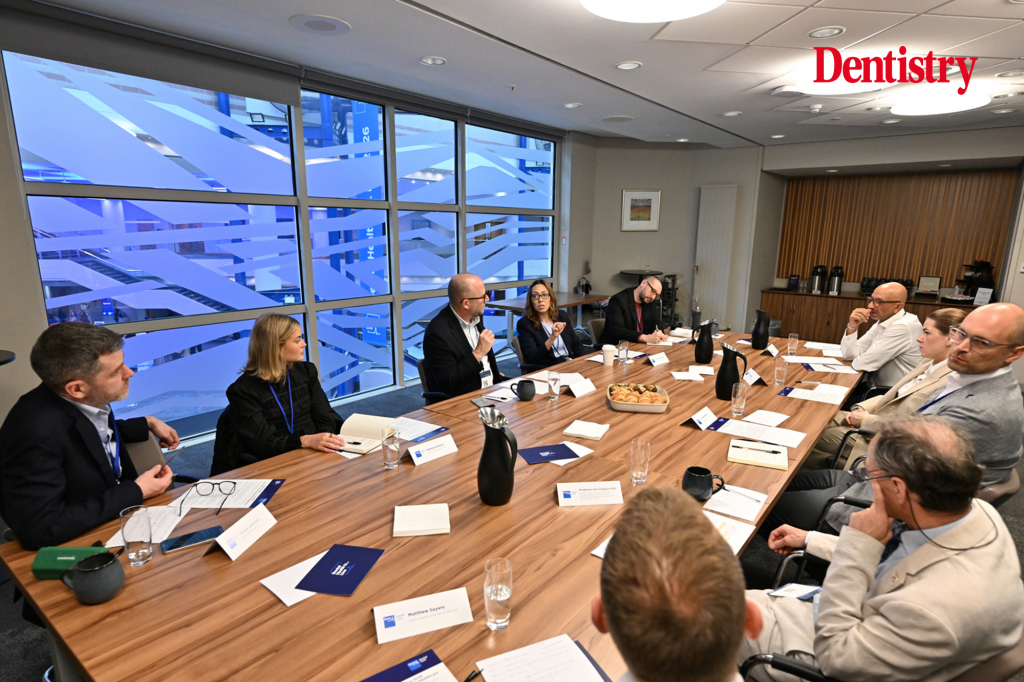
That prospect was discussed at Bupa’s Dental Health is… Live roundtable, a curated conversation on how dentistry is changing and what that could mean for the wider healthcare system.
Chaired by Mark Allan, general manager for Bupa Dental Care, the discussion ranged across genomics, saliva diagnostics, artificial intelligence (AI), personalised prevention and the growing role employers could play in oral health.
The roundtable made a compelling case for dentistry to move beyond a reactive repair service towards a frontline setting for prevention that connects oral health with wider health and long-term risk.
Beyond the dental check-up
Professor Iain Chapple MBE, professor of periodontology and consultant in restorative dentistry at the University of Birmingham and Birmingham Community Health NHS Foundation Trust, opened by drawing a distinction between personalised care and personalised medicine.
Personalised care, he explained, starts with the individual’s biology, behaviour and circumstances. Personalised medicine goes further, using genetics, lifestyle data and behavioural insight to identify targeted treatment before disease develops.
Dentistry, he argued, is better positioned to deliver this than most of medicine realises.
‘I used to hate the term checkup, because for me it trivialises it,’ Professor Chapple said. ‘But it’s proactive monitoring, isn’t it? You need to see people when they’re well, do the risk assessments, work out what might develop, and then put the prevention programmes in place.’
That reframe matters. Dental teams already see patients when they are well. They have regular, repeated contact. They have the opportunity to identify risk, support behaviour change and catch early signals, as long as the tools and frameworks exist to act on them.
Starting with the patient
Ela Sarwar, a dental hygienist currently studying towards a master’s in neuropsychology to deepen her understanding of human behaviour, argued that personalisation begins before the clinical examination even starts.
‘Before they open their mouth, I like to discover who they are,’ she said. ‘Personalisation starts right at the beginning, with great communication, with building trust, with building understanding.’
Behaviour change, she added, happens when advice connects with something that genuinely resonates with the patient.
That principle is particularly key as dentistry becomes more data-led. Genomics, biomarkers and AI can make risk more visible, but the value of those tools depends on whether patients understand what the information means and feel able to act on it.
Genomics in the waiting room
But fear not, the tools to help are closer than many practitioners may realise. Dr Rebecca Rohrer, clinical innovation and genomics director for Bupa Global, India and UK, described how genomic insight is already beginning to shape preventive care at scale.
Bupa has carried out whole genome sequencing on 16,000 individuals across Spain, Polandand the UK. The findings were striking: 99% of participants were identified as having variants associated with altered medication effectiveness or increased risk of side effects, while 77% had elevated polygenic risk, an estimate of an individual’s likelihood of developing common conditions such as cancer, diabetes and cardiovascular based on multiple genetic factors.
The practical application has already launched. Bupa’s medication check, currently using a saliva sample and moving to a cheek swab, shows how individuals are likely to respond to commonly prescribed and over-the-counter medications. It also supports preventive pathways for conditions including breast cancer, diabetes and cardiovascular disease.
‘You are now going to have a cohort of customers who are going to understand how they are likely to respond to medicine that they are on now or will be on in the future, presenting to dental practices,’ Rebecca said.
For dental teams, this has immediate implications around analgesia, antibiotics and risk management as more patients arrive informed about their own genomic profile. The crossover with diabetes and cardiovascular disease, conditions already linked to periodontal health, makes that overlap especially significant.
The mouth as diagnostic environment
The potential of saliva as a diagnostic medium threaded through much of the discussion. Professor Chapple described the mouth as a rich source of immune markers and local inflammatory signals, measurable through crevicular fluid and saliva. Panels of biomarkers have already been identified that could help distinguish health from gingivitis, periodontitis and treatment response.
The challenge is translating that complexity into usable clinical insight. Step forward AI.
Professor Chapple said: ‘It’s going to help us remove the background noise and say, well, actually, this is a signature in saliva for somebody that’s got severe gum disease or is going to develop it.’
When risk becomes visible and measurable, prevention becomes easier to explain, monitor and engage with. Dental care starts to become part of a continuous health picture.
Prevention beyond the practice
That communication challenge also extends into the workplace. Mark Allan noted that a high proportion of Bupa’s private medical insurance (around 85%) and dental cover (98%) is supported through the workplace. Dental benefits, he suggested, are well placed to support conversations about prevention that employees might not otherwise have.
Matt Sayers, benefits director at CME Group, was quick to add: ‘Employees love benefits they can use.’
Realism alongside ambition
But while optimism and opportunity were at the forefront, perspective and realism were never far away. Andrew Bower, head of the dental professional business at Philips, offered the sharpest reality check of the afternoon.
‘This is the cutting edge,’ he said, ‘but the reality is 70% of people today around the globe are still using a manual toothbrush. We’re a long way from biosensing and linking systemic health.’
The point was grounding rather than defeatist. The future of dentistry may involve genomic risk profiles, saliva biomarkers and AI-assisted diagnostics. Its success will also depend on health literacy, access and the daily habits that most patients still need support with.
The panel also recognised the risk that innovation could widen inequalities if access does not keep pace, with David Westgarth, associate editor of the BDJ Portfolio, warning that dentistry needed a ‘level playing field’.
The roundtable suggested dentistry already has a larger healthcare role than many patients, employers or policymakers recognise. The opportunity, and the challenge, is to make that role visible, practical and valuable.
Professor Chapple, reusing a slogan from the World Health Organization’s Bangkok Convention, offered the neatest summary: ‘No health without oral health. Simple and brilliant in its simplicity.’
Follow Dentistry on Instagram to keep up with all the latest dental news and trends.
Apa Reaksi Anda?
 Suka
0
Suka
0
 Kurang Suka
0
Kurang Suka
0
 Setuju
0
Setuju
0
 Tidak Setuju
0
Tidak Setuju
0
 Bagus
0
Bagus
0
 Berguna
0
Berguna
0
 Hebat
0
Hebat
0