















































%20and%20Batch%20Production%20Records%20(BPR).png)
















Lawmakers warn against weakening IP for medicines in House hearing
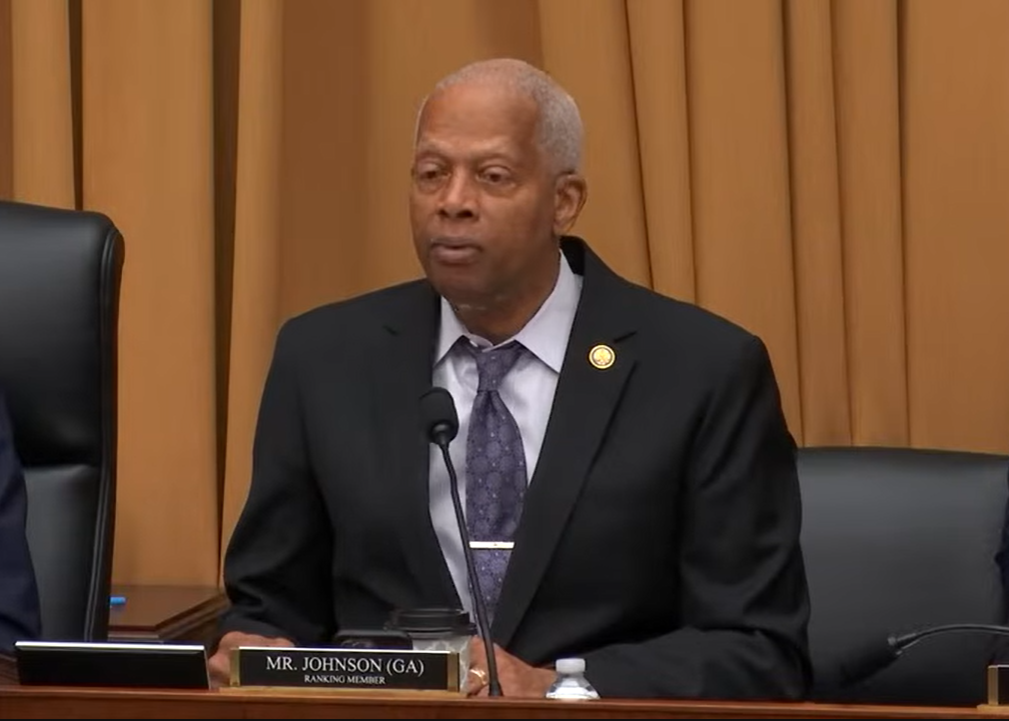
Lawmakers defended strong IP protections as essential to biotech innovation that saves lives in a June 4 Congressional hearing that also considered the role of generics and biosimilars.
The same day that the Supreme Court ruled that a generic drug maker was not infringing patent rights in the Hikma case, witnesses and lawmakers argued that weakening patents only harms innovation without impacting the cost of prescription drugs in a hearing before the House Judiciary Subcommittee on Courts, Intellectual Property, Artificial Intelligence, and the Internet.
“Strong patent protections are why the United States has been a global leader in the discovery and development of lifesaving medications, with more than one-half of all new drugs invented in the United States,” said Subcommittee Ranking Member Hank Johnson (D-GA) in his prepared opening statement.
Other lawmakers in the hearing spoke of the importance of the innovation that is enabled by IP.
“We’re actually living at a time that’s incredibly exciting for drug discovery with timelines for discovery and testing rapidly accelerating,” said Rep. Kevin Kevin Kiley (R-CA) “I think there’s a lot to be optimistic about.”
Rep. Deborah Ross (D-NC) reminded the hearing that she represents North Carolina’s Research Triangle, a hub for biomedical innovation.
“We have small scrappy startups putting it all on the line for the potential to find transformative cures, as well as large companies that leverage their resources to invest in the next blockbuster medicine,” Ross said. “Underlying all of this innovation and the hundreds of billions of dollars in economic activity it generates is our nation’s robust patent system. Strong intellectual property protections are the foundation that that success is built on.”
Regulation of generics and IP
The hearing included discussion of generic drugs and proposed changes to IP legislation that would weaken patent protections to favor generic drugs. Rep. Ross said the current system of laws regulating IP on prescription drugs is a thoughtful, bipartisan creation that encourages innovation while enabling generic drugs and does not need to be changed.
Witness Jamie Simpson, Chief Policy Officer and Counsel of the Council for Innovation Promotion, agreed that the system does much to enable generics.
“The Hatch-Waxman Act, for example, took generics from roughly 13% of the market in 1983 to 90% today—it has been remarkably successful in bringing lower-cost alternatives to patients, but it strikes a thoughtful balance in doing so, and Congress should be careful not to upset that balance,” according to Simpson’s written testimony.
As witness Krita Carver noted, the 90% market share for generics makes the U.S. an outlier, with the average generic market share in Organization for Economic Co-operation and Development (OECD) countries being 41%.
Rep. Kiley argued that innovation precedes imitation. “If there was no new innovator who created the underlying drug, what would be the opportunity for a generic to come along?” he asked.
Threats to IP protections
The hearing addressed the idea of multiple patents on drugs. Critics have called multiple patents “patent thickets,” arguing that they are used to prevent generic competition. A proposal mentioned during the hearing, the ETHIC Act, would single out legally valid drug patents and render them unenforceable, while allowing similar patents on other technologies to remain enforecable. It would make it harder for innovators to protect their IP in court.
Subcommittee Chair Darrell Issa (R-CA) and Justice Committee Ranking Member Jamie Raskin (D-MD) expressed concerns about “patent thickets.” Witnesses Michael Carrier of Rutgers Law School and Rachel Goode of Fresenius Kabi promoted the ETHIC Act as a solution, but other lawmakers and witnesses explained the legitimate need for multiple patents.
Ranking Member Johnson said multiple patents are used when researchers develop improvements to drugs after those drugs receive Food and Drug Administration (FDA) approval.
“Reliable protections also encourage companies to continue to invest in improving existing treatments, because medical invention should not end when a drug reaches the market,” he said.
Another proposal, The Skinny Labels, Big Savings Act, which would weaken existing legal protections against induced infringement, was promoted by its sponsors, Rep. Ben Cline (R-VA) and Rep. Zoe Lofgren (D-CA). Simpson explained how the proposed changes would undermine legitimate legal protections for innovators.
Simpson noted that the Congressional Budget Office (CBO) released a 2024 study into several proposals to accelerate generic and biosimilar market entry. “It concluded that each would reduce average drug prices only marginally—between 0.1% and 1.0%, or in some cases less than 0.1%, in 2031,” said her written statement.
Simpson warned about the impact of weaker IP protections. She said measures reducing IP protections create opportunities for other countries, notably China, to take away U.S. biotech leadership.
A written statement submitted for the hearing by the Biotechnology Innovation Organization (BIO) offered a similar point of view.
“Our patent system serves the important function of fostering innovation and U.S. global leadership in the life sciences. This continued leadership is being challenged by our foreign competitors, especially the People’s Republic of China. Further weakening patent protections would aid our foreign competitors at the expense of this strategically important sector,” said BIO’s statement.
The post Lawmakers warn against weakening IP for medicines in House hearing appeared first on Bio.News.
Apa Reaksi Anda?
 Suka
0
Suka
0
 Kurang Suka
0
Kurang Suka
0
 Setuju
0
Setuju
0
 Tidak Setuju
0
Tidak Setuju
0
 Bagus
0
Bagus
0
 Berguna
0
Berguna
0
 Hebat
0
Hebat
0