















































%20and%20Batch%20Production%20Records%20(BPR).png)












Scaling Cell and Gene Therapy Manufacturing
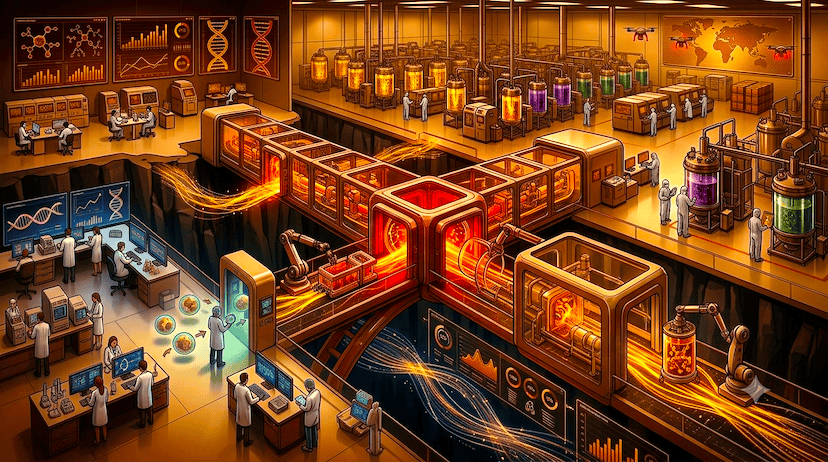
As cell and gene therapies (CGTs) move closer to mainstream clinical use, manufacturers are under growing pressure to bridge the gap between scientific breakthroughs and commercial reality. To explore this transition, GEN talked with three industry leaders, and here’s what we learned.
GEN: In today’s bioprocessing for cell and gene therapies, what is the most crucial business challenge and why?
Jonathan Wofford, COO, Title21 Health Solutions: Currently, the most crucial business challenge to solve in cell and gene therapy bioprocessing is scalable, cost-effective manufacturing. While scientific advances and clinical outcomes have accelerated the demand for therapy development, producing consistent, high-quality products at commercial scale remains difficult due to the increasing complexity of processes, limited automation, underdeveloped data-management infrastructures, supply-chain constraints, and patient-specific workflows for autologous therapies.
Justin Irizarry, CEO, OrganaBio: The disconnect between starting material and everything downstream. Despite heavy investment in manufacturing and analytics, the quality and consistency of raw biological material still determines whether a process succeeds. Variable, fragmented sourcing becomes failed runs, slipped milestones, and regulatory risk, and you can’t engineer that variability back out of a living product.
Carol Houts, CEO, Germfree: The most pressing challenge in CGT bioprocessing today is the gap between clinical promise and manufacturing readiness. Developers are advancing therapies faster than the infrastructure, workforce, and supply chain can scale to support them, and that mismatch is costing time and patients.
GEN: What is the most effective way to address these challenges?
Wofford: In theory, the approach should focus on end-to-end process standardization and automation, supported by closed-system manufacturing, digital process infrastructure, and scalable platform technologies. This reduces variability, decreases labor costs, improves regulatory compliance, increases throughput, and enables consistent product quality from clinical development through commercial production. I say in theory because adoption may be limited by the significant upfront investment needed to implement advanced manufacturing technologies.
Irizarry: Vertical integration and co-location: control the chain from donor through processing and testing under one quality system, with a recallable donor pool, identical SOPs across RUO and GMP, and processing near collection sites.
Houts: The most effective response is committing to manufacturing strategy early, not as an afterthought to clinical development. That means purpose-built environments, modular infrastructure that can grow with the program, and partners who understand GMP from day one. The groundwork determines whether a therapy ever reaches the people who need it.
The post Scaling Cell and Gene Therapy Manufacturing appeared first on GEN - Genetic Engineering and Biotechnology News.
Apa Reaksi Anda?
 Suka
0
Suka
0
 Kurang Suka
0
Kurang Suka
0
 Setuju
0
Setuju
0
 Tidak Setuju
0
Tidak Setuju
0
 Bagus
0
Bagus
0
 Berguna
0
Berguna
0
 Hebat
0
Hebat
0