








































%20and%20Batch%20Production%20Records%20(BPR).png)











NIIMBL to Support Vector Production and AI-Ready Training Projects
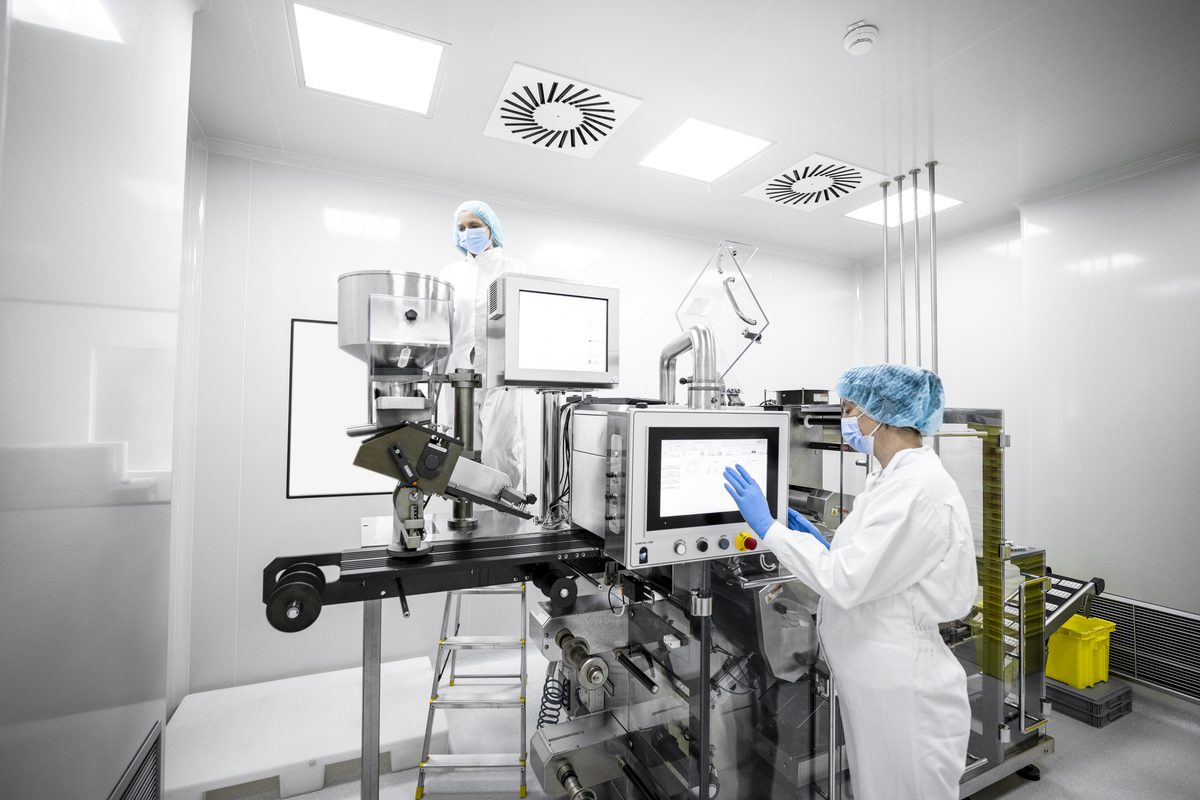
Viral vector production and training schemes designed to foster development of an AI-ready workforce dominate the list of projects selected for support by the U.S. National Institute for Innovation in Manufacturing Biopharmaceuticals (NIIMBL).
The institute, a public-private partnership focused on advancing manufacturing and solving industry challenges, announced its latest funding awards, explaining that the 39 recipients would support U.S. production and talent development.
Sandeep Kedia, NIIMBL senior technology fellow and project call program lead, says the projects “represent the kind of innovation needed to strengthen the nation’s biopharmaceutical manufacturing capabilities.
“By bringing together advanced process analytical technologies, AI-driven optimization, and next-generation production platforms, our members are helping accelerate the adoption of transformative technologies across the industry,” he adds.
Several of the selected projects focus on the production of adeno-associated viral (AAV) vectors—hollow viruses used to deliver genetic information—which play a crucial role in cell and gene therapy manufacturing.
For example, researchers at Michigan Technological University will work with industry partners on an aqueous two-phase continuous vector purification system. The aim is to boost yield while reducing cost, labor, and analytical complexity.
Similarly, a team at North Carolina State aims to develop “improved purification materials that can better capture full AAVs, along with machine-learning software that identifies optimal process conditions.”
The third vector-focused project will see an MIT group work with EMD Millipore, Landmark Bio, and Virica Biotech to try to reduce the number of empty viral capsids inadvertently made during vector production.
The researchers will combine an approach called decoupled replication-initiated vector encapsulation, or DRIVE, with various process control strategies to create a platform that makes high-titer, high-quality rAAVs.
According to the MIT team, “By reducing [the proportion of] empty capsids, the approach can streamline downstream purification, reduce time and cost, and improve the overall quality of gene therapy products.”
AI-ready workforce
In addition to the technology projects, NIIMBL will support several training programs with an emphasis on ensuring the next generation of biopharmaceutical engineers are AI-ready, according to workforce director John Balchunas.
“Our workforce initiatives are designed to meet talent needs head‑on by creating more innovative pathways into biomanufacturing careers,” he says, adding, “These new projects will strengthen partnerships and ensure that learners can gain the skills needed to thrive in a rapidly evolving biopharma industry.”
One such project will see a team at Texas A&M University’s National Center for Therapeutics Manufacturing expand an existing effort called NeuroPipes, which seeks to interest neurodiverse people in careers in biopharma. The aim is to provide technical skills training that prepares neurodivergent adults for careers in drug manufacturing.
Another project will see Wistar Institute researchers set up BioPATH, a national consortium focused on advancing workforce training in biomanufacturing, AI, and automation.
The idea, according to the Wistar team and collaborators at the International Academy of Automation Engineering, is to “bridge the gap between foundational bioprocess and GMP knowledge and the emerging needs of automation, data-driven manufacturing, and digitally enabled quality systems.”
The post NIIMBL to Support Vector Production and AI-Ready Training Projects appeared first on GEN - Genetic Engineering and Biotechnology News.
Apa Reaksi Anda?
 Suka
0
Suka
0
 Kurang Suka
0
Kurang Suka
0
 Setuju
0
Setuju
0
 Tidak Setuju
0
Tidak Setuju
0
 Bagus
0
Bagus
0
 Berguna
0
Berguna
0
 Hebat
0
Hebat
0