















































%20and%20Batch%20Production%20Records%20(BPR).png)














StockWatch: New UC Data Sparks Smoother Sailing for Abivax
Less than a month after its stock roller-coastered on safety signals associated with its late-stage ulcerative colitis (UC) drug candidate obefazimod, shares of Abivax (Euronext Paris and Nasdaq: ABVX) enjoyed smoother sailing this past week—namely a 63% surge in Europe and a 50% leap in the United States over four trading days, following more positive data that appeared to reassure investors.
Abivax declared that obefazimod “delivered meaningful clinical benefit” to adults with moderately to severely active UC in the ABTECT Maintenance Part 2 supplemental portion of its Phase III UC maintenance program, with 37.2% of induction nonresponders achieving clinical remission and 34.5% achieving endoscopic remission at Week 44 following continued 50 mg treatment. Of those patients, 61.5% also showed clinical response, 48.0% endoscopic improvement, and 44.6% Histologic-Endoscopic Mucosal Improvement (HEMI).
In patients whose doses were escalated to 50 mg, clinical remission was recaptured in 45.5% of patients who relapsed during ABTECT Maintenance Part 1—a result Abivax said supported a practical dose-escalation strategy for regaining and sustaining disease control over time.
Of special interest to investors, no new safety signals were seen since earlier this month, when Abivax disclosed various malignancies in nine patients among the 580 enrolled in the study. The earlier disclosure triggered price plunges of 44% for both Abivax’s ordinary shares traded on Euronext Paris and the company’s American depositary shares (ADSs) traded on the Nasdaq Global Market.
Established risk factors
The latest data from ABTECT Maintenance Part 2 showed four total cases of non-melanoma skin cancer (NMSC)—two in the study’s 25 mg arm, two in the 50 mg arm: “All occurred in patients with established NMSC risk factors including advanced age, thiopurine use, prior skin cancer history, and failure of multiple prior advanced therapies,” Abivax stated.
Significantly, incidence rates of malignancies (including NMSCs) when adjusted for patient-year exposure were well within the pre-defined background reference ranges based on previous UC studies.
Exposure-adjusted incidence rates (EAIRs) for malignancies excluding NMSC were 0.48 and 0.69 events per 100 person-years (PYs) in the all-active combined (50 mg + 25 mg) and 50 mg cohorts, respectively, and for NMSC were 0.95 and 0.69 events per 100 PYs, in the all-active combined (50 mg + 25 mg) and 50 mg cohorts respectively, all consistent with expected UC background rates
EAIRs for malignancies excluding non-melanoma skin cancer (NMSC) were 0.48 per 100 PYs in the all-active combined (50 mg + 25 mg) cohort, and 0.69 events per 100 PYs in the 50 mg cohort. For NMSC, EAIRs were 0.95 in the all-active combined cohort and 0.69 in the 50 mg cohort. All those results were consistent, Abivax said, with expected UC background rates ranging from 0.30–0.70 for malignancies excluding NMSC, and 0.70–1.40 for NMSC.
“Paradigm-defining treatment”
“The expanded cumulative safety data further strengthens our confidence in the long-term safety profile of obefazimod and reinforces the favorable benefit-risk profile for our program as we prepare for our planned NDA [New Drug Application] submission later this year,” Abivax CEO Marc de Garidel stated. “We believe this growing body of evidence positions obefazimod, if approved, to become a paradigm-defining treatment option for patients living with ulcerative colitis.”
Investors appeared to share de Garidel’s optimism. The data sparked a buying surge among investors, who sent Abivax shares traded on Euronext Paris soaring 39% the day after the announcement, from €83.30 ($94.71) to €115.50 ($131.31) on Tuesday. The shares rose another 1.7% Wednesday, closing at €117.50 ($133.59), then climbed another 9% Thursday to €127.80 ($145.28) before finishing the week with a 6% increase, to €135.80 ($154.38) and a 63% one-week gain.
On Nasdaq, Abivax ADSs surged 50% for the week, consisting of a roughly 39% leap Tuesday from $96.15 to $133.26. From there, shares dipped 0.5% the following day to $132.56, before rebounding 9% Thursday, finishing the Independence Day holiday-shortened week at $144.65.
Wednesday was a shorter trading day than usual since the company requested a temporary, single-day halt. Abivax requested the halt to price an upsized offering of its U.S. American depositary shares (ADSs), which increased from the originally announced $600 million to $800 million—6.4 million ADSs at $125 per ADS, which the company expected would extend its cash runway into the second quarter of 2029.
The offering closed Thursday at $920 million, of which approximately $874.1 million consisted of net proceeds, after underwriters exercised in full their option to purchase 960,000 additional ADSs representing 15% of the total number initially sold in the offering.
The size of the offering appeared, based on investor chatter cited by Stocktwits, an effort to dampen speculation about Abivax being a prime candidate for a buyout; the company appears in GEN’s most recent A-List of Top 10 Takeover Targets of 2026. But the upsizing of the offering rekindled buyout speculation by individual or “retail” investors, the same outlet reported Thursday.
Abivax said it intends to use the net proceeds toward expenses relating to potential commercialization of obefazimod in the United States; clinical R&D expenses, primarily related to UC and Crohn’s disease; and the remainder, if any, for general corporate purposes.
Leerink Partners, Morgan Stanley, Piper Sandler, and Guggenheim Securities were joint bookrunning managers for the offering, while LifeSci Capital acted as a passive bookrunning manager and Van Lanschot Kempen as the lead manager.
“Response rates (clinical & endoscopic remission) in this portion also appear compelling, especially given the refractory nature of patients in this subset, reaffirming obe’s best-in-disease efficacy,” Thomas J. Smith, senior managing director, immunology and metabolism, and a senior research analyst with Leerink Partners, commented in a research note.
“Should allay investor concerns”
“We believe this update further de-risks obe’s profile in UC and Crohn’s and should allay investor concerns following Part 1 maintenance data released earlier this month,” Smith added.
Smith raised his firm’s 12-month price target on Abivax shares 6%, from $140 to $148.
Two other firms also raised their price targets on Abivax stock:
- BTIG (Julian Harrison)—Up 17%, from $150 to $175, maintaining “Buy” rating.
- Wedbush Securities (David Nierengarten)—Up 22% from $90 to $110, maintaining “Neutral” rating.
Even more positive feedback on the latest data came from Faisal Khurshid, a managing director and equity research analyst with Jefferies. Khurshid upgraded his firm’s rating on Abivax’s stock from “Hold” to “Buy,” and boosted Jefferies’ price target 46%, from $108 to $158.
On June 1, Khurshid downgraded Jefferies’ rating on Abivax from “Buy” to “Hold,” citing the safety concerns he said have since been addressed.
“Mgmt. did a nice job addressing investor concerns w/ how they presented the safety data [June 29] vs. the Part 1 update. On top of that, the efficacy profile strengthens w/ each add’l piece of data,” Khurshid observed.
He also cautioned: “There is still risk on cash runway, catalyst path, and commercial needs for a pot’l standalone launch. But ultimately, good data should generate value.”
The biggest outstanding risk for Abivax, Khurshid wrote, is the need for significant resources associated with a commercial launch for an indication in inflammatory bowel disease (IBD): “We still think pot’l of asset better realized w/ a strategic partner.”
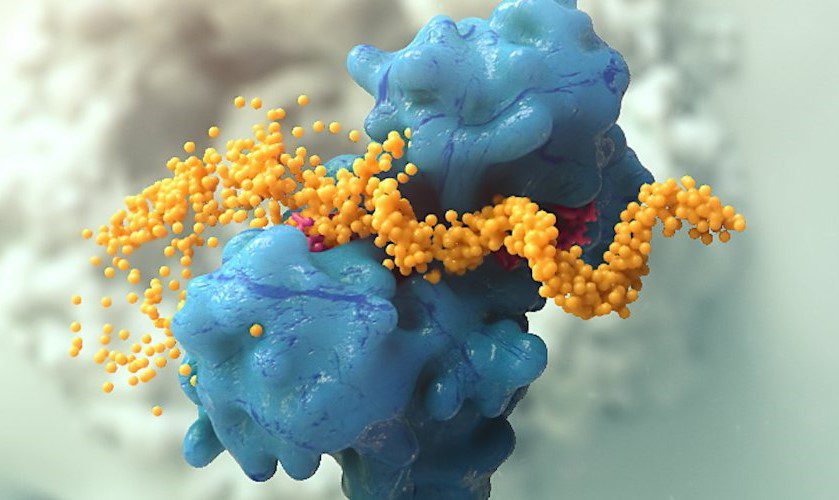
Obefazimod is a small molecule upregulator of miR-124, an anti-inflammatory microRNA. It enhances the selective splicing of a single long noncoding RNA to generate miR-124, which downregulates cytokines and chemokines shown to promote inflammation, including tumor necrosis factor (TNF) alpha, IL-6, monocyte chemoattractant protein-1 (MCP-1), and IL-17, as well as Th17+ cells.
Under its former name ABX464, obefazimod was initially developed against HIV but was repurposed to fight inflammatory conditions based on its anti-inflammatory effect.
Leaders and laggards
- Elicio Therapeutics (Nasdaq: ELTX) shares tumbled 37% from $5.14 to $3.22 Thursday after the developer of immunotherapies for high-prevalence cancers said it entered into a definitive securities purchase agreement led by two new “fundamental institutional investors” with participation from a large existing shareholder—all undisclosed—to purchase 4,380,313 shares of Elicio common stock through a registered direct offering. The offering is expected to result in gross proceeds of approximately $15 million before deducting placement agents’ fees and other expenses, Elicio said. Titan Partners, a division of American Capital Partners, is acting as lead placement agent while B. Riley Securities is acting as co-placement agent.
- Takeda Pharmaceutical (Tokyo Stock Exchange: 4502) shares increased 2.4% from ¥5,150 ($31.91) to ¥5,274 ($32.68) Thursday and rose another 1.6% to ¥5,359 ($33.20) after the pharma announced an up to $600 million artificial intelligence (AI)-based drug discovery collaboration with Insilico Medicine (Hong Kong Exchange: 3696.HK). Insilico agreed to use its end-to-end platform in leading AI-driven discovery to identify molecules meeting predefined scientific and early development criteria, while Takeda agreed to apply its global development capabilities to advance selected candidates through clinical validation across its therapeutic areas. Takeda gained exclusive worldwide rights to develop, manufacture, and commercialize novel therapeutics selected through the collaboration. Takeda’s American depositary shares (NYSE: TAK) rose 5% from $15.95 to $16.77 Thursday (U.S. markets were closed Friday for the Independence Day holiday). Insilico shares fell 4.1% from HKD 39.62 ($4.97) to an even HKD 38 ($4.77) Thursday and slid 1.6% to HKD 37.38 ($4.66) Friday.
The post StockWatch: New UC Data Sparks Smoother Sailing for Abivax appeared first on GEN - Genetic Engineering and Biotechnology News.
Apa Reaksi Anda?
 Suka
0
Suka
0
 Kurang Suka
0
Kurang Suka
0
 Setuju
0
Setuju
0
 Tidak Setuju
0
Tidak Setuju
0
 Bagus
0
Bagus
0
 Berguna
0
Berguna
0
 Hebat
0
Hebat
0