



















































%20and%20Batch%20Production%20Records%20(BPR).png)
















The register doesn’t lie – where have the dental technicians gone?
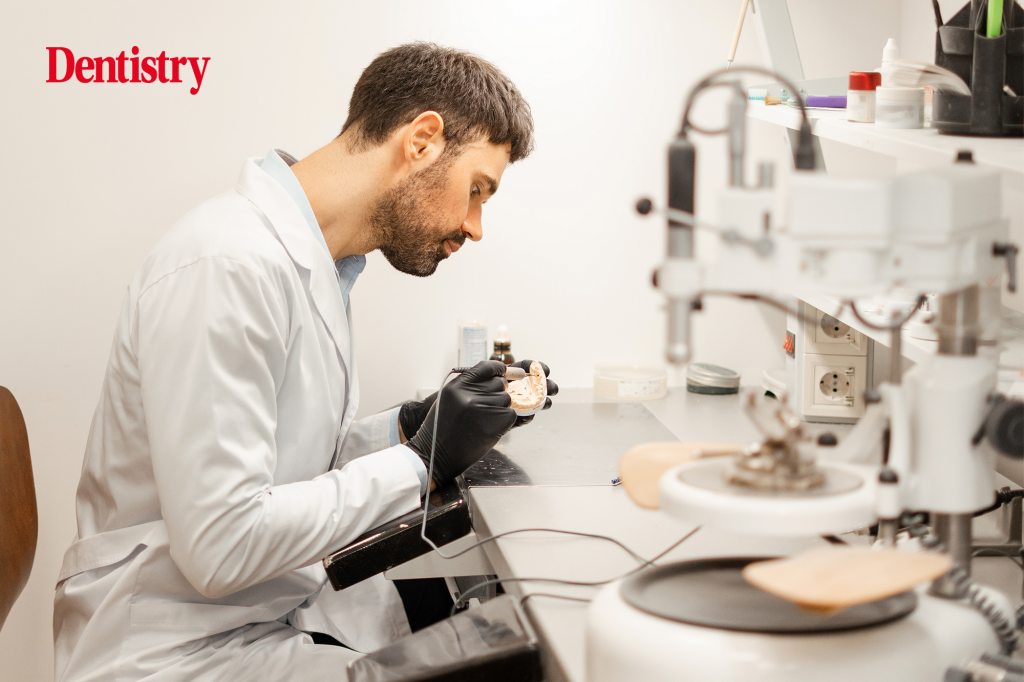
The GDC has finally said what many of us have known for years about the shortage of dental technicians. But before we sound the alarm, we should ask the right questions.
Every year the General Dental Council publishes its Registration Statistical Report. Every year the dental profession scans it for headlines. Dental therapist numbers up, hygienist numbers up, nurses up, and of course, dentists up.
Every year, dental technician numbers go quietly in the opposite direction.
This year, the GDC’s 2025 Registration Statistical Report, published in May 2026, made history. For the first time ever, the number of registered dental technicians has fallen below 5,000. Six consecutive years of decline. In 2025, just 143 new dental technicians joined the register.
One hundred and forty-three.
In the entire United Kingdom.
To put that in context, the overall dental workforce grew by 4.7% to 131,680 registered professionals by the end of 2025. Every single professional title increased.
Except dental technicians.
Before we draw conclusions, it’s worth asking whether this is entirely a crisis or partly a reflection of a profession being reshaped by technology.
Digital dentistry and dental technicians
Digital dentistry has transformed what we do and how we do it. Quality has improved. Accuracy has improved. Reproducibility that once required decades of experience can now be achieved with greater consistency and speed.
In-surgery 3D printing has taken this further still. Crowns and veneers that would previously have required an impression taking, laboratory prescription, a collection, and a return visit can now be designed and printed chairside in a single appointment. For patients, that is genuinely impressive. For the profession, it is a legitimate factor in why fewer registered technicians may be required than in previous decades.
It is entirely plausible that the register, in part, reflects that evolution rather than decline alone. That is a conversation worth having honestly.
But it doesn’t answer everything.
Alongside the advances in technology, there is another awkward conversation the profession has been reluctant to have. In-surgery manufacturing of dental devices. Crowns, veneers, and other restorations, produced by individuals who are not registered dental technicians, outside of the regulatory framework is not a new phenomenon.
Neither is the use of unregistered laboratories, some operating entirely outside UK regulation, whose work finds its way into patients’ mouths without scrutiny. Both are illegal. Both are largely ignored.
It would be naive to suggest this has no bearing on the register. Work that should, by law, be carried out by registered professionals is being carried out by others. These issues do not show up in the GDC’s statistics, but its effect on the profession almost certainly does.
Even setting that aside, 143 new registrations in a year still raises questions that deserve answers.
Who is training the technicians?
Which institutions are still training them? With numbers this small, how many training programmes remain genuinely viable? Which colleges or universities are financially able to sustain the infrastructure, the faculty, the equipment – all of it – to train such a small annual cohort? If the answer is fewer than we think, what happens to the pipeline when the last viable training faculty closes not through lack of interest, but through lack of funding?
There are other factors too, and they deserve honesty. A profession paid per item, compared onprice, left largely outside the clinical framework that every other dental professional sits within. A profession where the default response to market pressure has been to lower the fee rather than make the case for value. When you treat a profession that way for long enough, people leave and crucially, new people stop joining.
Digital efficiency hasn’t changed that dynamic. If anything, it has accelerated it.
What I have seen first hand is that as digital processes improve quality and efficiency, the administrative demands on laboratories have grown. The technicians we have are fewer in number and are supported by larger admin teams than ever before. The skill is still there. The expertise still takes years to develop. The contribution to patient care is still essential.
The question isn’t simply whether this is a crisis. The register has spoken. The question is whether the decline reflects an inevitable and manageable evolution or something that requires urgent attention from the practices, the corporates, the DSOs, the GDC, and the educators who collectively shape what this profession looks like.
Because at 143 new registrations a year, with training programmes under financial pressure, unregulated manufacturing largely unchallenged, and a workforce being reshaped by technology, we cannot afford to assume the answer without first asking the question.
Follow Dentistry.co.uk on Instagram to keep up with all the latest dental news and trends.
Apa Reaksi Anda?
 Suka
0
Suka
0
 Kurang Suka
0
Kurang Suka
0
 Setuju
0
Setuju
0
 Tidak Setuju
0
Tidak Setuju
0
 Bagus
0
Bagus
0
 Berguna
0
Berguna
0
 Hebat
0
Hebat
0