






























































Meet the Expert: Advancing Equity, Improving Outcomes, and Reducing the Burden of T1D



Nestoras “Nes” Mathioudakis, MD, MHS, is an endocrinologist and Associate Professor of Medicine at Johns Hopkins University School of Medicine in Baltimore, Maryland.
Mathioudakis also serves as Co-Medical Director of the Johns Hopkins Medicine Diabetes Prevention and Education Program, Co-Director of the Multidisciplinary Diabetic Foot and Wound Clinic at Johns Hopkins, and is the former Clinical Director of the Division of Endocrinology, Diabetes & Metabolism. Additionally, Mathioudakis is the Diabetes Clinical Community Lead for the Armstrong Institute for Patient Safety and Quality.
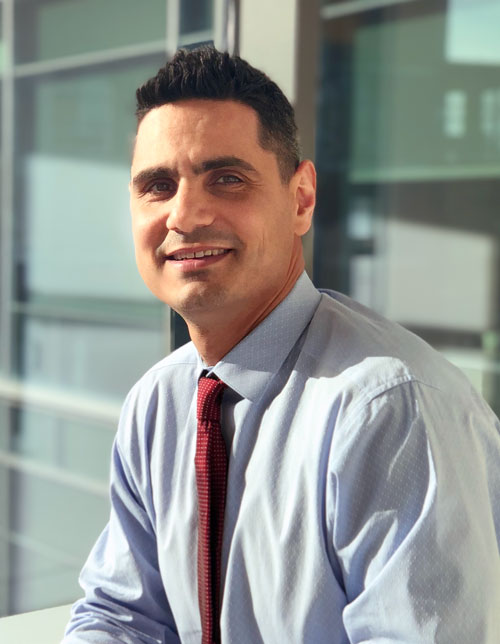 Interview with Nestoras Mathioudakis, MD, MHS
In this interview, Mathioudakis discusses his expertise in supporting people with type 1 diabetes (T1D) and working to improve patient care through the T1D Exchange Quality Improvement Collaborative (T1DX-QI).
The T1DX-QI was established in 2016 — with the support of The Leona M. and Harry B. Helmsley Charitable Trust — in an effort to refine best practices and improve daily life for people with type 1 diabetes (T1D). Growth has been tremendous, with 54 endocrine clinics from across the U.S. participating in the Collaborative.
Fueled by top leaders in diabetes care, the T1DX-QI has become an engine of innovation and inspiration. By engaging with the shared, data-driven, and systematic methods of the T1DX-QI, clinics have seen unprecedented success in their approach to diabetes management.
With members working closely together to identify gaps in care, discover and refine best practices, and share research — the process has become knowledge-sharing at its very best. While collated data gives clinics a clear sense of “where they are,” it also demonstrates “where they can be” by applying shared, evidence-based methods for improving care.
What do you enjoy most about your work?
“One of the most rewarding things is helping patients who have been struggling with their diabetes management,” explains Mathioudakis.
“T1D is a tough, demanding condition, and it’s easy to lose faith and get discouraged sometimes. Developing strategies to make improvements that are followed by ‘aha moments,’ along with joy and relief, is incredibly rewarding for a practicing physician.”
What led you to an MHS Program?
“In my first two years on faculty at Hopkins, I was the Associate Director of the Inpatient Diabetes Service, along with my mentor, Dr. Golden, a distinguished diabetes researcher. During this time, I completed a six-month fellowship in patient safety and quality training.”
“As I was compiling inpatient diabetes management data, I began to generate questions for larger-scale research,” Mathioudakis explained. In turn, he realized that more formal training in this space would allow him to perform these analyses.
Mathioudakis went on to pursue graduate training in clinical investigation, earning a Master of Health Science degree from the Johns Hopkins Bloomberg School of Public Health. “At that point, my trajectory shifted towards research,” he said.
“The MHS degree provided me with a strong foundation in data analysis and research methods, so I was well prepared to answer the scientific questions generated from my clinical work.”
Today, Mathioudakis dedicates about 20% of his time to patient care and 80% to research, focusing broadly on health informatics, clinical decision support, and machine learning applied to diabetes management, complications, and prevention.
Let’s talk about your new role with T1DX-QI
“I’m thrilled to serve as a Medical Advisor for the T1D Exchange Quality Improvement Collaborative, because I’ve seen firsthand the impact this network can have on patient care.”
“Since Johns Hopkins joined in 2022, participation in the collaborative has enabled us to systematically track our prescribing of automated insulin delivery systems and continuous glucose monitors — and we’ve seen significant increases in both,” said Mathioudakis, who has served as PI for adult endocrinology, alongside Risa Wolf, MD, for pediatric endocrinology at Johns Hopkins.
“The ability to benchmark against centers nationwide has been instrumental in making a compelling, data-driven case for my colleagues and clinical leadership about where we can — and should — improve,” he said.
Mathioudakis also led a multi-center randomized controlled trial within T1DX-QI — the BPA-TECH project — which underscored the power of peer learning and shared infrastructure. “Collaborating with leaders across the country and watching our interventions scale nationally has been both energizing and validating,” he said.
“T1D Exchange is the premier organization for quality improvement in type 1 diabetes, with unparalleled assets like a large EHR database and a robust patient registry. I’m excited to bring my background in EHR research and big data analytics to generate real-world evidence across diagnosis, management, and outcomes.”
Because his clinical practice focuses heavily on type 1 diabetes — with many patients using advanced technologies — Mathioudakis sees firsthand how data-driven improvement, rapid-cycle testing, and shared best practices can drive meaningful change.
“Ultimately, my goal is to improve outcomes for people with type 1 diabetes, increase equity, and reduce the burden of the disease,” he said. “I bring strengths in clinical expertise, implementation, and analytics, and I’m eager to help advance the collaborative’s mission by refining existing workflows, expanding the network, and pursuing additional funding and research opportunities that translate into measurable, real-world impact.”
Reducing disparities, predicting glucose trends, and studying AI-based diabetes interventions
“A study we’re currently working on is an issue that’s near and dear to my heart — reducing disparities in access to T1D diabetes technology,” said Mathioudakis, who, along with Wolf, recently published, “Racial Disparities in Access and Use of Diabetes Technology Among Adult Patients With Type 1 Diabetes in a U.S. Academic Medical Center” in Diabetes Care.
Mathioudakis discussed this research as a guest on the Diabetes Care On Air podcast.
The study found that CGM and insulin pump use are significantly lower among Black individuals with T1D compared to non-Black individuals. Highlighting that these disparities often begin at the point of care — during conversations with diabetes providers about technology, which plays a critical role in both education and prescribing.
“With grant funding from Breakthrough T1D and with T1D Exchange as the coordinating center, we’re actively testing whether a best practice advisor (BPA) — a type of informatics alert — can standardize patient selection for and prescribing of AID systems in type 1 diabetes,” he said. “We hope to have the results of a trial completed in the coming year to evaluate the effectiveness of the BPA relative to usual care in reducing these disparities.”
Beyond disparities, Mathioudakis has published extensively on machine learning-based decision-making in hospitalized patients who are at the highest risk of hypoglycemia. He explained that many people with T1D aren’t wearing CGMs when hospitalized, and other competing health conditions can affect glucose trends.
“We have rich data in EHRs,” he said. “When you utilize them to create a model, you can get high levels of predictive accuracy on where someone’s glucose is headed — in ways that human beings can’t.”
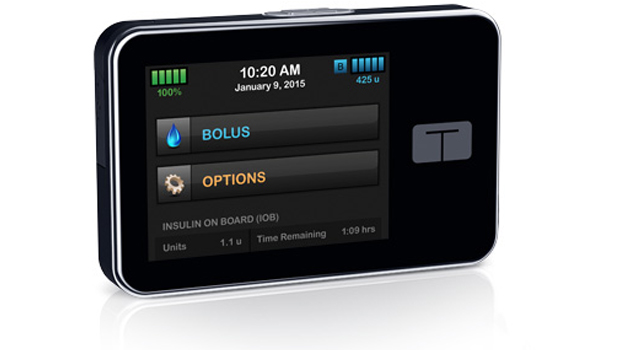
Next steps involve direct EHR integration to provide the care team with an additional decision-support tool, taking into account insulin on board, glucose values over the past 24 hours, and other factors.
Mathioudakis is also exploring AI-enabled decision support tools in the EHR, leveraging both unstructured data in clinic notes (symptoms, procedures, diet, etc.) and discrete data (glucose values, insulin doses) to help clinicians select appropriate antihyperglycemic medications throughout hospitalization.
Mathioudakis’ other research is supported by an NIH-funded R01 grant focused on testing an AI-based app for diabetes prevention. Results from this trial, published in JAMA in October 2025, showed that the AI-driven program achieved outcomes comparable to the gold-standard, human-based approach.
Precision Medicine Initiative
“I’ve been co-chairing an International Precision Diabetes Medicine Initiative through the American Diabetes Association. There are 12 working groups, and we’ve just wrapped up one of the most comprehensive systematic reviews on T2D precision prognosis for cardiovascular disease, including over 10,000 articles,” said Mathioudakis.
“It’s been a very fulfilling collaboration with international experts. We’re excited to see the culmination of these extensive reviews in this forthcoming consensus report with personalized recommendations, which we hope to share at the 2023 EASD meeting in Hamburg, Germany.”
What’s your hope for future diabetes-related tech?
“Having reviewed upcoming machine learning algorithms, I can say that in general, we’re getting better and better at it, the field is advancing, and it’ll reach patients in more meaningful ways.”
“Just look at the progress we’ve seen over the past decade,” he added. “The pace with which diabetes tech has evolved — and the attention to machine learning in medicine — is impressive. We’ll keep seeing improvements as algorithms in closed-loop systems are refined and become more rapidly adaptive.”
At the same time, “We have more work to do,” said Mathioudakis. “One of the biggest challenges is streamlining how data is uploaded from patient devices to improve accessibility for clinicians — ideally in a universal platform.”
Looking ahead, Mathioudakis is optimistic about what’s possible: “In the near term, my hope is for fully automated insulin dosing that doesn’t require meal announcements — so we can reduce the burden and simplify day-to-day life. In parallel, we can leverage AI to guide patients and care teams in adjusting and optimizing AID settings, tailoring them to each device and individual physiology to achieve the best outcomes with less trial and error.”
_________________________________________________________________________________
Outside of work, Nes Mathioudakis enjoys traveling, tennis, running, and playing the violin. While Nes chose a career in medicine, he almost became a professional violinist. He can often be found helping his children with their violin lessons, as they follow in his footsteps.
The post Meet the Expert: Advancing Equity, Improving Outcomes, and Reducing the Burden of T1D appeared first on T1D Exchange.
What's Your Reaction?
 Like
0
Like
0
 Dislike
0
Dislike
0
 Agree
0
Agree
0
 Disagree
0
Disagree
0
 Excellent
0
Excellent
0
 Useful
0
Useful
0
 Great
0
Great
0