































Aquaculture 4.0 and the Last Mile of Growth A Conversation with Dr. Antonio Garza de Yta
* By Aquaculture Magazine Editorial Team
In this discussion, Dr. Antonio Garza de Yta outlines Aquaculture 4.0 as the shift from fragmented farming to integrated, data-driven systems. By connecting infrastructure, data, and value chain integration, the industry can eliminate operational uncertainty, reveal unseen biological risks, and unlock large-scale structured finance. This framework provides an essential roadmap for scaling global aquaculture through visibility and understanding.
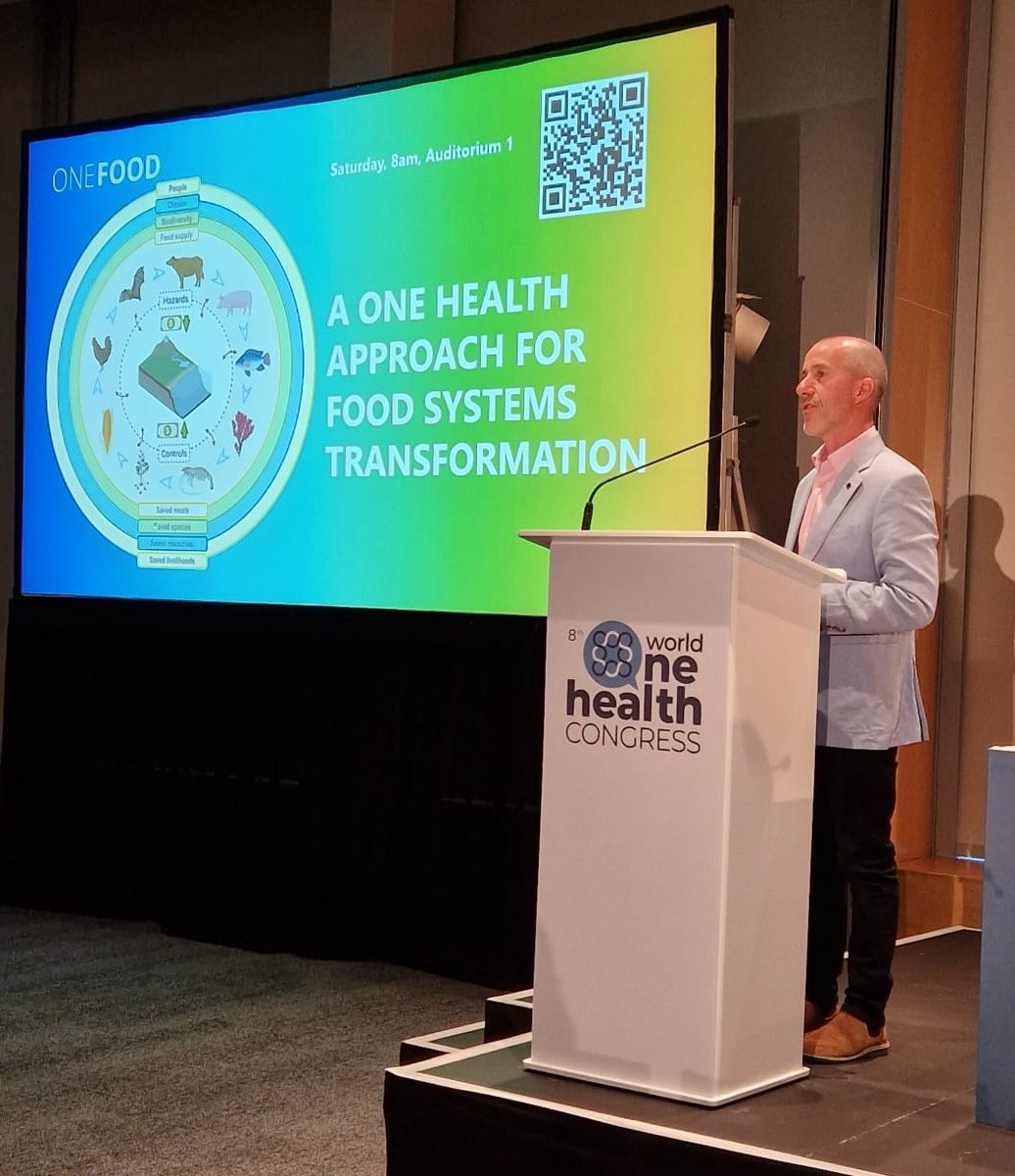
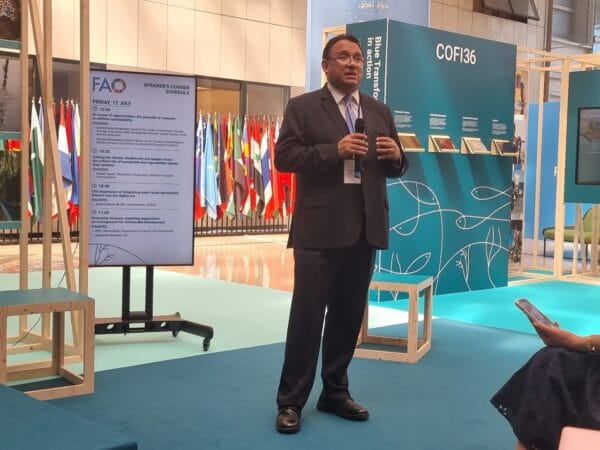
Few professionals in global aquaculture have operated across as many dimensions of the industry as Dr. Antonio Garza de Yta, from production and consulting to academia, public policy, and international leadership, from working directly with farms to shaping national strategy in Mexico and leading global dialogue as President of the World Aquaculture Society (WAS).
He built his foundation at the farm level, then broadened it through consulting across regions and species, where the same patterns of variability and unpredictability consistently emerged regardless of geography. At Auburn University, he created the Certification for Aquaculture Professionals (CAP), reflecting his belief that technology alone does not transform aquaculture, people do. Later roles at CONAPESCA and as Secretary of Fisheries and Aquaculture in Tamaulipas, Mexico (SEPESCA) positioned aquaculture as a strategic sector tied to food security and economic development.
Today, based in Australia and engaged across Southeast Asia through Intelligon, he operates globally, working with producers, governments, and financial and technology stakeholders to translate innovation into scalable, integrated aquaculture systems.
In this conversation with Salvador Meza, Aquaculture Magazine explores his central thesis: aquaculture will not scale sustainably until it evolves from a fragmented activity into an integrated, data-driven system, a concept he frames as Aquaculture 4.0.
The Making of a Global Aquaculture Leader
Salvador Meza: Antonio, you have worked across nearly every layer of aquaculture. How has that shaped your understanding of the industry?
Dr. Antonio Garza de Yta: It has shown me that aquaculture cannot be understood in isolation. I started at the farm level, aquaculture is biology, and biology defines your limits. Consulting across countries and species allowed me to see patterns, variability, lack of control, and limited predictability exist everywhere.
At Auburn University, that perspective led to the creation of CAP. Human capital remains one of the most underestimated variables in aquaculture.
Moving into policy at CONAPESCA and SEPESCA changed the scale at which I was thinking, from solving problems for a farm to designing systems for entire sectors. My work with WAS reinforced that aquaculture only advances when science, industry, and policy align.
So today I do not see isolated issues, I see a system that has evolved, but not yet integrated. The limitations are structural, not technical, improve production but ignore finance, and you limit scale; improve technology but ignore training, and you limit adoption. The next phase will come from connecting these elements, not optimizing them individually.
The Industry at Its Limits
Salvador Meza: Aquaculture has grown enormously over recent decades. Why do you believe it is reaching a structural limit?
Dr. Antonio Garza de Yta: Because despite that growth, the system remains fundamentally unstable.
We have made major advances in genetics, nutrition, and production technologies, but there is a contradiction:
Improved performance, but not reduced uncertainty.
Production cycles still show high variability because we continue to operate under a reactive model.
Salvador Meza: What drives that instability, and how does it connect to what you call the “black box”?
Dr. Antonio Garza de Yta: Lack of visibility. Aquaculture is driven by biological processes that change continuously, oxygen, feeding response, biomass development, but in many systems these variables are not monitored in real time.
Decisions are based on delayed information or experience alone, and reactive decision-making makes instability inevitable.
We understand inputs and measure outputs, but the process in between remains unseen. That is the black box. When the core of your system is not visible, you cannot stabilize it.
Salvador Meza: How does that connect with finance?
Dr. Antonio Garza de Yta: Directly. Finance depends on measurable risk.
If you cannot observe what is happening inside the system, risk remains opaque, and opaque risk makes capital cautious. That is why aquaculture, despite strong fundamentals, still faces limitations in accessing large-scale structured finance.
From the perspective I have built working across multiple regions with producers, technology companies, and financial stakeholders, the transition is clear:
From uncertainty to visibility, from reactive to predictive systems, from fragmented operations to integrated ones, and most importantly, from unmeasured risk to financeable risk.
Aquaculture 4.0: Unlocking the Last Mile of Growth
Salvador Meza: What is Aquaculture 4.0 for you, in practice?
Dr. Antonio Garza de Yta: At its core, a simple premise:
We cannot manage what we cannot see
Aquaculture has evolved by improving inputs, genetics, feed, and infrastructure, but visibility into what is happening inside the production system has remained limited. The first step is not adding more technology for its own sake, but making the system visible in a continuous and structured way.
I break this transformation into three pillars that only create value together:
Infrastructure, data, and systems integration
Infrastructure, both physical and digital, allows you to see the system.
Data allows you to measure it consistently and transform observations into structured information.
Systems integration connects that information across the value chain.
When these three elements work together, you move from a reactive model to a managed biological system, where decisions are based on what is happening and what is likely to happen next.
At the farm level, this improves stability and efficiency.
At the value chain and institutional level, it improves coordination, predictability, and visibility.
Feed mills understand demand and risk more clearly.
Governments can monitor production dynamics in real time.
And financial institutions can finally assess risk in a structured way.
Salvador Meza: And this is where finance becomes central?
Dr. Antonio Garza de Yta: Yes. This is what I describe as the last mile of growth.
The industry has made real progress in production and technology, but scale is constrained by capital, and capital requires clarity on risk.
Once you have continuous data, you move from assumptions to measurable performance. That allows risk to be structured, understood, and financed.
Infrastructure allows you to see risk.
Data allows you to measure risk.
Systems integration allows you to manage risk.
And that is what converts uncertainty into investable opportunity.
What emerges is a reinforcing cycle:
Data → Risk → Finance → Adoption → Data
Once that flywheel begins to move, transformation accelerates.
Salvador Meza: Where does Intelligon fit into this transformation?
Dr. Antonio Garza de Yta: Intelligon operates precisely at that intersection.
By integrating sensors, feeding systems, satellite information, and environmental data into a unified platform, we are not only improving farm performance, but enabling the translation of that data into actionable intelligence across the entire value chain, including producers, feed companies, governments, and financial institutions.
The objective is not just efficiency.
It is to enable scalable, financeable aquaculture systems at industry level.
Sustainability becomes a natural outcome of this visibility. Better feeding reduces waste, improved oxygen management reduces stress and mortality, and better data reduces environmental variability.
It emerges from better system management, and increasingly, it is directly linked to access to capital.
In one idea:
Aquaculture 4.0 is the transition from producing with uncertainty to producing with understanding.
And once you understand the system, you can manage it.
Once you can manage it, you can finance it.
And once you can finance it, you can scale it.
That is the last mile of growth.
Global Deployment and Validation
Salvador Meza: Where are you actually seeing this transformation happening?
Dr. Antonio Garza de Yta: This is no longer theoretical; it is already happening across multiple regions.
Having worked across these regions over nearly three decades, what stands out is that despite differences in geography, species, and production models, the same patterns are emerging.
In Southeast Asia, particularly Vietnam, export requirements are driving a strong push toward real-time monitoring, automated feeding, and data-driven decision making. Once these systems demonstrate consistent results, adoption accelerates rapidly.
In Latin America, especially Ecuador, we see a more advanced stage of implementation. Producers are not only improving productivity, but integrating data, traceability, and system-level thinking into their operations.
Across Central America and other emerging regions, the conversations are also evolving, shifting from production techniques to resilience, competitiveness, and long-term positioning.
At the global level, what is most relevant is convergence.
Through platforms like FAO and AQUACON, governments, international organizations, and industry leaders are increasingly aligned around the same structural questions, how to operationalize transparency, improve system-level visibility, and enable access to capital.
This is clearly reflected in initiatives such as the FAO Global Conference on Smart Farming, where the integration of digital technologies, data systems, and sustainability is no longer theoretical, but part of a global food system agenda.
When these themes emerge consistently across Asia, the Americas, Europe, and the Middle East, it becomes clear that this is not a regional shift.
It is a global transition.
What Comes Next
Salvador Meza: What should the industry focus on now?
Dr. Antonio Garza de Yta: The priority is scaling.
We already know these systems work. The challenge is how quickly we can deploy them across different regions, species, and production environments.
Salvador Meza: What is holding that back?
Dr. Antonio Garza de Yta: Three things.
Fragmentation, the industry is still segmented.
Access to capital, financial structures are not yet fully aligned.
And mindset, many still prioritize short-term output over long-term system stability.
Salvador Meza: So, this is not just a technical shift?
Dr. Antonio Garza de Yta: No. It is a structural shift.
It requires thinking about aquaculture not as individual farms, but as integrated systems.
Because the next phase of growth will not be defined by how much we produce, but by how well we understand, manage, and connect the systems behind it.
And the speed at which we make that transition will determine who leads the future of aquaculture.
Conclusion
As aquaculture enters its next phase, the question is no longer whether it can grow, but whether it can do so with stability, transparency, and scale.
The answer will depend on how quickly the industry moves from fragmented operations to integrated, data-driven systems.
*Salvador Meza
Editor & Publisher of Aquaculture Magazine.
Apa Reaksi Anda?
 Suka
0
Suka
0
 Kurang Suka
0
Kurang Suka
0
 Setuju
0
Setuju
0
 Tidak Setuju
0
Tidak Setuju
0
 Bagus
0
Bagus
0
 Berguna
0
Berguna
0
 Hebat
0
Hebat
0