





































Laser enrichment produces short-term increases in broiler activity

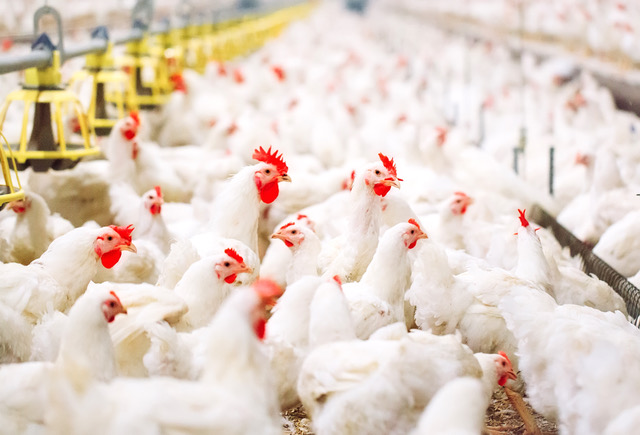
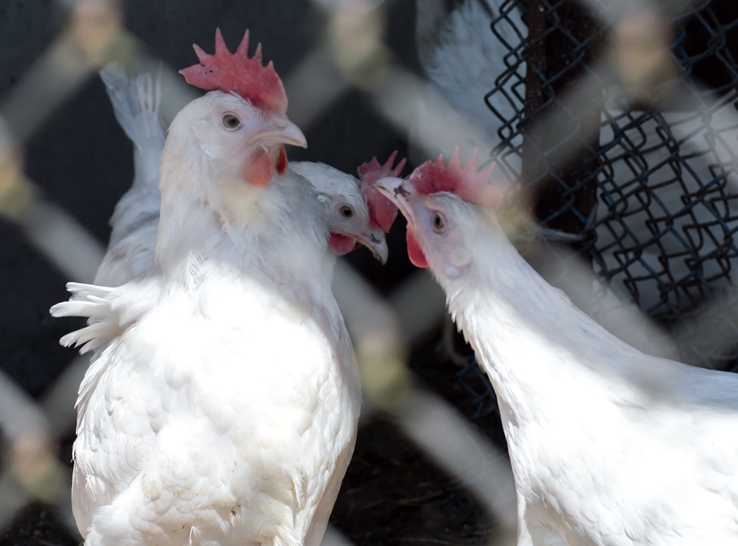
Can laser enrichment improve broiler health and marketability? Kayla Elmore, a graduate student at the University of Iowa, conducted a study to investigate this question, following up on two previous studies that reported increased activity among broilers exposed to lasers compared to control groups with no laser exposure. She found that a longer exposure time also showed positive but temporary effects.
The impetus for the research was that modern broilers “have been selected for rapid growth and increased muscle mass,” Elmore said, which can lead to “leg lameness and reduced mobility” near market age. She explained that this prompts veterinary visits and is “a major welfare concern” that can “lead to economic losses.”
Prior studies
Research has shown that exposing birds to a laser could increase their activity levels and decrease leg lameness. In one study, the birds were exposed to a laser in their pen 4 times a day, each exposure lasting 4 minutes. The laser’s presence increased their activity for several days, generally during weeks 3, 4 and 5 of age.
The laser-enriched birds also walked significantly farther than control birds on the first day and generally in weeks 3 and 4.
A second study increased laser exposure from 4 to 6 minutes. Again, the exposed birds exhibited more active behaviors for several days during week 1 and then overall in weeks 2 and 3. They also walked farther than control birds on many days and throughout week 2.
Increasing laser exposure, measuring behavior
Elmore hypothesized that increasing the laser exposure duration to 8 minutes would increase the positive effects on the exposed birds.
The study included 1,360 day-old straight-run Ross 708 broilers housed in 20 floor pens and randomly assigned to laser enrichment or control. The researchers selected 80 birds from 8 control and 8 laser-enriched pens (5 birds per pen) as focal birds to measure behavior and welfare.
A second-generation laser projected four red dots in a random pattern over two pens 4 times a day, at 5:30 and 11:30 a.m. and p.m.
Video ran for 20 hours and was edited into 8-minute segments covering both the enriched and control groups. For behavioral analysis, the researchers collected data on the first 9 days of life and then weekly for 7 weeks. For welfare assessments, they collected data on the third day and each week thereafter.
“Birds with their legs moving in continuous forward motion” were considered to be active, Elmore explained, while those birds that were standing without moving or resting in the litter were considered inactive.
A bird was at the feeder if its head was resting in the feeder or feeder tray. A bird standing beneath the drinker was at the drinker.
Gait scores were collected weekly: 0 (walk 5 feet without lameness), 1 (walk 5 feet but with an awkward or uneven gait) and 2 (can’t walk 5 feet without lameness).
Birds that were obstructed by a feeder or heat lamp were considered out of view. Other behaviors, such as preening and dust bathing, were not evaluated.
Laser-exposure effects
During the first week of life, the laser-enriched birds were more active and walked farther distances than the control birds.
The at-drinker behavior of the enriched and control birds was similar during week 1, but the birds exposed to lasers spent less time at the feeder.
After week 1, the control birds continued to spend more time at the feeder and drinker than the laser-enriched birds.
The inactivity of laser-enriched birds increased in weeks 3, 5, and 6. Meanwhile, active behaviors, and specifically distance walking, correspondingly decreased after week 1.
Measures of animal welfare indicated no breast blisters or footpad dermatitis throughout the study period. All birds had a gait score of 0 until week 7, when a few birds scored 1. Week 7 results were too insignificant to analyze.
Future plans
Elmore concluded that laser enrichment stimulated walking distance and activity only during the first week of life, but both measures fell off each succeeding week. Meanwhile, the enriched birds spent less time at the feeder than control birds.
Therefore, she said, “This 8-minute duration might just be too much for the birds, based on the measures that we’ve currently analyzed.”
In the future, she plans to investigate the effects of twice-daily 6-minute laser on performance, behavior, and meat and bone quality.
The post Laser enrichment produces short-term increases in broiler activity appeared first on Modern Poultry.
Apa Reaksi Anda?
 Suka
0
Suka
0
 Kurang Suka
0
Kurang Suka
0
 Setuju
0
Setuju
0
 Tidak Setuju
0
Tidak Setuju
0
 Bagus
0
Bagus
0
 Berguna
0
Berguna
0
 Hebat
0
Hebat
0