































%20and%20Batch%20Production%20Records%20(BPR).png)













Affordable Bioreactor Helps Prep Students for Biomanufacturing Careers
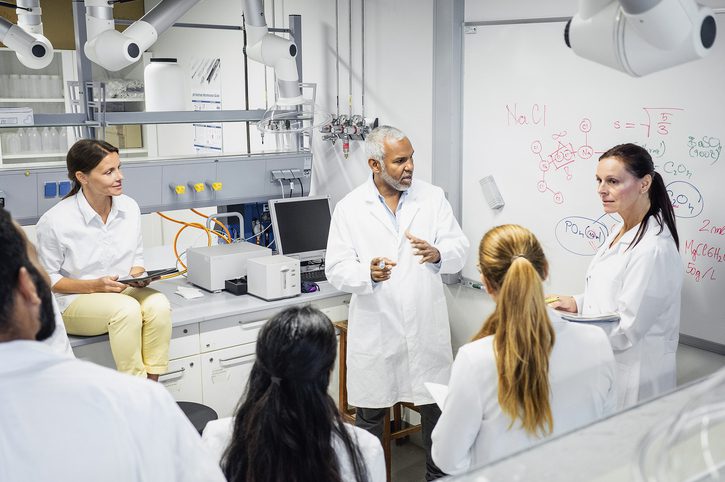
The biomanufacturing workforce of the future is hampered by a lack of familiarity with the technology today. Consequently, when those students choose careers, biotech isn’t top of mind and, even when it is, they may not have developed the deep understanding to help them succeed in biomanufacturing careers.
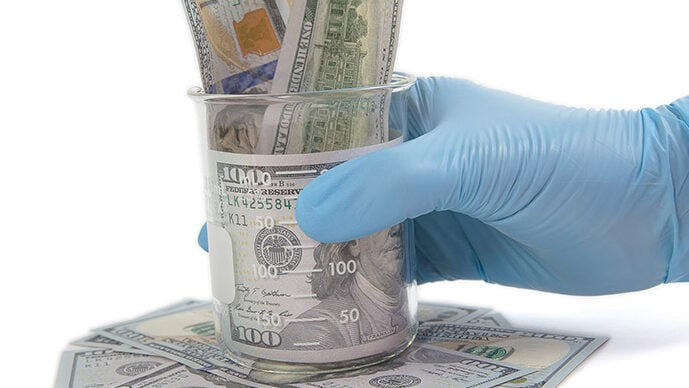
The challenge is that high schools and community colleges typically can’t afford advanced equipment such as bioreactors to provide the hands-on experience that leads to such understanding.
To help address that challenge, BioMADE, Novonesis, and Iowa State University (ISU) have designed a simple bioreactor to produce enzymes and other proteins, which they are adapting into an educational kit. The bioreactor’s eventual price target, estimated at roughly $200, is designed to be budget-friendly, even for rural schools. The goal is to make biomanufacturing as integral to the curriculum as typing and drafting once were and in doing so, help sustain the industry.
“By allowing each student to build their own reactor and see the awesome power of biology to create novel catalysts, materials, and small molecules, there will be more creative minds choosing this career path to support the burgeoning biomanufacturing economy,” Nigel Reuel, PhD, professor of chemical and biological engineering, Iowa State University, and CTO for the NSF RuralSTAMINA Biomanufacturing Engine of Iowa and Nebraska alliance.
Reuel is working to make the BioReactor Educational Activity Kit (BREAK) a robust educational tool under continued support from BioMADE and Schmidt Sciences, a science-focused philanthropic organization. BREAK will include labs and curriculum co-developed with Julie Gonzalez, PhD, the biotechnology program chair at Des Moines Area Community College, and will be initially disseminated through the NSF RuralSTAMINA Biomanufacturing Engine coalition to provide the hands-on learning experiences needed to stimulate a robust workforce.
Offshoot of sensor work
BREAK is an offshoot of sensor and AI control strategies development by Reuel and his team. One of Reuel’s recent papers explores the use of substrate-wrapped single-walled carbon nanotube-based photoluminescent probes in a circulating flow cell system. Reactions are accelerated by agitation and therefore can’t be accurately measured in a static microplate.
“Rather than buying multiple bioreactors to prove [his sensors] work in the real world, Reuel built an array of low-cost reactors his team could scale for machine learning,” David Nathan, program director, BioMADE, tells GEN.
Novonesis is developing that bioreactor for student use. “It’s designed so students can basically build it and know the ins and outs. A lot of ingenuity went into using common components rather than bespoke technology,” Mike Hess, PhD, senior manager of regional technical strategy, Novonesis, elaborates.
“It can’t do everything a million-dollar bioreactor can,” Hess says, but it measures multiple indicators, such as enzyme activity and cell concentration, in real time, thus lessening reliance on surrogates.
It also employs a reinforcement learning agent—another feature from Reuel. “This speeds the learning loop,” Hess says. Rather than extracting process knowledge offline over weeks or months, the machine learning component “lets you do it in real time so you can optimize [the culture] in a matter of minutes.”
“We’re at the proof-of-concept stage,” Nathan says. “We’re bringing ISU’s testing kit to Novonesis for at-line and on-line work.” The next steps are to design a wireless control system that controls the basic parameters such as temperature, mix speed, and feed, and to link the operating system to pilot-scale reactors before developing a kit for high school and community colleges.
Novonesis is also exploring expanded options to make this basic bioreactor industrially relevant for the biotechnology industry, Hess says. “The application of the machine learning control system will be critical going forward, to help biotechnology manufacturers increase output and, therefore, profits.”
The post Affordable Bioreactor Helps Prep Students for Biomanufacturing Careers appeared first on GEN - Genetic Engineering and Biotechnology News.
Apa Reaksi Anda?
 Suka
0
Suka
0
 Kurang Suka
0
Kurang Suka
0
 Setuju
0
Setuju
0
 Tidak Setuju
0
Tidak Setuju
0
 Bagus
0
Bagus
0
 Berguna
0
Berguna
0
 Hebat
0
Hebat
0