




















































%20and%20Batch%20Production%20Records%20(BPR).png)















ASGCT 2026: AI-Optimized Cas12l Gene Editor Offers Compact Cas9 Alternative

BOSTON — In a potentially significant advance for the genome editing field, researchers from the biotechnology company Caszyme and the Vilnius University Institute of Biotechnology in Lithuania have developed a potent and compact variant of Cas12l nuclease. Giedrius Gasiūnas, PhD, Caszyme co-founder and CEO, presented highlights of the research at ASGCT.
The work represents “a great example of the potential of continued mining for novel Cas effectors within the bacterial metagenomic diversity dark matter,” said Rodolphe Barrangou, PhD, Editor in Chief of The CRISPR Journal, which will shortly be publishing a paper on the Lithuanian team’s results.
“We need more diverse effectors to address the technical shortcomings of the CRISPR toolbox,” Barrangou continued. “This study is a great illustration of the potential of mining bacterial diversity.”
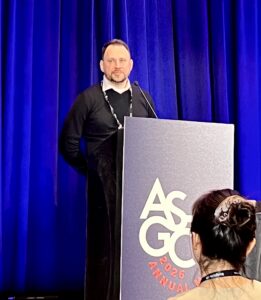
The Lithuanian team, including veteran gene editor Virginijus Siksnys, PhD—winner of the 2018 Kavli Prize with Jennifer Doudna, PhD, and Emmanuelle Charpentier, PhD, for CRISPR gene editing—used a hybrid approach to optimize Cas12l. By combining cryo-electron microscopy (cryo-EM) structure-guided design with artificial intelligence (AI) protein language models, the team was able to engineer a variant (Asp2Cas12l M82) that overcomes the known efficiency limitations of the Cas12l family.
Although Cas9 has widespread utility, including clinical applications, researchers have long considered its relatively large size and requirement for G-rich protospacer adjacent motifs (PAMs) problematic. The Cas12l family, discovered in the Armatimonadota bacterial phylum, offers a more compact size (867 amino acids) and recognition of a C-rich PAM site.
But wild-type Cas12l enzymes exhibit lower editing efficiencies and higher target-to-target variation compared to Cas9. According to Gasiūnas, the new M82 variant is “reliable, precise and adaptable,” and shows promise for a wide range of therapeutic applications.
“Through our continued work exploring novel Cas systems, Caszyme is focused on advancing technologies that move beyond promise into practical use.”
Path to potency
The engineering of the M82 variant proceeded in two steps. First, the Caszyme researchers solved the 3D structure of Asp2Cas12l complexed with an sgRNA and DNA to high resolution (2.51 Å). This revealed a unique “bracelet” architecture whereby the nuclease encircles the DNA target via interlocking helical bundles and a proline-rich string.
Next, the team introduced arginine substitutions at dozens of positions in the molecule to enhance electrostatic attraction to the negatively charged DNA backbone. This work included the production of an M67 variant, which provided a 7-fold improvement in indel editing over the wild-type nuclease.
To engineer further refinements, the Caszyme group turned to AI, specifically the ESM-2 protein large language model. This model predicted evolutionary hotspots considered likely to preserve or enhance function. Integrating these AI-derived substitutions—Q572R in the bridge helix and F607S in the RuvC domain—resulted in the final M82 Cas12l variant, illustrating the value of AI-supported engineering rather than deploying protein-directed evolution.
Rivaling Cas9
Gasiūnas presented data showing that M82 possesses good activity across recalcitrant gene targets, reducing the target-to-target variation that plagues many novel nucleases. In head-to-head comparisons in HEK293T cells, M82 demonstrated an average indel editing rate of 67.4%, nearly identical to that of Cas9 at overlapping target sites. This potency was consistently maintained across several delivery formats, including plasmid DNA, mRNA, and ribonucleoprotein complexes.
The Caszyme group also showed excellent M82 efficiency in homology-directed repair (HDR). In experiments targeting the AAVS1 locus, M82 facilitated a site-specific gene insertion frequency of 39%, outperforming Cas9 in the same context. Using single-stranded donor templates, HDR rates reached as high as 56%. Gasiūnas suggested that the staggered cut produced by Cas12l may inherently steer DNA repair toward precise correction rather than stochastic indels. With regard to safety, Caszyme found that M82 Cas12l maintained a high degree of on-target precision. Secondary editing signals were largely detected at or near the lower limits of assay sensitivity, suggesting a low risk of off-target cleavage.
The compact size of the M82 variant makes it an attractive candidate for adeno-associated virus-mediated delivery, which has strict limits on cargo size. “It is no secret that the CRISPR space has faced challenges and concerns in recent years,” Gasiūnas said. “However, we are confident in M82’s ability to create headroom for scientists to stand up and innovate within.”
Crowded field
Cas12l is not the only compact Cas nuclease gaining attention, of course. In a talk preceding Gasiūnas’ presentation, Zhaoshi Wu, PhD, co-founder and chief technology officer of Shanghai-based Castalysis Bioscience, presented an update on Cas12n, details of which were first published in Molecular Cell in 2023. The nuclease was touted as being the first independent CRISPR-Cas complete gene family uncovered by Chinese scientists within China’s territory.
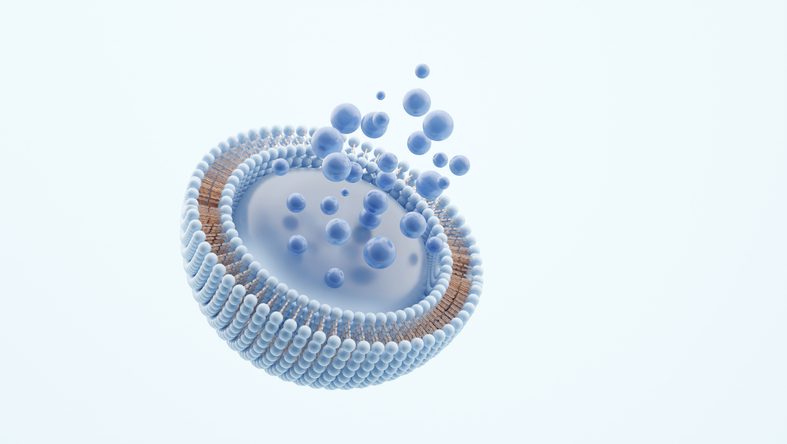
Touted as a next-gen ultra-compact gene editing system, Cas12n (branded as alphaCas) consists of just 450 amino acids, and possesses structural similarity to TnpB. Cryo-EM structural analysis led the Chinese investigators to optimize the molecule for non-viral in vivo delivery. Preclinical experiments showed robust genome editing in a mouse model by targeting PCSK9 using lipid nanoparticle delivery, resulting in sharp drop in serum LDL levels.
Wu said his company is on target to begin its first clinical before the end of 2026. But he faced an uncomfortable moment during audience questions. Fyodor Urnov, PhD, challenged Wu’s claim that an inherent advantage of Cas12n was its safety profile compared to Cas9. Urnov pointed out that Intellia Therapeutics has two ongoing Phase III in vivo trials using CRISPR-Cas9 that show no immunogenicity concerns using LNP delivery.
Urnov later congratulated Wu on the rest of the company’s data and wished them success.
The post ASGCT 2026: AI-Optimized Cas12l Gene Editor Offers Compact Cas9 Alternative appeared first on GEN - Genetic Engineering and Biotechnology News.
Apa Reaksi Anda?
 Suka
0
Suka
0
 Kurang Suka
0
Kurang Suka
0
 Setuju
0
Setuju
0
 Tidak Setuju
0
Tidak Setuju
0
 Bagus
0
Bagus
0
 Berguna
0
Berguna
0
 Hebat
0
Hebat
0