







































%20and%20Batch%20Production%20Records%20(BPR).png)















ASGCT President Terry Flotte Touts Rare Disease Initiatives as His Term Ends
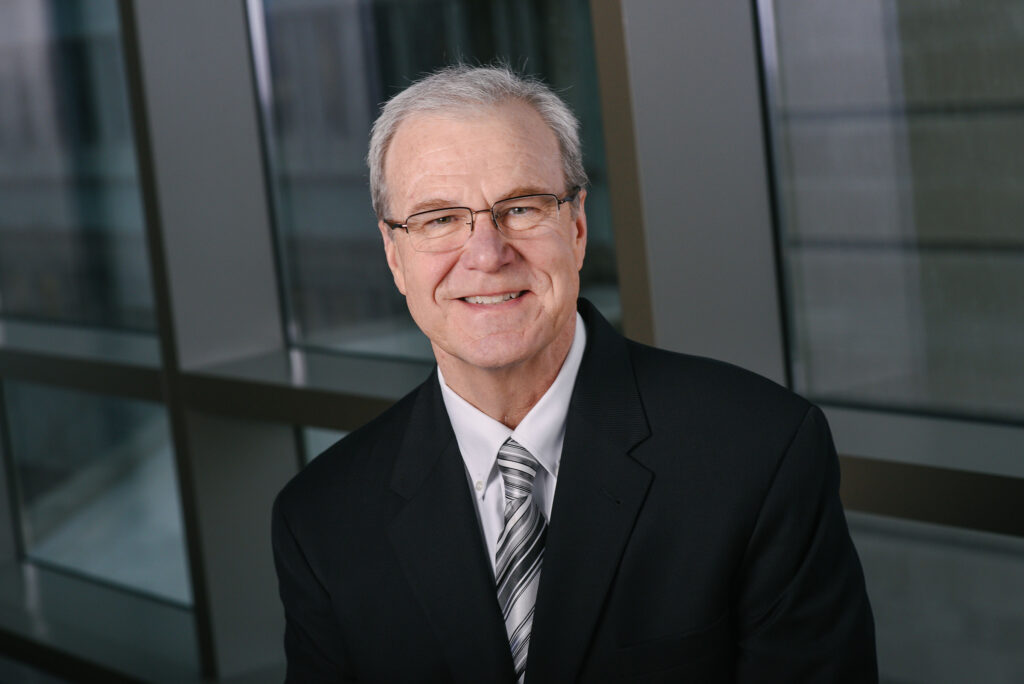
President of the American Society of Gene and Cell Therapy (ASGCT), Terry Flotte, MD, is excited to host this year’s conference in his own backyard. It will be a short drive east on the Mass Turnpike from his office at UMass Chan Medical School in Worcester to the Menino Convention and Exhibition Center in Boston’s Seaport district. Flotte is hopeful that the 2026 conference will draw the largest attendance in the meeting’s history. His tenure as president ends this week on the last day of the conference, May 15.
In the run-up to this year’s conference, GEN spoke with Flotte, who is also Editor in Chief of GEN’s sister journal Human Gene Therapy, about the central themes and most anticipated sessions at this year’s conference. “I have a full dance card, let me tell you,” Flotte joked. The conference will highlight several themes of Flotte’s productive tenure.
(This interview has been edited for length and clarity.)
GEN: Terry, what’s the theme of this year’s ASGCT conference?
Terry Flotte: We’re working very hard on access for rare and ultra-rare conditions and have been for some time. You’ll see that in the presidential symposium. This is in the context of our mission to improve access to rare disease cell and gene therapy (CGT). This is the guiding principle of our strategic plan: we want to work for universal access to CGT. There are two orthogonal axes to this: I’m focusing on rare and ultra-rare diseases. ASGCT is going to continue to work in parallel on universal access in a more global context.
We have created a first-of-its-kind exchange for shelved CGTs. An increasing number of CGTs for rare and ultra-rare diseases are being discontinued or deprioritized after they reach the clinical stage—not because they lack clinical efficacy but because they lack market viability. We have partnered with Orphan Therapeutics Accelerator to create a new entity called CGTxchange. This collaborative venture is meeting the need of these promising clinical-stage CGTs that are not progressing. This entity will be an AI-enabled digital platform that will list the available clinical-stage CGT programs and generate AI-enhanced profiles, digest the data, score them for their level of advancement and the robustness of their responses, and essentially shorten the due diligence that investors normally have to do, enabling the connections to work faster.
I estimate there’s at least 50-100 of these programs. We had our own personal experience with Sio Gene Therapies [formerly Axovant] on both GM1 and GM2 gangliosidosis. This is part of a broader set of initiatives. Over the past few years, we created a taskforce in response to this increasing rate of discontinuation of these therapies. The two main outgrowths that the ASGCT board has endorsed are to create a consortium of CGT developers that might be able to offer non-profits less expensive manufacturing in a limited way but also work toward a drug master file sharing data for those who benefit from the less expensive vectors—in addition to the clearinghouse I just mentioned.
GEN: What else is new this year?
Flotte: A new thing for ASGCT is we’re having a patient advocate presenting. Terry Pirovolakis pioneered the CGT therapy for spastic paraplegia type 50 (SPG50) by developing his own company, Elpida Therapeutics, which has taken SPG50 to the clinic and now is doing that for other rare and ultra-rare diseases.
The second example is from Claire Booth, MBBS, PhD, (Great Ormond Street Children’s Hospital, London). Her team has received market authorization to be the
pseudo-commercial manufacturer of a fully licensed therapeutic for different forms of SCID.
Those are two direct examples of alternatives to get things to the clinic, other than getting a new commercial sponsor. [Hopefully] we can end up getting more of those picked up, whether through the CGTxchange or direct outreach. We’re also going to honor Timothy Yu, MD, PhD, with the Jerry Mendell Translational Research Award. He will be talking about the N=1 Collaborative with the parallel effort with oligonucleotide therapeutics. There is a purposeful theme to this meeting, aiming to make a big change in how things can get to the clinic and stay in the clinic.
GEN: Last year in New Orleans, the conference was dominated by the Baby KJ story. Will anything stand out in the same way this year?
Flotte: We are honoring the three primary authors of the Baby KJ story—Kiran Musunuru, MD, PhD, Rebecca Ahrens-Niklas, MD, PhD, and Fyodor Urnov, PhD.
I have also selected the work of Lindsey George, MD (Children’s Hospital of Philadelphia) as a presidential abstract. She is going to present the first case of an AAV-induced tumor—or at least an aggressive and autonomously growing malignancy…. This occurred in an MPS1 patient who received a high dose of AAV into the ventricles. It is not exactly a meningioma, but it’s arising from the neuroepithelial cells lining the ventricles. The tumor has AAV integrated with a strong promoter immediately upstream of a known oncogene. I put that into the presidential lecture, even though it’s not good news—but I’m not a [gene therapy] campaign manager here! I think this is a significant finding that we’ll have to pay attention to.
Lindsey is not saying that nobody should ever do this again. She’s going to point out aspects of this that were very manageable and how this patient overall has a dramatically better outcome than they would have without the therapy. In a way, [this is] somewhat like when those leukemia cases developed in Europe in the early SCID [gene therapy] trials. It is in a way parallel to that.
GEN: This will be your last conference as president of ASGCT!
Flotte: Yes, it ends on May 15th! We only get to be president for one year. I started the Rare Disease Task Force as vice president. This was my cause over the past three years [as an officer]. I’m very pleased we were able to stand this up.
We have an actual corporation, a joint venture, 50% owned by ASGCT. We set up this manufacturing consortium. Somewhat related, we set up our own charitable foundation, the ASGCT Foundation. We will have our first event—a gala at the conference. It will have a lot of time to grow. The foundation has just been incorporated as a subsidiary not-for-profit.
GEN: How do you view things at FDA currently?
Flotte: We will have a fireside chat with the new director of CBER, Katherine Szarama, PhD. We are very encouraged—she’s a very highly trained professional. We love that FDA is paying a lot of attention to rare diseases, but we need some scientific and evidence-based guidelines on how to do this consistently. We’re looking to someone who has regulatory experience.
GEN: What else has got you and your colleagues in the gene therapy space excited of late?
Flotte: I’m hoping we’re going to better understand high-dose AAV toxicity… I think what we’ve got is several different syndromes, but many of them may have a common link… We’ve been seeing with high-dose AAV a very broad distribution, but the doses are incredibly high and there have been deaths—the DMD patient deaths that occurred in the first two weeks are the best-known examples, but there have been other ones.
In my lab, we’re trying to figure out the primary pathogenesis. We have found a number of situations with unexpected vector expression in the endothelial cells and then seeing vascular leakage into some of these tissues causing tissue injury. So, in the post-mortem analysis we helped on, we saw high expression in the lungs and alveolar capillaries. They had diffuse leakage into the capillaries leading to a syndrome known as acute respiratory distress syndrome (ARDS). But in some of the others where they’re seeing some complement activation, we think that small vessel injury could be a convergent pathway. Now, where does this come into play in the broader sense?
One of the holy grails of recent AAV gene therapy is to design an AAV capsule that efficiently crosses the blood-brain barrier. Many diseases that are appropriate for AAV are diseases of the central nervous system (CNS). You can think of, for instance, the easiest cells to access in the CNS are the spinal motor neurons, hence the SMA1 treatment, Zolgensma. So, if you treat an SMA newborn, that is essentially solved or at least adequately solved. But in none of the diseases that affect the brain have we seen an IV gene therapy that is robustly efficacious—just giving an AAV at a high enough dose to get across the blood-brain barrier. Many different companies are trying to develop AAV capsids that will penetrate the blood-brain barrier, the first one that got to clinic was a vector designed by Capsida Biotherapeutics. But the first patient treated on the Capsida trial developed cerebral edema and died.
One of the important challenges for the field is to understand if we can separate a blood-brain barrier penetration from endothelial cell toxicity, because you could think perhaps a vector designed to get through the blood-brain barrier could cause injury as it crosses to the endothelial cells in the brain. I think there may be ways around this, but to me this is a central issue because the CNS is affected in so many single-gene disorders. The parents see a child who has a disability or degenerating, as in Tay-Sachs, and they want to be able to do an IV therapy. They don’t want to have to have a direct brain injection or some other invasive intervention. So that’s what I’m looking for at ASGCT 2026.
The post ASGCT President Terry Flotte Touts Rare Disease Initiatives as His Term Ends appeared first on GEN - Genetic Engineering and Biotechnology News.
Apa Reaksi Anda?
 Suka
0
Suka
0
 Kurang Suka
0
Kurang Suka
0
 Setuju
0
Setuju
0
 Tidak Setuju
0
Tidak Setuju
0
 Bagus
0
Bagus
0
 Berguna
0
Berguna
0
 Hebat
0
Hebat
0