






















































%20and%20Batch%20Production%20Records%20(BPR).png)
















BIO is expanding its work to defend IP
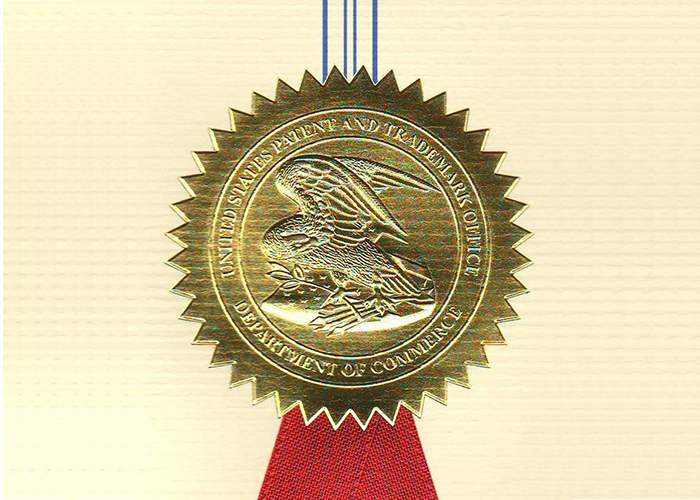
When a biotech firm sells investors on the promise of a new drug, what they are really selling is the intellectual property behind their innovation. That’s why biotech firms need a strong patent system to safeguard their IP.
That’s also why the Biotechnology Innovation Organization (BIO) has always worked vigilantly to promote America’s patent system. BIO continues to build its work in this area, according to Joe Franklin, BIO’s Chief Legal and Policy Officer, who laid out the new initiatives and the issues involved ahead of International IP Day on April 26.
“We are working on Capitol Hill, in the courts, and in international fora to advocate and educate stakeholders about how IP supports a strong biotech ecosystem—and how best to protect it,” said Franklin.
As David Lachmann, BIO Senior Director for Federal Government Relations, explained, policies and court decisions that weaken U.S. IP protections risk America’s biotech leadership. “China has a history of IP theft, which continues, but they are innovating successfully and strengthening their IP system to protect those innovations,” Lachmann said.
“That’s going to be the challenge to the U.S. going forward. Are we still going to be the gold standard for IP protection? Are people going to want to invest here? Do we want this essential industry in our country?” Lachmann asked. “At this point, these are national security questions. If we fall behind in IP, we fall behind in biotech, leaving Americans with reduced access to medicines and surrendering a strategic advantage.”
BIO’s new work in IP
BIO’s longstanding work to promote IP protections has included regularly convening the BIO IP Counsels Committee, a group of legal experts working for BIO members who collaborate on IP issues.
“The BIO IP Counsels Committee is an awesome set of subject matter experts with legal expertise on patent and IP issues, like Hatch-Waxman and biosimilars,” said John Delacourt, BIO’s Deputy General Counsel. “Now we are looking to expand that network to bring together different disciplines—lawyers, Hill experts, patient advocates, and others with a policy or communications lens.”
BIO is currently organizing an IP Task Force, where experts from member companies will come together with BIO staff to drive BIO’s IP strategy and specific policy activities, according to Franklin. Meanwhile, BIO’s Board has created the Economic Growth, Innovation, and Intellectual Property Committee, which will set BIO’s IP strategy and oversee the IP-related work performed by the IP Task Force and elsewhere at BIO.
These initiatives will enable a focus on the most important policy priorities and advocacy efforts in the area of IP, to ensure BIO has the highest possible impact on issues that matter, according to Franklin. Along with advocacy, the work will include support for thought leadership in the form of reports and other publications, to help lawmakers and the public better understand the issues, he added.
Specific areas for action
According to Lachmann, one issue the public could understand better is multiple patents. Several patents can be necessary to protect different aspects of a drug, or improvements, such as inventing means for taking medicine as a pill instead of an injection, he explained.
“Judging by the public debate, most people think patents are basically good, but they are suspicious of multiple patents because they don’t understand the difference between a single invention and a product that may include multiple inventions,” according to Lachmann.
That’s why BIO is working to explain to lawmakers and the public about the risks of the ETHIC Act, proposed legislation that would render all but one patent associated with a pharmaceutical unenforceable, he said.
BIO is engaged in congressional advocacy for IP protections on several fronts. For example, BIO entered a statement for the record in an April 16 hearing before the Senate Health, Education, Labor & Pensions Committee.
The statement explained the importance of exclusivity periods for newly invented biologics and discussed a proposal for the Food and Drug Administration (FDA) to improve transparency of this exclusivity.
“Put simply, life science innovations are hard to discover and develop, and yet they are often very easy to copy, which illustrates why patent protections are so vital,” said BIO’s statement.
In addition to work on the Hill, BIO is also working through the courts. BIO recently partnered with PhRMA to discuss the implications of a pending Supreme Court patent case on drug innovation in an amicus brief submitted to the Court on March 27.
The brief outlined the importance of enabling generic drugs while protecting innovation, a balance enshrined in the 1984 Hatch Waxman Act. It also explained the importance of research into new indications.
“Medical progress depends on costly investment in research and development, including investments to study existing medicines for potential new uses,” according to the amicus brief. “That post-approval research has delivered important new treatments for hard-to-treat and rare diseases, and the benefits of some of these new uses have dwarfed the benefits of the original indication several times over.”
Franklin said the amicus brief delves into complex topics that deserve to be better understood.
“The brief emphasizes the nuances of the biopharma IP landscape and stresses the importance of the Hatch-Waxman framework, which balances innovation with market entry of generics,” he explained. “To be relevant in the IP space, we have to address complex legal and policy issues with nuance.”
BIO’s international work includes submitting comments to the U.S. Trade Representative’s office for the annual Special 301 report. That report informs trade policy by identifying practices that weaken IP protections, including when drug makers are pressured to give up their licensing rights and localize their technology in exchange for accessing a country’s market.
The submission explains why it’s important to address such unfair practices by China and other international competitors. “A robust biotech ecosystem in the U.S. is a national security priority,” Franklin said. “IP is obviously central to that.”
This centrality of IP is a message that Franklin wants to emphasize.
“IP intersects with so many areas that are really important to BIO, like national security, trade, and regulatory modernization,” Franklin said. “By showing how these areas are connected with IP, we can help to promote IP policies that enable a strong biotech ecosystem.”
The post BIO is expanding its work to defend IP appeared first on Bio.News.
Apa Reaksi Anda?
 Suka
0
Suka
0
 Kurang Suka
0
Kurang Suka
0
 Setuju
0
Setuju
0
 Tidak Setuju
0
Tidak Setuju
0
 Bagus
0
Bagus
0
 Berguna
0
Berguna
0
 Hebat
0
Hebat
0