


















































%20and%20Batch%20Production%20Records%20(BPR).png)
















Monitoring Mammalian and Microbial Bioprocesses in Real Time
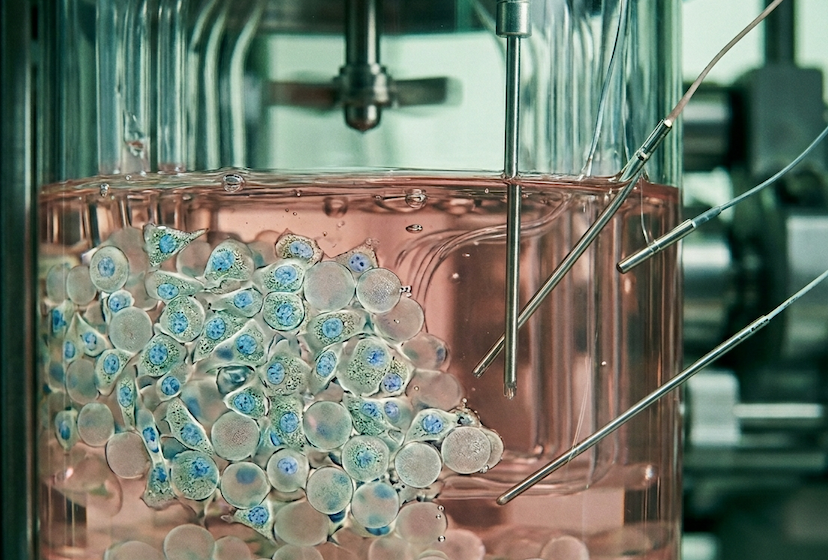
At the 2026 BiOS conference in San Francisco, researchers presented a biosensing platform aimed at improving how living cells and tissues are monitored during drug bioprocessing. Known as TissueSense, the system provides continuous, real-time insight into cellular behavior without disrupting the biological environment.
In biopharmaceutical manufacturing, maintaining consistent cell health and productivity is essential. Yet many monitoring approaches still rely on intermittent sampling or endpoint measurements, offering only partial visibility into dynamic biological processes. TissueSense addresses this limitation by enabling continuous, in situ observation—capturing changes as they unfold.
The platform combines resonator-based photonic sensing with phase contrast microscopy, allowing simultaneous detection of biochemical activity and structural changes in cells. This dual approach provides a more complete picture of how cells respond to process conditions, such as nutrient shifts or environmental stress, which directly impact production outcomes.
A defining feature of the system is its label-free operation. Conventional biosensing methods often require fluorescent markers or reagents that might alter cell behavior or limit long-term monitoring. By removing these constraints, TissueSense supports extended observation of living systems in conditions closer to their natural state, an advantage for prolonged bioprocesses.
Data from the platform are analyzed using machine learning to simultaneously quantify up to 18 biomarkers, linking molecular outputs—such as secreted proteins—to tissue structure and function. This multiplexed capability is particularly relevant in drug manufacturing, where small variations in cellular activity can influence yield, quality, and reproducibility.
While TissueSense focuses on mammalian tissue models, parallel advances in microbial systems highlight a broader shift toward continuous, high-resolution monitoring across bioprocessing platforms. In yeast-based systems, for example, researchers have developed microbead-based cultivation methods that enable high-throughput, label-free screening of millions of individual mutants in extremely small volumes. These approaches can enrich desirable traits, such as resistance to metabolic inhibitors, by thousands-fold, supporting strain optimization for industrial bioproduction.
Similarly, in bacterial bioreactors, automated flow cytometry techniques now allow real-time tracking of population dynamics and physiological states. By combining DNA staining with indicators of active replication, these systems provide continuous insight into growth rates and cell cycle behavior, helping optimize feed strategies and overall process performance.
Together, these developments point toward a more integrated future for bioprocess monitoring—one that spans mammalian, yeast, and bacterial systems. Continuous, non-destructive sensing technologies are enabling researchers and manufacturers to move beyond static measurements toward dynamic control of biological production.
The post Monitoring Mammalian and Microbial Bioprocesses in Real Time appeared first on GEN - Genetic Engineering and Biotechnology News.
Apa Reaksi Anda?
 Suka
0
Suka
0
 Kurang Suka
0
Kurang Suka
0
 Setuju
0
Setuju
0
 Tidak Setuju
0
Tidak Setuju
0
 Bagus
0
Bagus
0
 Berguna
0
Berguna
0
 Hebat
0
Hebat
0