














































%20and%20Batch%20Production%20Records%20(BPR).png)
















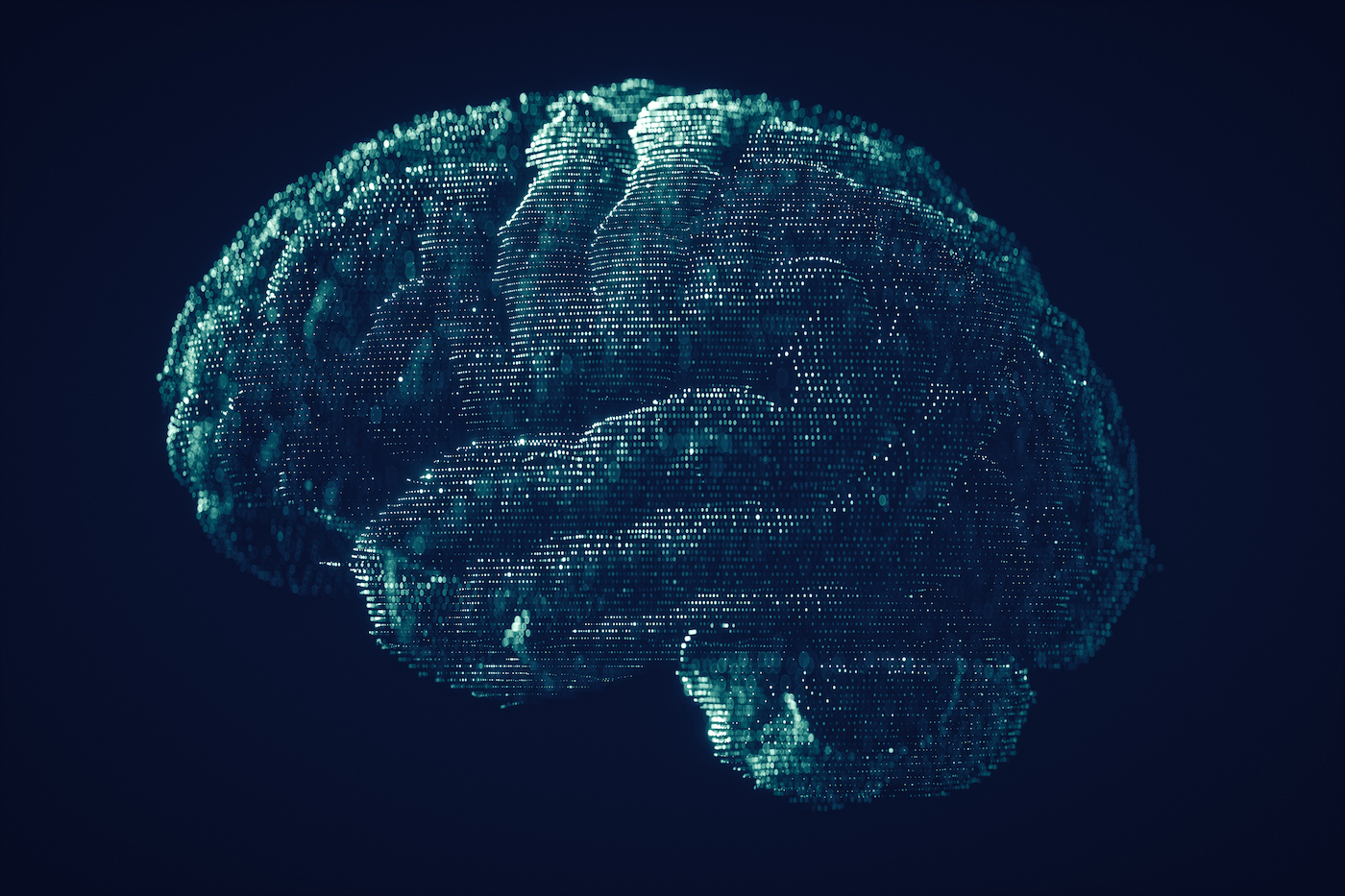
Brain Histamine Map Links Genetic Factors to Mental Health and Psychiatric Disorders

A study headed by researchers at King’s College London and the University of Porto has mapped the histamine system in the brain. Histamine, a molecule more commonly associated with allergies, plays a separate but poorly understood role in brain function. The new study addresses this gap, building the first multiscale map of the histamine system which spans from genetics to behavior and related mental health conditions.
The findings provide a new framework for understanding how this often-overlooked chemical system contributes to brain function and could point towards new treatment strategies for histamine-related conditions such as depression, ADHD, and schizophrenia. The study was funded by the National institute for Health and Care Research (NIHR) Maudsley Biomedical Research Centre.
Daniel Martins, MD, PhD, visiting senior research fellow at the Institute of Psychiatry, Psychology & Neuroscience (IoPPN) King’s College London, said, “This work provides a crucial foundation for future research. By integrating molecular biology, brain imaging, and computational analysis, it offers a new perspective on how neurotransmitter systems are organized across the human brain. As neuroscience moves toward more integrated and personalized models of mental health, understanding systems like histamine may prove essential for unlocking new approaches to diagnosis and treatment.”
Martins is first and corresponding author of the team’s published paper in Nature Mental Health, which is titled “Mapping histamine pathway networks in the human brain across cognition and psychiatric disorders.” In their paper the team concluded, “This study provides an integrated characterization of the histaminergic system in the human brain, leveraging transcriptomic, neuroimaging, and functional datasets to delineate its molecular organization and relevance to brain function underlying cognition and psychiatric disorders.”
Histamine is a neurotransmitter, a molecule crucial for neurons to communicate with one another, the authors explained. “Neuronal histamine plays a crucial role in the regulation of brain function, serving as a neuromodulator with widespread influence across multiple neurotransmitter systems.” However, neuroscience research has classically focused on understanding other neurotransmitter systems such as dopamine and serotonin.
As the investigators noted, the organization of histamine in the human brain remains incompletely characterized. However, they explained, dysregulation of the histaminergic system has been implicated in a number of neuropsychiatric conditions, including anxiety, depression, schizophrenia, and autism spectrum disorder (ASD), as well as neurodegenerative diseases including Alzheimer’s, Parkinson’s, and Huntington’s diseases. “Therefore, targeting the brain histamine system has garnered significant attention as a potential new therapeutic strategy for treating these disorders, with pharmacological interventions aimed at modulating histamine receptor activity showing promise in preclinical models.”
Histamine acts through four known histamine receptors, which are responsible for how the signal will influence receiver neurons. Each of these histamine receptors, (histamine receptor H1 (encoded by HRH1), H2 (HRH2), H3 (HRH3) and H4 (HRH4)), mediates distinct functions. For their newly reported study, Martins and colleagues carried out what they described as multimodal analysis, integrating transcriptomic, neuroimaging, developmental and functional datasets to map the architecture of the histaminergic system.
To build a comprehensive map of how histamine acts in the brain, researchers first combined genetic and molecular data with physical maps of the brain.
This revealed which brain regions receive more input from the brain’s histamine system, and which parts show greater capacity to respond to histamine. These molecular data were then linked with positron emission tomography imaging of histamine receptors in living individuals, as well as functional neuroimaging databases that map brain regions to specific cognitive processes and mental health conditions. This type of scan shows how different parts of the brain are working by tracking a tiny amount of radioactive tracer in real time.
Their results found that different histamine receptors were found on brain cells that either turn activity up (excitation) or turn it down (inhibition). “The findings reveal that histaminergic genes exhibit distinct cellular and regional expression profiles, closely aligning with known histaminergic neuroanatomy and function,” they wrote. “At the single-cell level, histamine receptor H1 and histamine receptor H2 were enriched in excitatory neurons, whereas histamine receptor H3 showed preferential expression in inhibitory populations.” This suggests histamine may be important in maintaining the balance between excitation and inhibition, a fundamental property of healthy brain function.
Brain regions with higher histamine-related gene expression were consistently associated with processes such as emotional regulation, stress and fear responses, decision-making, impulsivity, reward, sleep, and memory.
The parts of the brain where histamine-related genes were most active also overlapped significantly with brain regions known to be affected in several psychiatric conditions, including attention-deficit/hyperactivity disorder, major depressive disorder, schizophrenia, and anorexia nervosa. This is in keeping with previous hypotheses linking histamine to these disorders. “By linking histaminergic gene expression to brain-cell types, neurotransmitter systems, cognitive domains and psychiatric disorders, these correlational findings generate several hypotheses concerning histamine’s critical role in brain organization, neurodevelopment and mental health, which further experimental mechanistic work should prioritize and build onto investigate causal relationships,” the investigators concluded.
Martins said, “Current psychiatric treatments largely target neurotransmitters such as serotonin and dopamine, yet histamine interacts closely with these systems and influences their activity. By providing a detailed map of histamine-related pathways, this work suggests new opportunities for developing treatments that target this system more directly, particularly for symptoms such as cognitive dysfunction, fatigue, and impaired motivation.
While these findings do not establish a direct causal role, they suggest that histamine signalling may contribute to regional vulnerability in these disorders. This aligns with a growing view in psychiatry that mental health conditions arise from disruptions across interacting brain systems rather than a single chemical imbalance.”
This new map paints a neural picture of a previously lesser-studied molecule. It opens up future avenues of research into exactly what histamine is doing in various cell types and parts of the brain.
“We want to emphasise that these findings are hypothesis-generating and based on large-scale datasets that capture patterns rather than direct mechanisms,” commented senior author Steve Williams, PhD, professor of neuroimaging at IoPPN King’s College London. Future studies will focus on testing how histamine signaling changes in living individuals, for example through pharmacological interventions or longitudinal imaging approaches.
Co-author Daniel Van Wamelen, PhD, clinical senior lecturer in neuroscience at IoPPN, King’s College London and one of the authors on the paper said: “This kind of work is already taking place at King’s College London, for example in the iMarkHD project. In this project we use Positron Emission Tomography scans to study a specific histamine receptor (called H3) in people with Huntington’s disease, an inherited condition that affects the brain. The goal is to see how histamine activity changes in different parts of the brain over time, and how these changes relate to symptoms such as apathy, depression, and anxiety.”
The post Brain Histamine Map Links Genetic Factors to Mental Health and Psychiatric Disorders appeared first on GEN - Genetic Engineering and Biotechnology News.
Apa Reaksi Anda?
 Suka
0
Suka
0
 Kurang Suka
0
Kurang Suka
0
 Setuju
0
Setuju
0
 Tidak Setuju
0
Tidak Setuju
0
 Bagus
0
Bagus
0
 Berguna
0
Berguna
0
 Hebat
0
Hebat
0