

















































%20and%20Batch%20Production%20Records%20(BPR).png)















First complete NHS standards for children’s oral health aim to localise care
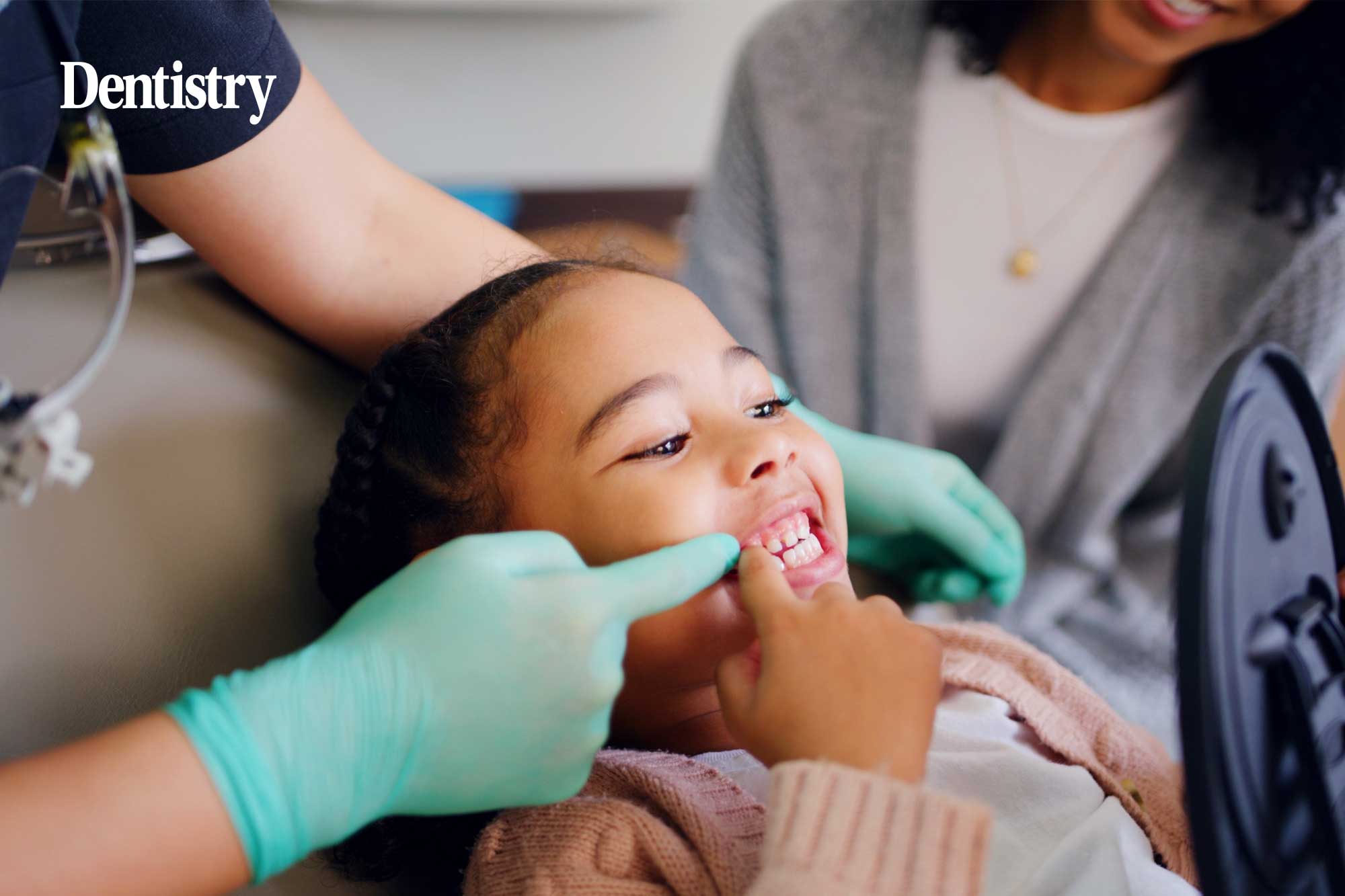
In a ‘pivotal moment’, NHS England has released updated standards for children’s oral health which prioritise uncomplicated care in the most local setting possible.
Replacing the 2018 NHS England clinical standard for paediatric dentistry, the new document is a structured, level-based model of oral healthcare for children and young people.
The guidance applies to all paediatric oral healthcare providers across primary dental care, community dental services, hospital dental services and tertiary paediatric centres.
Oosh Devalia, president of the British Society of Paediatric Dentistry (BSPD), said: ‘This standard is a pivotal moment for children’s oral health in England. For the first time, we have a single, coherent national document that supports every professional, from a newly qualified dentist in general practice to a consultant leading a tertiary team. It sets the benchmark not just for clinical care, but for equity, safety and accountability.’
However, the new guidance met with a degree of skepticism from some dental experts. Martyn Cobourne, dean of the Faculty of Dental Surgery (FDS) at the Royal College of Surgeons of England (RCS England), said: ‘With tooth decay the leading cause of hospital admissions among five- to nine-year-olds in the UK, and wide variation in decay-related extractions across the country, it is right to see a renewed focus on prevention and improving access to dental healthcare for children.
‘However, these standards will only make a difference if there are enough dental professionals to deliver them. This means investing in a strong NHS dental workforce and ensuring that reforms to the NHS dental contract go far enough to support appropriate care for children. Without that, NHS dentistry will continue to struggle to meet demand and deliver these standards in practice.’
What are the new standards for children’s oral health?
Localisation
‘Paediatric dental services should be planned and delivered in alignment with the neighbourhood health direction set out by NHS England, working as part of integrated neighbourhood teams to support holistic management of children and young people in the community.’
The news standards say that care should be provided in the least complex and most accessible setting that is appropriate for each child. Oral healthcare providers should work closely with health visitors, school nurses, GPs, paediatrics, social care, safeguarding teams, early years providers and families.
Virtual pathways should also be used to support the delivery of care closer to home.
Prevention first
‘Clinical care for children and young people should be grounded in minimally invasive, outcomes-focused principles, prioritising tissue preservation, early intervention, and child-centred approaches that support long-term oral health.’
Every contact with a dental professional should include preventive advice such as on toothbrushing, fluoride, diet, sugar intake, and tobacco or alcohol where relevant.
All care should be evidence-based and minimally-invasive where possible, with an emphasis placed on reducing the need for operative dentistry.
Care plans should also include caries and periodontal risk assessment in line with up-to-date guidelines.
Child- and family-centred care
‘The child’s best interests must remain central to all decision making, with their views heard and given weight in line with their age, maturity and understanding.’
The guidance says that the child and their family should be placed at the heart of care with an emphasis on shared decision making.
Communication must be developmentally appropriate and inclusive of parents or carers, including those with additional needs, communication difficulties or non-native English speakers.
Safeguarding duties also require dental teams to identify, document and respond to concerns about neglect, abuse or vulnerability.
Levels of care
The standards define a stepped model for levels of care:
- Level 1a: general dental practice for low-complexity care
- Level 1b: enhanced child-focused primary care for low-to-moderate complexity, mainly acute dental disease without major modifying factors
- Level 2: intermediate care for moderate complexity, behaviour management needs, or sedation
- Level 3a: specialist-led care for high complexity, complex trauma, developmental anomalies, medical or behavioural complexity, and some general anaesthetic care
- Level 3b: consultant-led or tertiary care for very high complexity, rare conditions, craniofacial cases, and complex general anaesthetic-dependent care.
It is intended that commissioners, providers and managed clinical networks can use the standard to update local service specifications and pathways. Where services are not yet compliant, implementation should be phased with agreed timelines. The standard will be reviewed every five years, or sooner if policy changes.
The full standards can be found here.
Follow Dentistry.co.uk on Instagram to keep up with all the latest dental news and trends.
Apa Reaksi Anda?
 Suka
0
Suka
0
 Kurang Suka
0
Kurang Suka
0
 Setuju
0
Setuju
0
 Tidak Setuju
0
Tidak Setuju
0
 Bagus
0
Bagus
0
 Berguna
0
Berguna
0
 Hebat
0
Hebat
0