







































%20and%20Batch%20Production%20Records%20(BPR).png)















From botox to algorithms: How AI is redefining cosmetic medicine
In a clinic in Bandra, a patient holds up her phone under a ring light while an app maps her pores, the depth of a nasolabial fold, the faint brown patch near her left cheekbone. The doctor has not touched her face yet. The screen has already produced a skin score, a projected ageing curve and three treatment options ranked by expected impact. Ten years ago this conversation started with a mirror and a guess. Today it starts with a dataset.
This is the exciting part of the AI story in aesthetic medicine. The headlines go to botox and fillers, but underneath them sits a growing layer of software: imaging tools that read skin the way a radiologist reads a scan and algorithms that suggest a neurotoxin dose. Then there are robots that extract hair follicles one at a time, and simulators that show a patient her own face five years forward before she signs a consent form.
Reading the skin before touching it
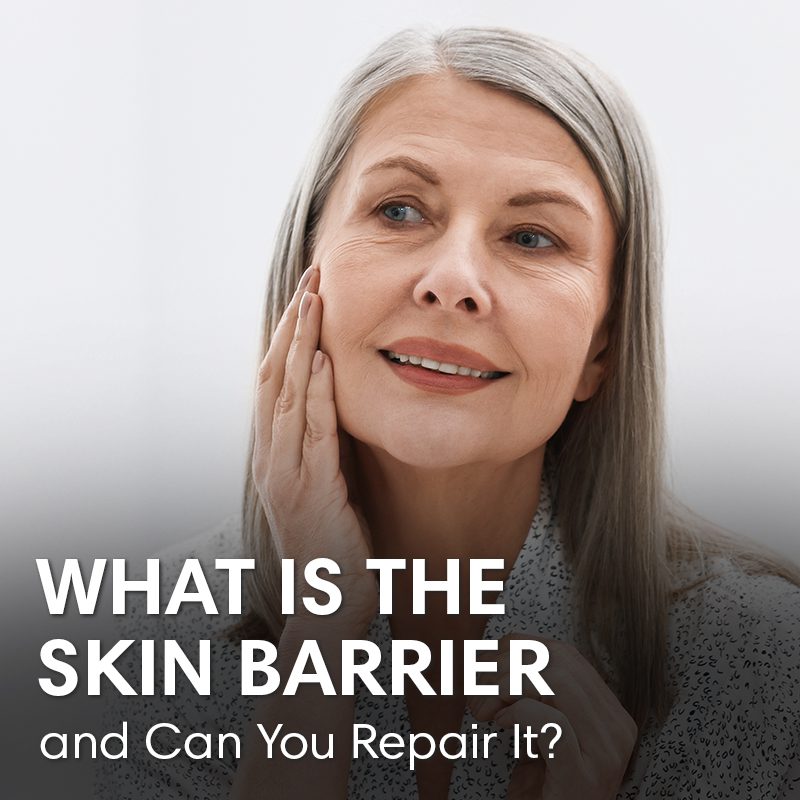
AI-based skin analysis is the most mature layer of this shift. Devices such as VISIA complexion analysis and apps built by big companies now generate detailed maps of wrinkles, pigmentation, pore size and sebum activity in seconds. Earlier, this work relied on a dermatologist’s trained eye and a good light source. The scale of this shift shows up in the numbers. Future Market Insights projects that the Indian AI skin market will grow at a compound annual rate of 20 per cent through 2035, placing India alongside China as one of the two fastest-growing markets globally.
From diagnosis to dosage
The more contested frontier is treatment planning itself. Software used in some botox and filler training programmes now offers simulation-based facial assessment, mapping dynamic muscle movement and suggesting a starting dose. Smart filler mapping tools overlay a patient’s scan with known arterial risk zones, flagging areas where an injection could be dangerous before the needle comes anywhere near the skin.
None of this removes the injector from the room. Every account of these tools, from clinical training literature to industry commentary, repeats the same line: AI supports judgement, it does not replace it. A hairline, a smile, the particular way one eyebrow sits higher than the other, these are still read by a trained clinician, not a model.
There is also a healthy dose of scientific caution built into this story. A study published in Plastic and Reconstructive Surgery Global Open, using facial-analysis tools to estimate age before and after filler injections, found that AI-estimated age did not shift over the 90 days following treatment, even though patients reported feeling and looking younger. It is a useful reminder that an algorithm and a mirror do not always agree, and that patient-reported outcomes remain a measure AI has not yet learned to fully capture.
Robots in the hair transplant chair
Nowhere is automation more visible than in hair restoration. Robotic systems such as ARTAS now scan the scalp in real time, select the healthiest follicles and extract them with a precision no human hand can consistently match, a shift already available at clinics in cities including Ahmedabad. Robotic-assisted extraction reduces the physical fatigue of a procedure that can otherwise run six to eight hours with a surgeon bent over a single patient, freeing that time for planning the hairline and pattern instead of the repetitive mechanics of extraction.
Seeing the future face first
Perhaps the most patient-facing use of AI is the preview. Simulators now take a single selfie and generate a realistic projection of how a face might look after filler, a neurotoxin treatment or resurfacing, built on a database of tens of thousands of real treatment cases. For a patient nervous about looking overdone or unnatural, seeing an approximation before committing changes the entire consultation conversation.
Every clinic offering these simulators adds the same caveat. A projection cannot account for a patient’s bone structure, muscle movement or how their particular skin will respond to a needle, so the final say still belongs to the person holding it.
What 2035 might actually look like
A review published in the Journal of Cosmetic Dermatology describes cosmetic dermatology moving away from short-term aesthetic fixes and toward long-term, AI-guided strategies for preserving skin health over a lifetime, folding in microbiome data, immune modulation and generative AI-designed formulations.
That framing matters, particularly in India, where the same review notes that culturally adapted AI systems, trained on Indian skin tones and ageing patterns rather than datasets built largely on lighter skin, remain a research priority rather than a solved problem. A tool trained mostly on Korean or American faces will not automatically read a face in Lucknow or Coimbatore with the same accuracy.
By 2035, the realistic picture looks like this. Skin analysis will be near-instant and standard at the first consultation, not a premium add-on. Predictive software will assist dosing for neurotoxins and fillers, with a trained doctor checking and overriding it when a face doesn’t match the model. Robotic-assisted hair restoration will be common, not a novelty reserved for flagship clinics in Mumbai or Bangalore. And previews generated from a single photograph will be a normal part of the first conversation, not a gimmick.
The miracle, and its fine print
It is tempting to describe all this as a miracle for ageing, a phrase that shows up often in clinic marketing and rarely in peer-reviewed journals. The more accurate description sits somewhere quieter. AI is proving useful at what machines do best: measuring, mapping, predicting, and repeating a precise motion thousands of times without fatigue. What it has not replaced, and what none of the research reviewed here suggests it will replace by 2035, is the judgement of a trained doctor who knows when a template does not fit the person sitting in the chair.
For patients, the practical advice has not changed much even as the tools have. Ask what the AI tool actually measured, ask what data trained it, and ask what the doctor would do differently from what the screen recommends. The algorithm can suggest. For the foreseeable future, the decision still needs a human signature.
The post From botox to algorithms: How AI is redefining cosmetic medicine appeared first on Express Pharma.
Apa Reaksi Anda?
 Suka
0
Suka
0
 Kurang Suka
0
Kurang Suka
0
 Setuju
0
Setuju
0
 Tidak Setuju
0
Tidak Setuju
0
 Bagus
0
Bagus
0
 Berguna
0
Berguna
0
 Hebat
0
Hebat
0