









































%20and%20Batch%20Production%20Records%20(BPR).png)













India’s biotech innovation may be hidden in its biodiversity
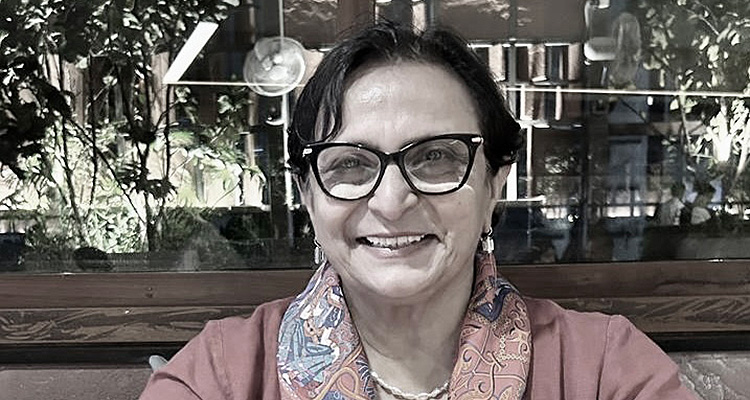
You have studied the Parsi population for quite a few years. What has the data taught you that surprised you?
Actually, being a Parsi myself, and being a biologist and a geneticist, I knew what lay within these genomes due to endogamy, because I have worked on diversity. So I know that a gene in humans or a gene in bacteria will have common features. So those common features can be elucidated. So when you have endogamy, where the population is completely, you know, almost similar because they’ve married internally for so many years. I mean, when did we arrive in India? It was the 8th century. So it was a big opportunity there, because also the community was rapidly vanishing. It was endangered. So I thought that was the moment and we just started on the collection.
It took planning and it was done fully bioethically and was the topmost quality multi omic collection. So we collected nine tubes per person, seven millilitres each. We took 60 pages of the data. It was a methodical collection, a biobank creation. And we reached around 4,700 across nine cities in India. So that itself took a while.
And then it was after that we went into the sequencing of 100 mitochondrial genomes and created a very deep, reference standard of the genome, both male and female. So all that has revealed something extraordinary, that what we And then it was after that we went into the sequencing of 100 mitochondrial genomes and created a very deep, reference standard of the genome, both male and female. So all that has revealed something extraordinary, that what we suspected was validated to some level by the early biomarkers that surfaced, that all of, because they live long, so they do have longevity markers in the mitochondrial data that we did. And they also have autoimmune conditions, which was also well known, but biomarkers were found in this population, and colon cancer. And IBS. So all those markers showed up. And so now we have to validate that.
We have embarked on an AI-enabled drug discovery, which could result in anything. It could result in antibodies, monoclonal, or it could be cell therapies, it could be stem cell therapies, CAR T therapies, but we are embarking on that. With the original data, which we have, so the biobank was created.
What I was trying to stress on today, you have to own where you begin. The idea has to be yours for innovation to succeed. Of course, the innovation cycle is 20 years. I mean, now with AI, we can shorten it to say 7 to 8 years, maybe. But again, very focused. It has to be very focused.
If you’re doing Alzheimer’s, you have a set of team there. But through partnerships, you cannot do this on your own. The ownership of the data remains with you. The ownership of the pipelines remains with you. But you have to partner for various things to drive an effective molecule, unique innovation into the market in the 8th year or 10th year.
Parsi dataset is unique. Can this model work with other Indian populations as well?
Absolutely, it will work. So for example, there are these tribal populations that are haemophilic.
You can go into those populations, do a proper collection. The thing is to do it properly, not half-heartedly. And you do a full scientific collection with background data, you know, create the biobank, create the database, put it all together.
So that becomes the unique treasure. And on that, you apply science to elucidate information out of it, to create novel drugs. That’s where I started.
India is a biodiversity story. It is one of its biggest trends. But how we do it, where we do it, and how we use the data, capitalise and analyse the data, it’s in the analytics. It’s in the analytics. And the ability to see across, you know, which AI is enabling now. Earlier we used to do it ourselves by writing the code.
But today you can do it. You can see, like, if supposing the haemophilic tribal population could have a gene in common with the Parsis in their rare disease. So you could make a connect. So that is possible also.
You have taken genomics into diagnostics, food and agriculture as well. How do you turn a genomic discovery into something people can actually use?
See, the first outcome is the diagnostics. So the biomarkers, say, for example, for colon cancer that we have, we should pick them out and validate them. Now that goes as part of the panel. So there are already panels existing, say, for colon cancer. It adds to the panel. Also, people are different.
So if you were to do a colon cancer test and I were to do it, different genes would light up because different biochemical pathways result in different outcomes. So then the doctor would know which pathway is where your, I mean, a person’s colon cancer biomarkers lie, and they can give the proper precision drug therapy. That’s how it will apply.
Because all are not the same. There are 20 types of diabetes. Similarly, from that panel where the diagnostic biomarkers come on, you can predict which pathway you fall under.
You know, we may all fall under groups of people who fall under this pathway. Your family may be on this path and our family may be on another path, and then the drug appropriately has to be done. Now doctors, of course, also have to increase their range of knowledge in all of this. That is another story.
What’s your advice for Indian biotech founders trying to raise global PE and strategic capital?
See, I do it all the time. It’s my job. For every idea, for every say, as I was mentioning, the colon cancer, for that I’ve written a project.
So where do I go with that? I mean, I’ve raised global capital, but at the stage where I am today, it’s different, I’ve got too many things as an outcome. So my 50 products, they need different types of capital. So there maybe it’s strategic.
What do I need that capital for? Scale, manufacturing, and marketing. That is a different beast altogether, different set of investors. There, international capital won’t be interested.
It will have to be your local capital, unless you’re going overseas. That brand is an overseas brand, and then you can go for Indian. But you will have to rely on local or strategic investors internationally who may be wanting to enter India, and who may say, okay, we want to position ourselves in this area, and they may pick up that technology from you, or they will invest.
There are multiple models that will emerge there. It’s not one thing. It’s not, I want capital one way. There are multiple ways. There’s the grant, sustain the foundation, keep writing grants. Don’t lose your science.
In your journey, you may fail. I mean, your molecule may, but if you have that grant chugging underneath, the grants must chug on underneath. That’s sort of the basic bread, not even butter.
Then you go into these licensing partnerships, where you licence and pick up some money, co-develop, that kind. Third money is venture capital money. Fourth money is private equity, and the fifth is strategic partnerships. Private equity, strategic go together. They play together, and it depends on what stage you’re at and which product and where. So there’s no one general prescription.
And of course, today, as I was saying, there are the MSME markets. Go for them. At some point, just jump. And the government should facilitate MSMEs, not ask for ‘what’s your revenue here?’ This is not about revenue. This is about a product that’s been created. You want to go to the market. The public will decide whether they want to invest in you or not. It’s not the government law that can stop.
So the government should facilitate startups to go to the markets as soon as possible through the MSME exchange or through the GIFT City exchange or whatever new exchange. They have to create new exchanges to facilitate product-led companies to move. Because how can they scale? How can they manufacture? If not, you want them to waste another 10 years of their life? No.
Where does India still fall short in converting scientific research into commercial biotech success?
I think it’s happening. The science from the labs is coming out in certain institutions. But there is still a lot of work to do. Also, the people doing that science in the labs, they have to be sufficiently motivated. They are not people who execute, the do-or-die type.
They are scientists from certain types of families where the families don’t encourage you to take risks. They don’t have the wherewithal. So, that’s where it stalls.
So now, you should create, perhaps, within that institutional system, a leader who can pick up and who is like a networker also. Every institute should have a business development and/or IP licensor head. And that guy should move around and pick up whatever looks interesting. And he should be a networker. He should move to companies. He should travel, putting these out into the market.
That’s the only way we can move forward fast. A proper business, corporate-type business development. Not your from academia, one guy picking up, trying to flop. That won’t work. A corporate deliverer.
neha.aathavale@expressindia.com
nehaaathavale75@gmail.com
The post India’s biotech innovation may be hidden in its biodiversity appeared first on Express Pharma.
Apa Reaksi Anda?
 Suka
0
Suka
0
 Kurang Suka
0
Kurang Suka
0
 Setuju
0
Setuju
0
 Tidak Setuju
0
Tidak Setuju
0
 Bagus
0
Bagus
0
 Berguna
0
Berguna
0
 Hebat
0
Hebat
0