














































%20and%20Batch%20Production%20Records%20(BPR).png)















Genome-Wide Analysis Identifies BACH2 as Potential Fetal Hemoglobin Activation Target
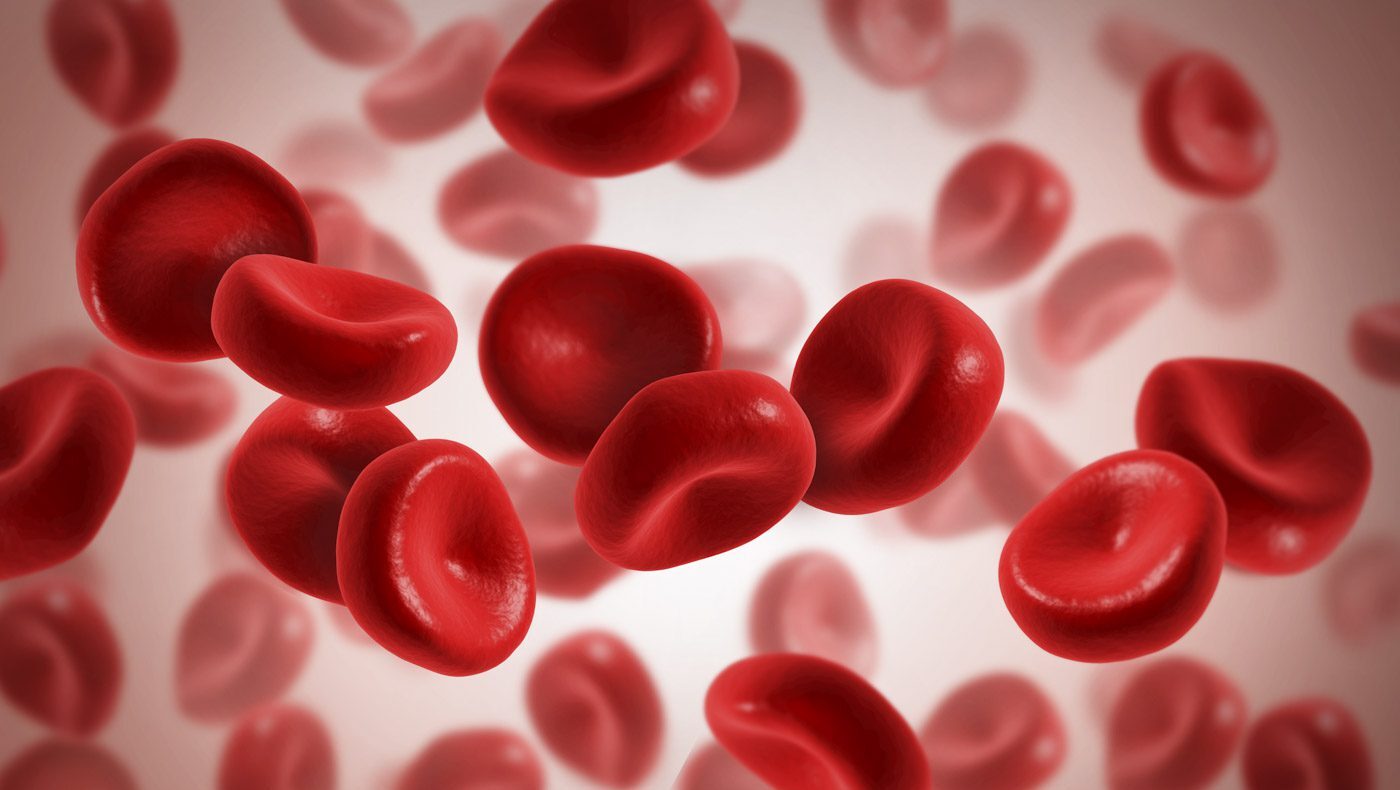
In a major new genome-wide meta-analysis, researchers at Boston Children’s Hospital and the Broad Institute led by Vijay G. Sankaran, MD, PhD, have identified a novel regulatory pathway that activates the expression of fetal hemoglobin (HbF). This pathway, which the authors dub the “BACH2-NRF2 axis,” is independent of the well-known BCL11A transcription regulator, the target of the approved cell therapy Casgevy for sickle cell disease (SCD).
The Boston study raises the interesting prospect of an accessible new target for therapeutic development. The paper, published today in Nature, is entitled: “Human genetics implicates a BACH2-NRF2 axis in fetal hemoglobin activation.”
These new findings “establish the BACH2–NRF2 axis as a tractable and potentially therapeutically targetable regulatory node involved in HbF activation,” the authors write.

[Boston Children’s Hospital]
For the past few decades, researchers have focused on the fetal-to-adult hemoglobin switch as a potential therapeutic avenue for SCD and thalassemia. Fetal hemoglobin expression declines naturally in the first 6-12 months after birth, replaced by adult hemoglobin. Almost 20 years ago, teams led by Swee-Lay Thein, MD, and, separately, Sankaran and Stuart Orkin, MD, identified BCL11A as a key regulator of that switch. The approval in December 2023 of Casgevy, the gene editing therapy sponsored by Vertex and CRISPR Therapeutics, provided clinical validation of that strategy and has transformed the lives of scores of SCD and thalassemia patients.
In the Nature report, Sankaran’s team analyzed a trove of genome-wide association study (GWAS) data from more than 28,000 individuals spread across European, African, and Asian populations. The study identified 91 discrete genetic associations across 12 genomic regions. One of the strongest signals, albeit weaker than the original GWAS findings two decades ago, highlighted a novel regulatory circuit—the BACH2–NRF2 axis—that directly governs γ-globin gene expression.
BACH2 variations
BACH2 is a known transcription regulator, Sankaran told GEN, but it was not previously suspected as having a role in HbF regulation. Sankaran’s team performed studies to pinpoint the precise genetic variant that contributed to the GWAS signal. The causal variant—rs1010474-C—reduces expression of BACH2 in erythroid progenitor cells. Genetic and biochemical experiments to block BACH2, either using short hairpin RNA knockdown, base editing, or pharmacological inhibition using a small-molecule inhibitor, led to marked elevation of γ-globin transcription (one of the two globin chains that make up HbF) and increased the proportion of HbF-containing red blood cells without disrupting normal erythropoiesis.
Sankaran’s team went on to demonstrate that BACH2 functions as a direct repressor at the γ-globin promoter and locus control region LCR. Under baseline conditions, BACH2 restricts chromatin occupancy of the transcriptional activator, NRF2. But if BACH2 is lost or inhibited, NRF2 binding is able to expand across γ-globin regulatory elements. Loss of BACH2 triggers the formation of discrete nuclear NRF2 foci that specifically colocalize with active sites of γ-globin transcription.
By mapping the transcription factor binding sites, the team identified overlapping consensus motifs for BACH2 (−94 to −106) and NRF2 (−96 to −105) within the upstream γ-globin promoter. Using base editors, the team engineered single-nucleotide substitutions to study the impact of targeted point mutations on gene expression. Promoter variants including −98G>A, −99G>A, and −104G>A—similar to those that might be contemplated in a therapeutic setting—reduced BACH2 binding affinity while enhancing NRF2 binding, resulting in robust HbF expression. Biochemical analysis further confirmed a direct protein interaction between domains of BACH2 and NRF2, indicating that BACH2 physically interacts with NRF2 to mute its transcriptional activity.
Parallel pathways
The Nature study from Sankaran’s team also shows that the BACH2–NRF2 axis operates independently of BCL11A. The BACH2–NRF2 promoter motif is sandwiched between two BCL11A binding sites. The researchers found no evidence of direct physical contact between BCL11A and BACH2 or NRF2. Furthermore, simultaneous depletion of both BACH2 and BCL11A yielded additive increases in γ-globin expression, suggesting the potential for multi-target genetic or pharmacological therapies.
Sankaran tells GEN he is excited by the finding that the BACH2 pathway is “completely independent of the BCL11A repressive pathway and is primarily involved in activation of HbF. So, combined editing at the [gamma-globin] promoters,” in addition to what companies like Shanghai-based CorrectSequence Therapeutics is doing at the BCL11A binding site, “could also be beneficial.”
Addressing the translational potential of their work, Sankaran and colleagues emphasize that “the presence of high-confidence human genetic evidence is a more critical predictor of clinical success than the absolute magnitude of the variant effect size.”
Naturally, this report raises the intriguing prospect of new avenues for combining BCL11A-targeted strategies with BACH2/NRF2 modulation for treating SCD and β-thalassemia. “There are already small molecules in development for SCD that we suspect might target BACH2,” Sankaran said. “I think our findings add clarity on the mechanism by which this pathway might modulate HbF.”
The post Genome-Wide Analysis Identifies BACH2 as Potential Fetal Hemoglobin Activation Target appeared first on GEN - Genetic Engineering and Biotechnology News.
Apa Reaksi Anda?
 Suka
0
Suka
0
 Kurang Suka
0
Kurang Suka
0
 Setuju
0
Setuju
0
 Tidak Setuju
0
Tidak Setuju
0
 Bagus
0
Bagus
0
 Berguna
0
Berguna
0
 Hebat
0
Hebat
0