











































%20and%20Batch%20Production%20Records%20(BPR).png)
















Hopes Raised for More Sustainable Oligonucleotide Manufacturing

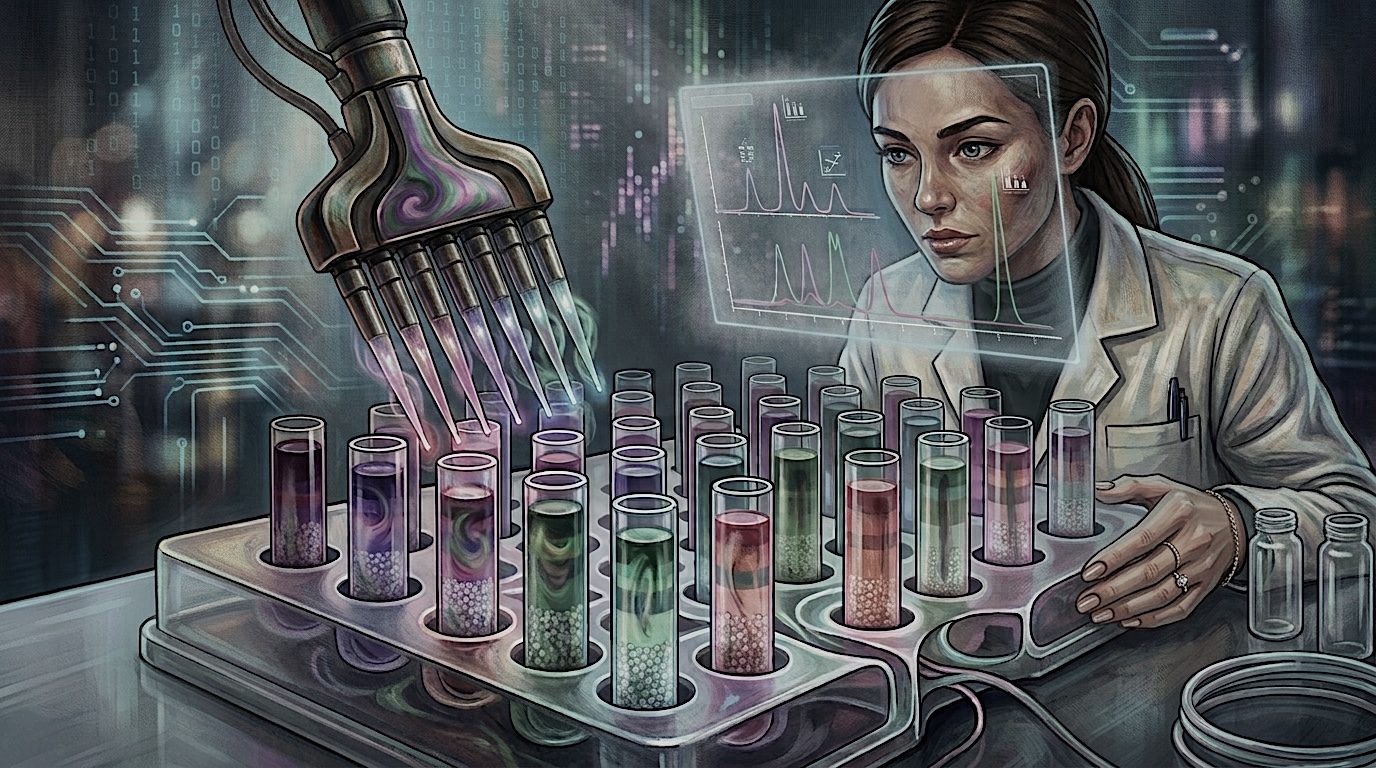
Large-scale manufacturing of oligonucleotides could become more environmentally friendly if the biotech industry can overcome the challenges of a promising technique for synthesizing them. That’s according to QurAlis, a clinical-stage biotech company targeting neurodegenerative disease.
Hagen Cramer, PhD, QurAlis’s CTO, thinks synthesizing oligonucleotides using enzymes could be more sustainable than traditional solid-phase synthesis methods, but challenges remain for the industry.
“Solid-phase synthesis is convenient—you can have everything automated, it’s fast, and can be used for [many] types of therapeutics,” he says. “However, because it’s a solid-phase synthesis, you have to wash away the external reagents with lots of solvents, and that’s why the mass intensity is high.”
By contrast, manufacturing RNA and DNA using a process that happens in nature and is aqueous-based uses fewer materials in the production of any given mass of product, notes Cramer. However, creating a wide selection of enzymes to manufacture multiple products remains a challenge for the industry.
“Enzymatic synthesis]was explored a long time ago, but it went away because people couldn’t figure out the challenges,” he points out. “But there’s now a lot more money in the industry as we have approved drugs and, hence, it’s now being reinvestigated.”
Other challenges include using enzymatic techniques for manufacturing above the 100-g scale and also speeding up these techniques to be comparable with solid-phase synthesis.
“With solid-phase synthesis, if you have a 20-mer oligonucleotide, you might have to take 80 chemical steps, and you can be efficient and complete all of that in a day, but—with an enzymatic approach—it’s going to take much longer and the development time is also large,” explains Cramer, adding that clinical-stage companies making smaller volumes may want to stick with solid-phase synthesis. But, he continues, commercial-stage companies producing large volumes of product may want to investigate enzymatic approaches as they become available.
“At a certain stage, if you’re working at commercial stage already, you can plan ahead and I think the industry will move toward these new approaches starting post-market,” he says.
The post Hopes Raised for More Sustainable Oligonucleotide Manufacturing appeared first on GEN - Genetic Engineering and Biotechnology News.
Apa Reaksi Anda?
 Suka
0
Suka
0
 Kurang Suka
0
Kurang Suka
0
 Setuju
0
Setuju
0
 Tidak Setuju
0
Tidak Setuju
0
 Bagus
0
Bagus
0
 Berguna
0
Berguna
0
 Hebat
0
Hebat
0