


















































%20and%20Batch%20Production%20Records%20(BPR).png)

















Immune Pathway Identified That Prevents C. albicans Infection from Becoming Deadly
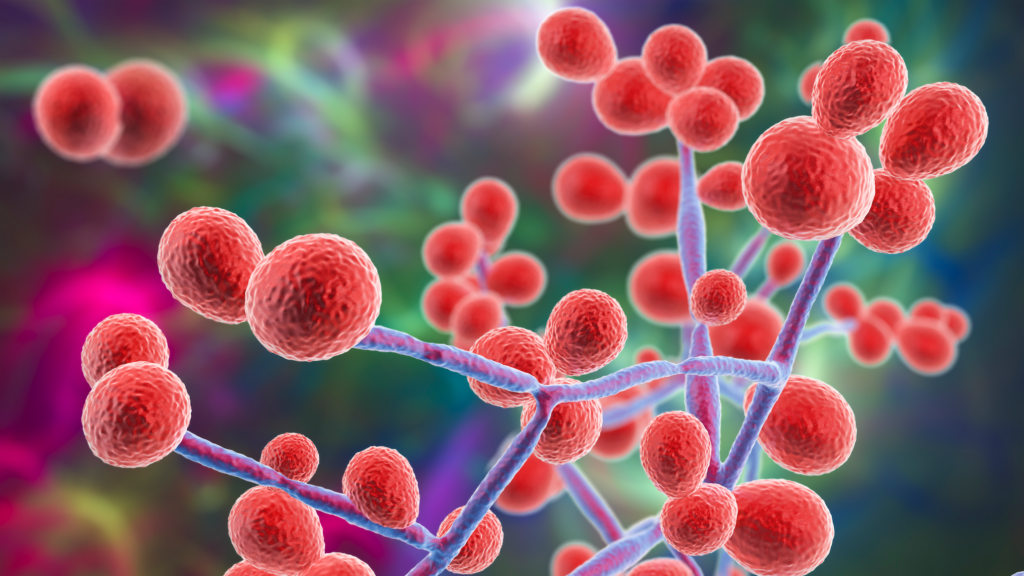
King’s College London researchers have identified an immune pathway that prevents what is normally a harmless fungus, Candida albicans, from developing into a fatal infection.
The team’s study, including experiments in mice, identified a central role for the IL-1 family in mediating rapid and protective immunity against C. albicans mucosal infection. If the results of the preclinical study are confirmed in humans, they could help better understand who is at risk of developing fatal fungal infections and also point to a potential therapeutic target.
The results provide the first potential clues as to why only some patients with weakened immune systems—including those undergoing chemotherapy or living with HIV—are at risk of life-threatening Candida albicans infection. James S. Griffiths, PhD, research fellow, King’s College London, said, “Most people carry Candida albicans harmlessly as part of the body’s natural microbiome, but in immunocompromised patients it can spread throughout the body and become life-threatening. A major challenge has been understanding why a fungus that is normally harmless can suddenly spread beyond its natural niche and cause invasive disease. Our study identified the IL-1 family as a critical early immune defense system that helps prevent this fungus from escaping the mouth and gut and spreading to multiple organs. We hope these findings will help identify patients at greatest risk of invasive fungal disease and provide a foundation for developing new ways to strengthen protective antifungal immunity.”
Griffiths is corresponding author of the team’s published paper in Nature Microbiology, titled “IL-1 family signaling drives mucosal defense against systemic Candida albicans infection.”
C. albicans is a fungus that normally lives harmlessly in the mouth and gut but can sometimes spread through the body and cause fatal disease. Fungal infections kill more than 2.5 million people each year, and C. albicans alone kills almost a million. “While mucosal infection is common and contributes to morbidity, it is invasive systemic disease that drives mortality,” the authors explained.
However, scientists haven’t fully understood why fungi can escape their natural locations in the mouth and gut and cause life-threatening disease in around 10% of patients who have a weakened immune system. “With increasing resistance to antifungals, poor diagnostic tools and limited therapeutics, understanding how C. albicans mucosal infections develop and, critically, how they disseminate, is vital to managing C. albicans disease,” the investigators continued.
For their reported study they focused on a signal, IL-1, produced by the immune system to trigger symptoms to fight off infection. IL-1 family members are potent regulators of immunity, the investigators noted, and both insufficient IL-1 activity, and excessive activity, may be implicated in disease. “Here, we investigated how the combinatorial IL-1 family shapes the host immune response to mucosal C. albicans infection and explored the role of the IL-1 family in mucosal–systemic dissemination,” they noted.
The scientists’ study showed that mice genetically modified not to produce IL-1 experienced severe disease when exposed to Candida albicans. The study results suggested that the IL-1 immune pathway is critical in preventing Candida albicans from spreading around the body and causing life-threatening disease.
The team investigated this further by injecting IL-1-deficient mice with a drug that removes neutrophils, a type of white blood cell that is among the first to respond to infections and help fight threats such as bacteria and fungi. This approach allowed the researchers to mimic the weakened immune system seen in some immunocompromised patients. By then introducing Candida albicans to the mouths of those mice, the scientists for the first time observed the fungus spread throughout the body and cause fatal disease, confirming that IL-1 is critical in preventing disease spreading. “Critically, absence of IL-1 family signaling coupled with neutropenia permits C. albicans dissemination from the mucosa, first to the liver and then into multiple organs, mimicking disease experienced by severely immunocompromised patients,” they reported.
While the study focused specifically on Candida albicans, the researchers say the IL-1 immune pathway may be a broader defense mechanism that helps keep fungi normally found in healthy microbiomes from spreading and causing fatal disease, and further research is needed to confirm whether this applies to other fungal species. Understanding what causes fungi that are naturally present in our microbiomes, such as Candida albicans, to cause life-threatening disease could help spot at-risk patients earlier.
The researchers suggest that, if confirmed in humans, the findings could lead to a test that identifies which immunocompromised patients have low levels of IL-1 and so are at heightened risk of Candida albicans escaping their microbiomes and causing disease.
While drugs such as antibiotics are currently used to treat life-threatening fungal diseases, more targeted therapies are needed that tackle the root cause of infection. The researchers suggest future clinical studies in humans could test whether drugs targeting IL-1 could work as a personalized therapy for preventing life-threatening Candida albicans infection.
Co-author Lea Lortal, PhD, a postdoctoral researcher in mycology at the University of California, San Francisco (UCSF), said, “Fungal infections are severely overlooked: they affect more than one billion people worldwide. Yet, there are still no clinically approved vaccines against any fungal pathogen, and our understanding of the immune mechanisms that protect us from fungal disease remains incomplete. What normally keeps fungi, such as Candida albicans, in check has remained a major unanswered question. In this study, we identified the IL-1 family as a key early coordinator of the immune response that helps contain Candida before it can become invasive. Understanding how these protective responses are initiated is an important step toward developing better ways to prevent and treat invasive fungal infections.”
In summary, the authors wrote, “Our findings suggest that combinatorial IL-1 family function plays a crucial role in dissemination risk, offering potential for a personalized therapeutic approach. Consequently, therapeutically enhancing IL-1 family function to augment mucosal immunity and reduce dissemination could have substantial clinical implications.”
The post Immune Pathway Identified That Prevents C. albicans Infection from Becoming Deadly appeared first on GEN - Genetic Engineering and Biotechnology News.
Apa Reaksi Anda?
 Suka
0
Suka
0
 Kurang Suka
0
Kurang Suka
0
 Setuju
0
Setuju
0
 Tidak Setuju
0
Tidak Setuju
0
 Bagus
0
Bagus
0
 Berguna
0
Berguna
0
 Hebat
0
Hebat
0