





























































How to Keep the Skin Looking Young: Anti-Aging From the Inside Out
Exploring What “Younger-Looking Skin” Means Today, and How to Separate Trend From Truth
To understand how to keep the skin looking young, you have to go beyond marketing claims and social media influencers to evaluate the efficacy of specific products, treatments, procedures, and skin care regimens, and what will work best for your unique skin type. When it comes to anti-aging skin care, the science and evidence behind a certain approach often carries more weight than a trend.
Anti-Aging Has Long Influenced the Skin Care Industry
The long-sought “secret” for how to keep the skin looking young has fueled product marketing campaigns since the earliest days of advertising, where cosmetic brands took out full-page spreads in magazines like Harper’s Bazaar and Vogue to tout the ability for their products to achieve youthful beauty. In one ad (shown below), Dorothy Gray Salon went so far as to say their collagen cream could “help you side-step the tragedy of the middle years.”
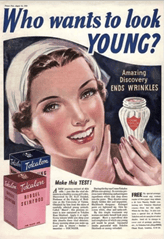
Tokalon Biocel Skinfood, 1939. Whitfords.co.uk

Dorothy Gray Salon, 1951. Duke University Libraries Repository
Today, the anti-aging narrative has morphed into a massive social media influencer culture of creams, procedures, peptides, personalized routines, tips, trends, and before-and-after glow-up videos complete with the amped-up background music that can instill confidence in even the most critical of consumers.
While we know advertising younger skin is nothing new, today’s greater access to information and advice can quickly muddy the waters, leading to confusion and, in some cases, the use of incorrect or untested products that carry risks.
To sort the trends from the truth, this article examines science-backed anti-aging methods shown to promote younger-looking skin, and other approaches that stand out in the crowded influencer landscape.
Copper Peptides Offer Antioxidants, Tissue Rebuilding, and Anti-Inflammatory Properties
Peptides are short chains of amino acids that signal different processes throughout the body. Their potential to support the skin’s natural repair and renewal processes has elevated peptides as a key ingredient across skin care product lines.
Copper peptide GHK-Cu is a naturally occurring compound made up of exactly what you would expect by the name: the peptide GHK bound to copper. Early clinical research found that GHK-Cu “has been shown to promote skin remodeling, wound healing and regeneration, and has prominent antioxidant and anti-inflammatory effects.”
Ever the voice for top beauty trends, Vogue published a lengthy article in late 2025 about the anti-aging benefits of copper peptides when applied topically, particularly for stimulating “collagen synthesis, and helping maintain the skin’s firmness and resilience while slowing visible aging.”
Copper peptides were discovered in 1973, but they continue to be studied as clinical evidence for their anti-aging properties is limited compared with other, more well-established treatments.
Should you use copper peptides? Copper peptides are a reasonable anti-aging skin care treatment, but shouldn’t replace proven strategies like sun protection, topical retinoids, or dermatologist-directed treatments.
The Controversial Use of Tanning Peptides for Anti-Aging
“Tanning peptides” – Melanotan II, is a synthetic, injectable peptide that stimulates melanin, the natural pigment the skin produces to protect cellular DNA from sun damage.
The anti-aging argument for using Melanotan II requires a bit of circuitous logic: creating a tan with an injectable peptide removes the need to tan under the sun, therefore avoiding one of the biggest contributors to premature skin aging (UV rays).
However, this rather simplistic justification fails to consider the risks of treating any product as a safe substitute for proven sun protection. The FDA has not approved Melanotan II and warns about the marketing and distribution of unapproved injectable tanning treatments. Further, the Skin Cancer Foundation has sounded alarm bells about numerous health concerns associated with Melanotan II use:
- Development of melanoma
- Changes in moles and pigmented lesions that can make skin cancer harder to detect
- Serious health effects, including systemic toxicity and muscle damage
Plus, the origin, purity, contents, and dosage are unknown, as patients typically acquire Melanotan II through unregulated online sources.
Should you use tanning peptides? No. Using a tanning peptide to look tan without UV exposure doesn’t mean you don’t need sun protection, and it doesn’t make a tanning peptide an anti-aging treatment. A tan is the skin’s response to UV radiation, and UV exposure contributes to premature skin aging, including wrinkles, loss of elasticity, uneven pigmentation, and leathery skin. It also increases the risk of skin cancer. Coupled with the other suspected health risks, it’s best to avoid tanning peptides. If you are seeking a bronzed appearance, use a topical sunless tanning product instead. But remember, a self-tanner should never be considered a substitute for sun protection.
Achieving Younger-Looking Skin Using the Bryan Johnson Blueprint
Bryan Johnson is a tech entrepreneur who, while known for making millions selling Venmo to PayPal in 2013, has more recently caught the public eye for a very different reason. Johnson is dedicated to an extreme anti-aging and longevity regimen called “Project Blueprint”. Johnson’s “don’t die” philosophy involves essentially fighting death and aging by scientifically reversing his biological age – including the aging of his skin.
His approaches to youthful skin include a variety of dermatological treatments to improve skin quality. He has spoken publicly about using treatments like:
- Microneedling
- Platelet-rich fibrin and platelet-rich plasma (PRP), in which the patient’s own blood is treated and injected into the skin to release growth factors and rejuvenate the skin
- Sofwave, a non-invasive ultrasound device, and Tixel, a fractional skin rejuvenation system, to support collagen and elastin
On his website, he claims: “When I started Blueprint, my skin was in the 98th percentile for damage, with a skin age of 64. Now, my skin age has improved to age 36.”
Any dermatologist will caution against taking these claims at face value. Everyone’s skin is different, and one individual’s customized longevity protocol likely isn’t a blueprint for everyone else.
That being said, let’s explore two of Bryan Johnson’s protocols for achieving younger-looking skin; microneedling and PRP.
Can Microneedling Make My Skin Look Younger?
Microneedling is a minimally invasive dermatologic procedure that uses ultra-fine needles to make microscopic holes in the top layer of the skin. Doing so stimulates a healing response in the skin, encouraging the production of collagen and elastin, which help keep your skin firm and smooth.
Dive Deeper: What is Microneedling? FAQs About the Different Types of Treatment Options
When you see a credentialed aesthetic professional (rather than use an at-home microneedling kit, which can carry significant risks), microneedling can help diminish:
- Acne scars
- Dark spots
- Large pores
- Melasma
- Skin Laxity
- Scars due to surgery or an injury
- Uneven skin texture and tone
- Wrinkles and fine lines
Microneedling with Platelet-Rich Plasma
Microneedling can also be combined with PRP. Microneedling creates controlled openings in the skin while PRP is applied to the treated area. This combination has been used primarily for minimizing acne scars and skin rejuvenation.
While these treatments have generated favorable results, the right treatment depends on your unique skin type and situation. Your provider will help set realistic expectations for what the procedure can accomplish and what results to expect.
Best-Practice Skin Care Techniques to Reduce the Signs of Aging
Keeping the skin looking youthful can be simpler than product marketers and social media influencers may lead us to believe.
- Protect your skin from the sun. UV radiation damages collagen and elastin, and can cause wrinkles and changes in pigmentation and skin texture. Apply a daily sunscreen with an SPF of 30 or higher, and practice consistent sun protection during any exposure.
- Use proven topical ingredients. Speak to your provider about the best topical ingredients for your skin type and specific concerns. Products containing retinoids, vitamin C, niacinamide, or tretinoin, among others, have evidence supporting their ability to reduce signs of aging.
- Consider cosmetic treatments. For more significant improvements with faster results, a credential aesthetic professional may recommend in-office procedures like microneedling, laser treatments, chemical peels, injectables, and other collagen-stimulating or skin-resurfacing treatments.
Dive Deeper: Laser and Light Treatments for Skin Rejuvenation
The reality is that we cannot stop the aging process, but the goal should be to help your skin age in a healthy way while addressing the issues that matter most to you.
This prevailing skin care movement focused on anti-aging from the inside out reflects a shift in how people think about their skin. Rather than simply trying to cover up wrinkles, people are considering their skin’s overall health, structure, and function; this approach can be a positive, as long as evidence-based dermatology is considered above marketing or influencer hype.
If you have concerns about minimizing the signs of aging, or want to learn more about how to keep your skin healthy as you age, schedule an appointment with our team.
Frequently Asked Questions About Anti-Aging Skin Care
Do copper peptides really help reduce wrinkles?
Copper peptides such as GHK-Cu have properties that may support collagen production, tissue remodeling, and skin repair. However, clinical evidence for their ability to significantly reduce wrinkles is still limited compared with established anti-aging treatments such as topical retinoids. A dermatologist can help determine whether a copper peptide product is appropriate for your skincare routine.
Are tanning peptides like Melanotan II safe?
Melanotan II is not FDA-approved as a tanning treatment, and the FDA has identified safety concerns associated with products containing the peptide. Tanning peptides should not be considered a safe alternative to sunscreen or a proven anti-aging treatment.
Does microneedling make your skin look younger?
Microneedling can improve the appearance of fine lines, wrinkles, uneven texture, acne scars, and skin laxity by stimulating the body’s collagen-production process. Results develop gradually and may require multiple treatments depending on the individual’s skin concerns.
Does PRP work for facial rejuvenation?
PRP may help improve certain signs of skin aging and can be used with procedures such as microneedling. However, research on PRP for facial rejuvenation is still developing, and results can vary between patients. A dermatologist can help determine whether PRP is an appropriate option based on your goals and medical history.
What is the best dermatologist-recommended anti-aging treatment for skin?
There is no single best anti-aging treatment for everyone. Effective skin-aging strategies typically include daily sun protection, an appropriate skincare routine, and dermatologist-recommended treatments based on individual concerns such as wrinkles, pigmentation, loss of firmness, or uneven texture. A credentialed aesthetic professional can create a personalized plan that may include topical medications, microneedling, laser treatments, or other procedures.
The post How to Keep the Skin Looking Young: Anti-Aging From the Inside Out appeared first on Optima Dermatology.
Apa Reaksi Anda?
 Suka
0
 Kurang Suka
0
 Setuju
0
 Tidak Setuju
0
 Bagus
0
 Berguna
0
 Hebat
0