




































































iPSC Manufacturing Starts with the Source
For developers of induced pluripotent stem cells (iPSCs), the path to commercial-scale manufacturing can be derailed long before cells reach a production bioreactor. According to two leaders at Pluristyx, one of the field’s most persistent problems is surprisingly basic: many programs begin with cell lines that were never intended for clinical manufacturing.
“It is difficult to find the right cell line,” said Benjamin Fryer, PhD, CEO and cofounder of Pluristyx. Researchers often build promising processes around readily available lines, only to discover later that the material lacks the provenance, consent, or good manufacturing practice (GMP) pedigree needed for human use. By then, Fryer said, teams may have invested years in process development, animal studies, and publications—only to restart with a new line.
Clinical readiness also depends on whether donor consents support the intended use, said Priya Baraniak, PhD, chief commercial and development officer at Pluristyx. Beyond that, developers face the familiar manufacturing demands of robustness, reproducibility, and scale at a cost that is “clinically and commercially feasible,” she noted.
That makes the choice of starting material a bioprocessing decision, not merely a research decision. As developers move from milliliter-scale work toward liters or tens to hundreds of liters, Fryer said, “the manufacturing process has to be somewhat similar.” Passage number and population doublings should be controlled so cells at small and large scale are effectively the same biological age. Production format matters, too. “You need to make sure that the cells are available in the process format you’re going to use,” Fryer said. A therapy intended for suspension culture, for example, should move toward suspension early rather than undergo a disruptive conversion late in development.
Baraniak put the principle simply: “Standardizing your input is really important.” Even high-quality cells can introduce variability if their passage history, characterization, or biological state changes from run to run.
That issue is especially important for iPSCs because their expansion potential can create a false sense of security. “We often fall into a false narrative that these cells can be expanded forever and they’re an evergreen source,” Baraniak said. “They accumulate genetic mutations and aberrations as you expand them,” potentially leaving developers with a process built around cells that no longer behave as intended.
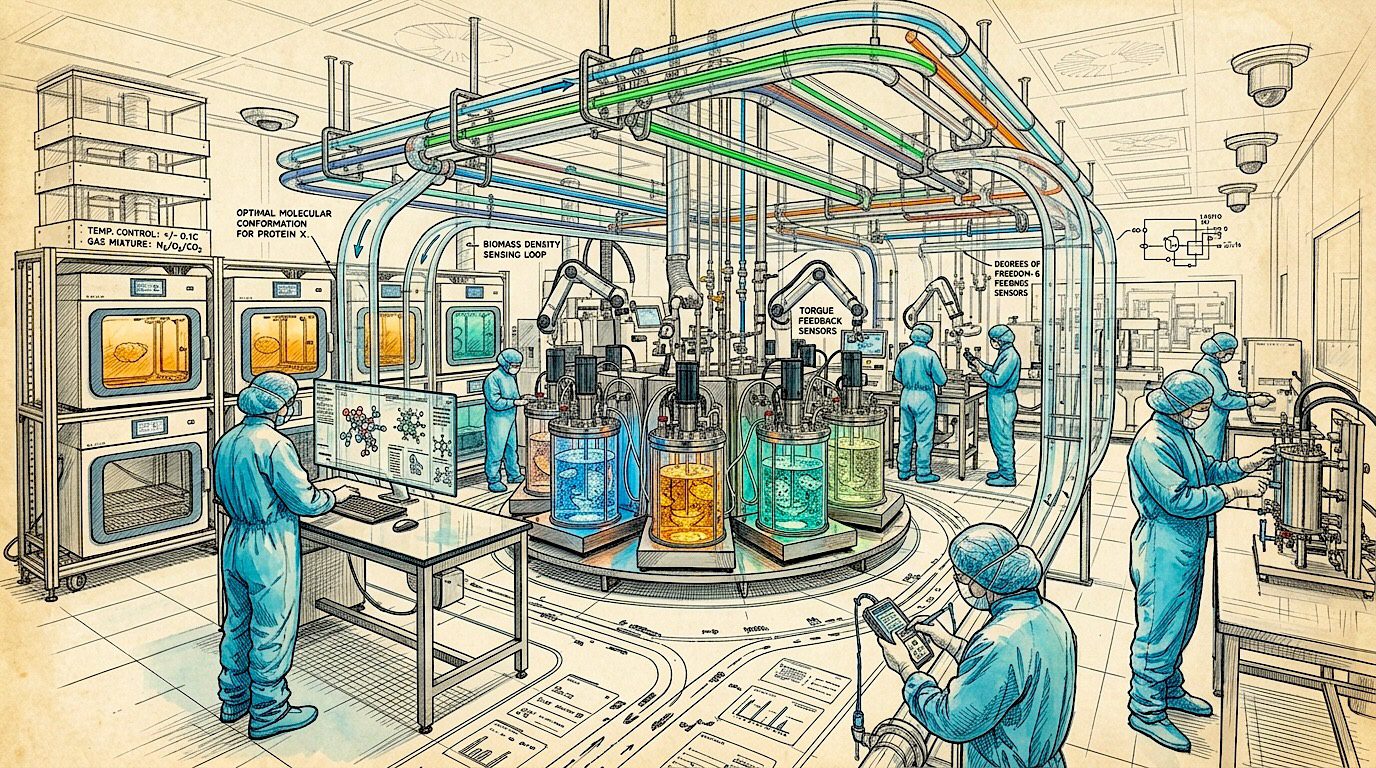
The challenge extends beyond raw material into process design. Baraniak said cell manufacturing still relies too heavily on “golden hands”—highly skilled operators whose tacit knowledge can be difficult to reproduce across people, sites, and scales. “You can’t rely on just golden hands,” she said. Processes must instead be engineered to minimize operator-dependent decisions and tolerate normal manufacturing variation.
That transition also changes the role of automation. Fryer cautioned that simply replacing a human hand with a robotic one does not solve a poorly understood process. Manufacturers first need to understand why cells respond to particular media, handling steps, environmental conditions, and culture parameters. That mechanistic knowledge can guide smarter automation, closed systems, and process analytics rather than locking fragile procedures into hardware.
The same manufacturing discipline could expand the usefulness of iPSCs in new approach methodologies (NAMs), including drug screening, toxicology, disease modeling, and engineered tissues. Unlike limited primary tissues, well-controlled iPSC banks can provide renewable human material representing different donors, disease states, and genetically engineered variants. But those models only become useful at industrial scale if they can be manufactured, distributed, and reproduced consistently.
For Baraniak, that need for reproducibility reflects how far the field has come. “We’ve moved past the point of proving that these therapies have viability, that iPSCs work,” she said. “So now it’s how do we make them work over and over and over.”
That shift—from demonstrating biological possibility to engineering repeatable manufacturing—might define the next phase of iPSC commercialization. Better starting materials, deeper process understanding, automation, and more open sharing of manufacturing experience will not eliminate biological complexity. But they could keep that complexity from becoming the bottleneck that prevents promising iPSC technologies from reaching patients.
The post iPSC Manufacturing Starts with the Source appeared first on GEN - Genetic Engineering and Biotechnology News.
Apa Reaksi Anda?
 Suka
0
 Kurang Suka
0
 Setuju
0
 Tidak Setuju
0
 Bagus
0
 Berguna
0
 Hebat
0