




































































The Next Major Controversy in Sport?

This week in the world of sports science, here’s what happened…
- Could weight-loss drugs become the next major controversy in sport?
- Santos FC introduces robotic exoskeletons for training and recovery
- Is isometric calf strength testing an effective predictor of athletic performance?
Could weight-loss drugs become the next major controversy in sport?
The Washington Post recently published a fascinating article examining the growing interest among athletes in weight-loss drugs, particularly GLP-1 medications such as Ozempic, Wegovy, Mounjaro and Zepbound. Although these medications were developed to treat conditions such as type 2 diabetes and obesity, their ability to suppress appetite and promote weight loss has raised important questions about their potential use in competitive sport. This is particularly relevant to athletes in weight-category sports such as boxing, MMA, wrestling and weightlifting, where even small reductions in body weight can be significant. However, losing weight does not necessarily lead to improved athletic performance.
The article also highlights that the World Anti-Doping Agency (WADA) has been monitoring certain weight-loss medications since 2024 because of concerns about their potential performance-enhancing effects. In September, WADA confirmed that these medications would remain permitted in competitive sport throughout 2027, although research into their potential misuse is ongoing.
The article also referenced a recent study of sports medicine physicians, which found that 12% of those surveyed were aware of elite athletes using GLP-1 medications without a medical need. Another notable development is that tennis player Serena Williams has publicly discussed using Zepbound for weight loss and improved mobility, bringing even greater mainstream attention to the debate.
Although WADA currently considers the evidence insufficient to justify banning these medications, their potential use in competitive sport raises important questions. The next generation of weight-loss drugs could complicate matters further, particularly if new treatments become more effective at reducing body fat while preserving muscle mass. With these medications set to remain permitted throughout 2027, could weight-loss drugs become the next major controversy in sport?
If you would like to learn about safe weight loss, check out our highly informative blogs:
- Weight cutting in combat sports: What is it and how can you minimise the risks?
- Weight cutting tips: Nutrition secrets you need to know
- The severely detrimental effects of making weight the wrong way
Santos FC introduces robotic exoskeletons for training and recovery
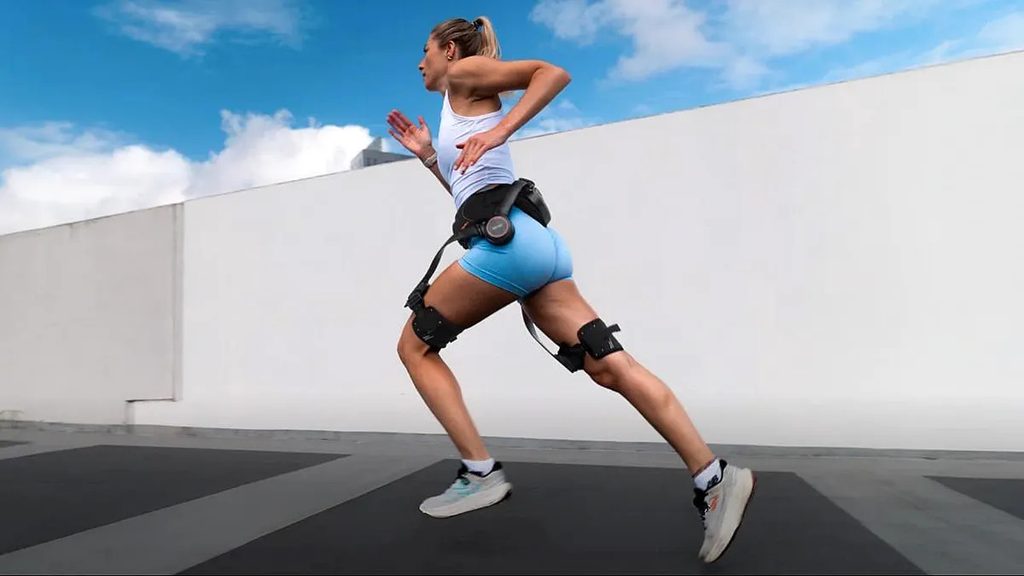
An intriguing story has recently emerged from Brazilian football club Santos FC (see here), which has introduced robotic exoskeleton technology into its S&C department. The club announced that it had received seven exoskeletons from technology company Hypershell.
These lightweight, battery-powered wearable devices attach around the hips and legs. By combining electric motors, movement sensors and AI-based motion control, the technology claims to reduce the muscular effort required during activities such as walking and running.
According to reports, the club’s medical and performance staff are exploring several potential applications for the devices. One is recovery, where exoskeletons could reduce physical effort during low-intensity movement after matches or demanding training sessions. The club is also investigating their use in strength and endurance training, including mechanical assistance or resistance to adjust training demands. In addition, the technology could support rehabilitation and return-to-play protocols by allowing athletes to progress gradually towards normal physical workloads.
It will be particularly interesting to see whether these devices can genuinely improve recovery between demanding training sessions and matches, enhance athletic performance, or provide meaningful benefits during rehabilitation and return-to-play programmes. For now, however, their effectiveness in these areas remains unproven.
Overall, this fascinating development in sports science and technology raises an intriguing question: how long before robotic exoskeletons become a regular feature in the S&C departments of professional football clubs?
Is isometric calf strength testing an effective predictor of athletic performance?
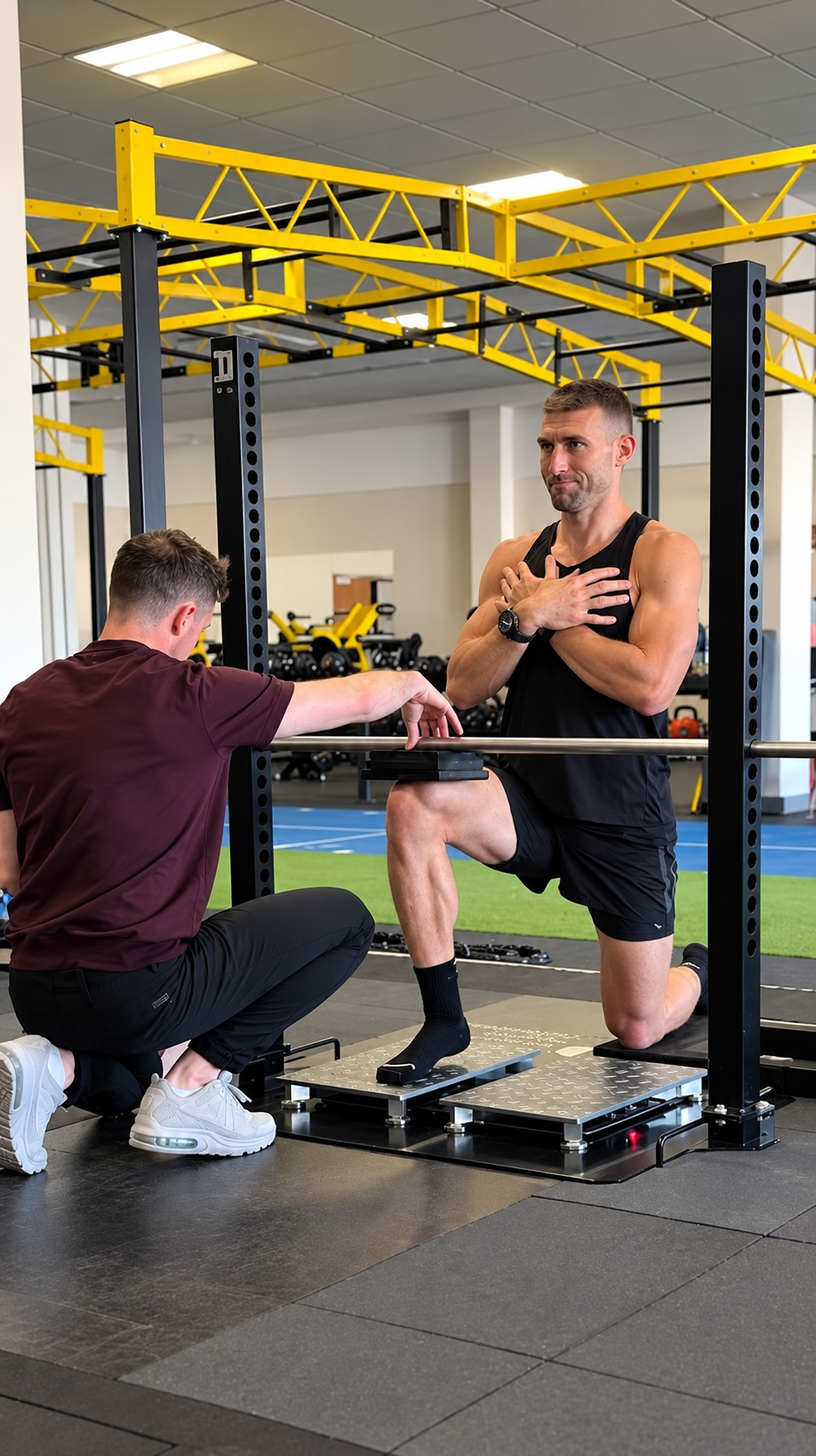
S&C expert Professor Stephen Patterson recently shared an interesting LinkedIn post highlighting new research that questions the effectiveness of isometric calf strength testing as a predictor of athletic performance.
The research found that isometric calf strength explained approximately 9% of drop jump performance and just 2% of jump height and sprint speed, with none of these links reaching statistical significance. Patterson highlighted a key limitation of conventional isometric calf strength testing: the lack of specificity to the mechanical demands of sprinting and jumping. Many isometric calf strength assessments are performed with the ankle positioned close to neutral, at approximately 2.5° of dorsiflexion. In contrast, during sprinting and jumping, peak ankle torque occurs at approximately 16–21° of dorsiflexion, under substantially higher movement velocities and within the stretch-shortening cycle. Consequently, these conventional isometric assessments may fail to adequately replicate the joint angles, contraction velocities, and neuromuscular demands associated with explosive athletic movements.
Based on these findings, Patterson suggested that if the primary purpose of isometric calf strength testing is to predict sprinting or jumping performance, he would stop using it. Importantly, this does not necessarily invalidate isometric calf strength testing as a measure of calf strength but rather questions its usefulness as a standalone predictor of dynamic athletic performance.
From us this week:
>> New course: Observation Before Intervention: Building Better Coaching Environments
>> New podcast: Moving Beyond Aerobic and Anaerobic Training Labels
>> New infographic: Nutrition Timing in Sport
>> New article: ESSA and Science for Sport Announce Strategic Professional Development Partnership
Access to a growing library of sports science courses
SFS Academy is an all-access membership to premium sports science education.
With SFS Academy, you’ll learn from some of the best coaches around the world as they teach you how to apply the latest research and practice with your athletes.
The post The Next Major Controversy in Sport? appeared first on Science for Sport.
Apa Reaksi Anda?
 Suka
0
 Kurang Suka
0
 Setuju
0
 Tidak Setuju
0
 Bagus
0
 Berguna
0
 Hebat
0