




























































New Catalytic Reactive-Hydrogen Membranes Capture and Break Down PFAS
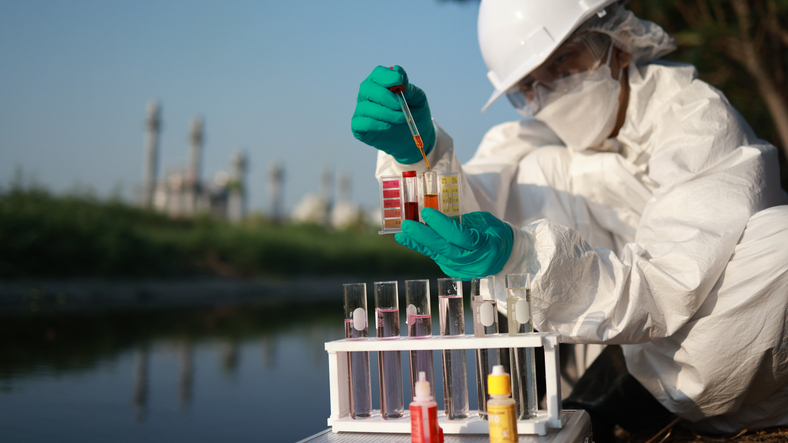
Researchers at Arizona State University (ASU) and collaborating institutions have developed catalytic reactive-hydrogen membranes that capture and chemically break down six per- and polyfluoroalkyl substances (PFAS) in water. The approach couples contaminant removal with carbon–fluorine bond cleavage, addressing a limitation of conventional treatments that separate “forever chemicals” from water but leave contaminated waste requiring further handling.
The study, led by Bruce Rittmann, PhD, director of ASU’s Biodesign Swette Center for Environmental Biotechnology, involved collaborators at Rice University, Tongji University, the National University of Singapore, and Nanjing University. Published in Proceedings of the National Academy of Sciences, the paper is titled “Catalytic Reactive-Hydrogen Membranes for Rapid Capture and Hydrodefluorination of Six PFAS of Regulatory Concern.”
“PFAS are hard to break down, and normal processes that we use don’t work,” Rittmann said.
That persistence stems from the compounds’ strong carbon–fluorine bonds. Activated carbon, ion exchange, and membrane filtration can remove PFAS from water, but do not themselves resolve the challenge of destroying the captured contaminants. The new system instead brings PFAS and reactive hydrogen together on palladium-coated membrane fibers under ambient conditions.
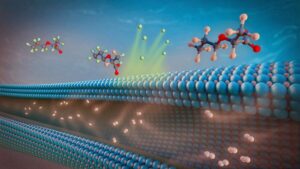
Hydrogen gas travels through the fibers to the palladium catalyst, where it generates two forms of active hydrogen with complementary functions. Surface hydrogen supports PFAS capture, while subsurface hydrogen stored as beta-phase palladium hydride supplies the driving force for hydrodefluorination.
“The palladium attracts the PFAS molecule, and the palladium attracts the hydrogen and puts them together,” Rittmann added.
Solid-state analyses identified formation of the palladium hydride and associated lattice expansion. In the paper, the researchers described their findings as “a mechanistic framework for how active hydrogen is generated, stored, and deployed in catalytic membranes.”
The team tested PFOA, PFOS, PFNA, PFHxS, PFBS, and GenX. During 58 days of continuous operation, the system achieved up to 96% removal and 83% defluorination.
Performance also varied by compound. Long-chain PFAS were removed and defluorinated faster than short-chain analogs. GenX was more resistant, which the authors attributed to its ether linkage, weaker adsorption, and higher average carbon–fluorine bond dissociation energy. Nevertheless, the membrane enabled GenX removal and defluorination, producing 2-propoxypropanoic acid.
Practical deployment will require further engineering, including reducing palladium use. “Palladium is expensive,” Rittmann said. One potential application is treating concentrated waste streams generated by existing PFAS-removal systems, rather than replacing those systems outright. The researchers are also developing related hybrid membranes combining palladium with pollutant-degrading bacteria, although the current study’s catalytic system uses palladium rather than microbes.
The post New Catalytic Reactive-Hydrogen Membranes Capture and Break Down PFAS appeared first on GEN - Genetic Engineering and Biotechnology News.
Apa Reaksi Anda?
 Suka
0
 Kurang Suka
0
 Setuju
0
 Tidak Setuju
0
 Bagus
0
 Berguna
0
 Hebat
0