


















































%20and%20Batch%20Production%20Records%20(BPR).png)













Newly Discovered Role for Polyamines Could Point to Potential Anticancer Strategies
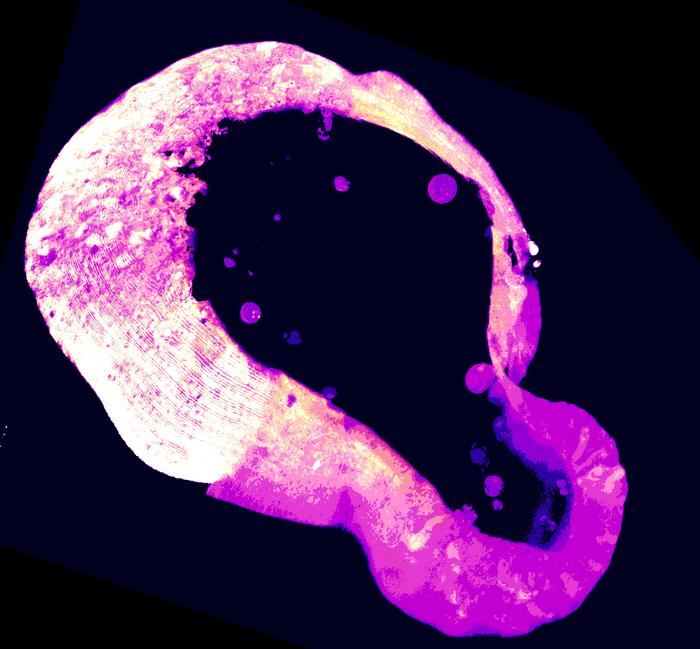
Our cells need iron to produce energy, carry oxygen throughout the body and power countless chemical reactions that sustain life. But when too much iron is left free inside cells it can trigger destructive reactions that break down DNA, proteins, and even cell membranes.
Researcher headed by a team at the Whitehead Institute have now discovered that cells rely on small molecules called polyamines as an unexpected protector against this threat. The newly reported study by White Institute member Ankur Jain, PhD, together with former postdoc Whitney Henry, PhD, and graduate student Pushkal Sharma, and colleagues, revealed that polyamines act like storage lockers for iron, safely holding the metal in a non-reactive state until cells need it. As part of their research the team developed a genetically encoded fluorescent reporter allowing them to quantitatively measure redox-active iron in living cells.
The collective findings solve a decades-old mystery about why cells maintain such extraordinarily high levels of polyamines and also uncover a previously unknown defense mechanism that protects cells from toxic iron overload. The discovery could potentially help scientists develop better cancer treatments, by allowing iron overload to trigger cancer cell death. The study results could also offer up new clues about disorders such as early-onset Parkinson’s disease, in which mutations affect polyamine levels within neurons.
Jain and Henry are co-senior and co-corresponding authors of the team’s published paper in Cell titled “Polyamines buffer labile iron to suppress ferroptosis,” in which they stated that the findings “… reposition polyamines as key regulators of iron homeostasis, with implications for ferroptosis-linked disease states and cellular redox balance.”
The Jain Lab studies RNA and is particularly interested in how RNA folds, misfolds, and sometimes clumps inside cells. Jain and Sharma first began studying polyamines because these molecules bind to RNA and help to shape its structure. However, they suspected that polyamines must be playing other roles inside cells. Polyamines are among the most abundant small molecules within cells, present at levels comparable to ATP, the molecule that cells use as their energy currency.
“We’ve known that without polyamines, cells stop growing and dividing,” explained Jain, who is also an associate professor of biology at the Massachusetts Institute of Technology (MIT). “But their best-known function only requires a small fraction of the polyamine levels cells actually have.”
To uncover the hidden function of polyamines inside cells the researchers used a large-scale genetic approach that allows them to screen the entire genome at once, rather than testing genes one-by-one, in order to find out which cellular processes are impacted when polyamine levels are changed within cells. “To identify cellular dependencies that emerge during polyamine stress, we performed a genome-wide CRISPR-Cas9 screen in human cells under polyamine-depleted conditions,” they noted.
The screen revealed that when cells have reduced levels of polyamines, a protein called GPX4 becomes essential for survival. GPX4 is known to prevent harmful chemical reactions that damage the fatty molecules that make up cell membranes. “This synthetic lethal screen revealed a surprising link between polyamines and iron homeostasis: polyamine depletion rendered cells highly dependent on glutathione peroxidase 4 (GPX4), an antioxidant enzyme that protects membranes from lethal lipid peroxidation and ferroptotic cell death,” the team added.
The team also found that cells with lower polyamine levels have higher amounts of another protein that acts as an iron sponge and keeps the metal in a mineralized form. Together, these findings led the researchers to hypothesize that polyamines might be helping keep iron in a safe, non-reactive state within cells.
To test this idea, they developed a new fluorescent sensor that would allow them to measure chemically reactive iron inside living cells. The new sensor causes living cells to glow based on the amount of chemically reactive iron they contain, allowing researchers to track any changes under a microscope in real time.
The team paired the new iron sensor with another sensor they had previously developed that measures polyamine levels within cells. By employing them simultaneously, they observed a striking pattern: as polyamine levels dropped within cells, the amount of chemically reactive iron went up, offering new evidence that polyamines play a key role in preventing toxic iron build up inside cells. “Single-cell analysis revealed that labile iron levels increase as polyamines decline,” the team wrote in summary. They suggest that their collective findings “… support a model in which millimolar polyamines help restrain labile iron availability, linking polyamine metabolism to redox balance and ferroptosis sensitivity … Altogether, these data demonstrate a tight, inverse coupling between polyamine and labile iron levels at the single-cell level and establish our genetically encoded reporter as a robust tool for the quantitative dissection of iron biology.”
Beyond answering a fundamental biological question, these findings could have implications for cancer treatment. Cancer cells often rely on high polyamine levels to support their rapid growth and division. However, cancer drugs designed to lower polyamine levels to stop cell division have had limited success.
“We saw that when polyamine levels fall, cells rely on GPX4 to protect themselves from iron toxicity,” said first author Sharma. “This could mean that combining drugs that lower polyamine levels with those that block GPX4 might be more effective for killing cancer cells than targeting either pathway alone.”
The discovery may also have implications beyond cancer. Mutations in genes that help move polyamines around cells are linked to a rare form of early-onset Parkinson’s disease, and scientists have long observed unusually high levels of iron in the brains of Parkinson’s patients.
While it is still unclear whether excess iron directly contributes to neuron death in Parkinson’s, the discovery that polyamines help buffer reactive iron inside cells offers a possible explanation for this link and opens new directions for future investigation.
In addition, the researchers expect the new iron sensor to be a valuable tool for other scientists. By allowing them to track chemically reactive iron inside living cells, it could power new discoveries in aging, cancer, and neurodegeneration. “We anticipate that this reporter will provide a powerful platform to facilitate future discoveries into iron biology, ferroptosis, and disease mechanisms,” they stated.
“There are a lot of promising future directions for this work,” Jain noted. “It’s exciting to think about how these tools and findings could help answer further questions about disease pathways and potentially help design better therapies.”
The post Newly Discovered Role for Polyamines Could Point to Potential Anticancer Strategies appeared first on GEN - Genetic Engineering and Biotechnology News.
Apa Reaksi Anda?
 Suka
0
Suka
0
 Kurang Suka
0
Kurang Suka
0
 Setuju
0
Setuju
0
 Tidak Setuju
0
Tidak Setuju
0
 Bagus
0
Bagus
0
 Berguna
0
Berguna
0
 Hebat
0
Hebat
0