




































































Proteins Circulating in Blood Linked to Future Risk of Prostate Cancer
The results of a large prospective proteomic study, headed by Oxford Population Health, have linked proteins associated with the immune system, cell adhesion, blood vessel formation, and known prostate cancer genes, with the future risk of developing prostate cancer (PCa), including aggressive disease.
Findings from the study, involving more than 2,500 men, revealed biological differences between those who later developed prostate cancer, and those who did not. The results may may help guide future studies aimed at identifying men at greater risk of the disease.
Professor Karl Smith-Byrne, MPhil, DPhil, at Oxford Population Health, said, “Finding proteins linked to known prostate cancer driver genes in blood collected years before diagnosis gives us new insights into the earliest stages of the disease. Together with existing and future genetic evidence, these findings may help us identify biological pathways that could be targeted to prevent aggressive prostate cancer.”
The study, “Circulating Immune and Cancer Driver Gene Biomarkers Precede Prostate Cancer Diagnosis by over 10yr,” is published in European Urology, and was presented at the American Society of Human Genetics (ASHG) Annual Meeting. In their paper co-senior author Smith-Byrne and colleagues, concluded, “These findings identify candidate protein risk factors for overall and clinically significant PCa, and warrant further validation and mechanistic evaluation.”
Prostate cancer is the most commonly diagnosed cancer in men worldwide, but relatively little is known about why some men develop the disease or why some cancers become aggressive. Most established risk factors, such as age and genetics, cannot be changed. “Identifying individuals at future risk of clinically significant prostate cancer remains challenging because of the limited number of established predictors,” the researchers noted. Their previous research had identified potential protein risk factors for prostate cancer, “… suggesting that broader proteomic investigation may provide further insights into the mechanisms underlying PCa development.” This is particularly important, they noted, given the lack of preventive strategies.
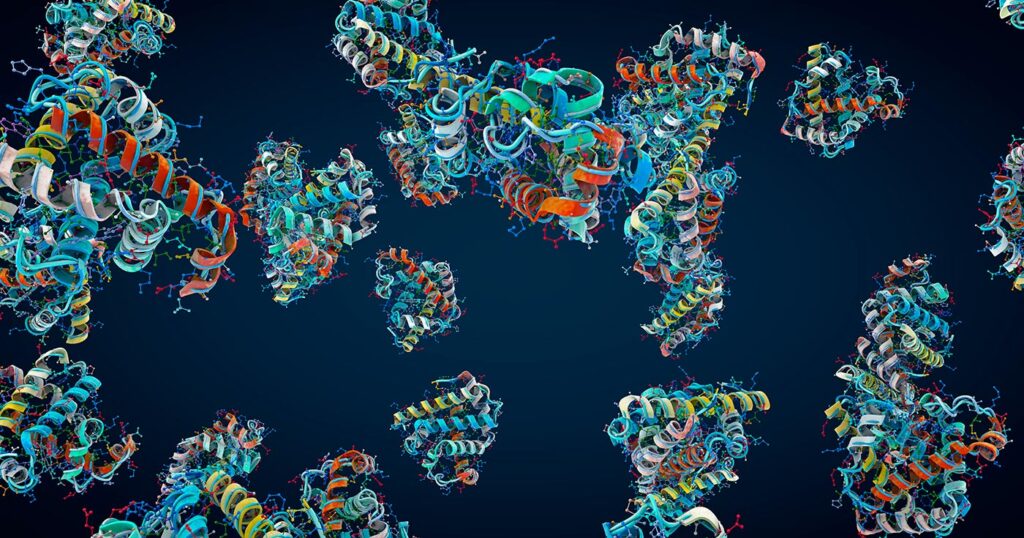
High-throughput proteomic technologies allow large-scale evaluation of potential protein-disease associations. For their newly reported study, which was part funded by Cancer Research UK, the investigators analyzed blood samples from 982 men who subsequently developed prostate cancer and a randomly selected sample of 1,573 men from the European Prospective Investigation into Cancer and Nutrition (EPIC). They measured more than 6,000 proteins in the blood and looked for differences linked to the later development of prostate cancer, particularly aggressive disease. Participants were followed for around 16 years. “This study is the largest population-based investigation of proteomic risk factors for PCa to date, with comprehensive protein profiling and a case-cohort design enabling robust risk estimation,” the investigators stated.
Their analyses identified circulating proteins associated with future PCa risk, including proteins related to immune, adhesion, angiogenesis, and PCa driver-gene pathways. “Notably, these protein differences were detectable in the blood long before a man’s diagnosis with PCa, and many were associated with clinically significant disease,” they commented.
Twelve proteins were linked to prostate cancer diagnosed more than 15 years after the blood sample was collected. These included GZMK, a protein produced by immune cells involved in recognizing and destroying abnormal cells, suggesting that immune processes may help keep prostate cancer in check long before it is diagnosed.
The researchers also identified seven proteins linked to aggressive prostate cancer. “The long follow-up and detailed characterization of clinically relevant subtypes allowed the identification of proteins associated with aggressive disease,” they stated. One protein, ANKRD1, was consistently linked to several serious forms of the disease, including cancers that had spread or were ultimately fatal. Other findings pointed to processes involved in how cancer cells interact with surrounding tissue and how new blood vessels form.
First author Zhe Huang, PhD, a postdoctoral epidemiologist at Oxford Population Health, said, “Prostate cancer is not one disease. Many prostate cancers grow slowly and may never cause harm, while others are aggressive and can be life-threatening. By measuring thousands of proteins in blood collected years before diagnosis, we can begin to investigate how men who later develop aggressive prostate cancer may differ from men who do not. Ultimately, we hope this will help us understand the biology of aggressive prostate cancer and identify markers that could improve how we assess risk in the future.”
The study also found links with blood levels of proteins produced by genes already known to be important in prostate cancer, including ERBB3, KRAS, and NRAS. These proteins were particularly linked to aggressive prostate cancer diagnosed around a decade later. This does not mean cancer was already present when the blood was collected, but the findings may provide clues to biological changes associated with the future development of the disease.
The researchers compared their results with other large population studies and genetic evidence to test the robustness of their findings. Several findings were supported by these additional analyses, although not all could be confirmed. The proteins identified are not yet suitable for use as clinical tests; most associations were modest and further studies are needed to establish whether they could improve prediction of clinically significant prostate cancer. “Studies integrating tumor genomics and circulating proteomics will be required to clarify the relationship among circulating protein levels, genomic alterations, and disease development, and dedicated prediction studies are warranted to support their potential utility for biologically informed risk stratification,” the researchers concluded.
Future research through the Prostate Cancer Aetiology and Prevention Programme (PCAP), funded by Cancer Research UK, will investigate whether these findings could ultimately contribute to better ways of predicting or preventing prostate cancer.
Professor Ruth Travis, DPhil, at Oxford Population Health, and one of the PCAP programme leads, said,” For the first time, technologies that allow us to measure thousands of proteins simultaneously are giving us unprecedented insight into the earliest stages of prostate cancer development. Combined with large, long-term population studies, they allow us to look back many years before diagnosis and investigate the biological changes associated with future cancer risk. Understanding these processes is a critical step towards developing new strategies to prevent prostate cancer.”
The post Proteins Circulating in Blood Linked to Future Risk of Prostate Cancer appeared first on GEN - Genetic Engineering and Biotechnology News.
Apa Reaksi Anda?
 Suka
0
 Kurang Suka
0
 Setuju
0
 Tidak Setuju
0
 Bagus
0
 Berguna
0
 Hebat
0