















































%20and%20Batch%20Production%20Records%20(BPR).png)
















StockWatch: Novo’s 2030 Strategy Underwhelms Investors at Capital Markets Day

A week after loosening up its branding to “Novo,” Novo Nordisk (Nasdaq Copenhagen: NOVO-B; NYSE: NVO) laid out a strategy for 2030 that underwhelmed investors of the Danish metabolic biotech giant.
Addressing investors at its 2026 Capital Markets Day, Novo CEO Maziar (Mike) Doustdar and other company executives laid out a series of initiatives aimed at restoring its edge in metabolic and other drugs by growing and diversifying its pipeline, as well as driving sustainable growth, and delivering attractive returns.
To that end, Doustdar and colleagues said Novo planned to launch “more than five multi-blockbusters” or drugs with multiple billions of dollars in sales every year through 2030. Those five are expected to emerge from more than five Phase III programs in obesity and diabetes, and another 5+ Phase III programs in other therapeutic areas.
Doustdar also committed Novo to generating more than DKK 150 billion (just over $23 billion) in risk-adjusted pipeline sales by 2035, a figure that includes current pipeline assets. Novo plans to combine internal pipeline growth with external growth through merger-and-acquisition (M&A) activity.
“Novo is targeting 2026-2030 revenue growth in line with industry peers, likely underwhelming for investors,” cautioned Evan David Seigerman, a managing director and head of healthcare research at BMO Capital Markets, in a research note.
Seigerman cited a consensus of analysts that estimates a 3.53% compound annual growth rate (CAGR) for Novo, vs. ~3.65% CAGR for its pharma peers. However, he added, “Novo’s outlined growth expectation appears already priced in to [Wall] Street estimates, reading negatively to shares.”
Key to Novo’s new strategy, Doustdar said, was planning for the eventual loss of U.S. patent exclusivity in 2032 for its best-selling drug semaglutide, the glucagon-like peptide-1 (GLP-1) drug marketed as Ozempic® for type 2 diabetes in adults and as Wegovy® for obesity/weight control—what the CEO called “the elephant in the room.”
“We plan to come on the other side of the LOE [loss of exclusivity] as a bigger company than we are today and a much more diversified version of it,” Doustdar said. “We created an incredibly attractive market, and now almost every other single pharma company, big or small, is trying to come and compete with us. We need to be ready for that.”
‘Not seeing concrete news’
Those and other priorities laid out at the annual capital markets event failed to reassure Novo investors. The company’s primary shares on Nasdaq Copenhagen slumped nearly 8% this morning from DKK 281.55 ($43.19) to an even DKK 260.00 ($39.89). On the New York Stock Exchange, Novo’s American depositary receipts (ADRs) also tumbled 8% from $43.24 to $39.81.
“Investors are selling the shares because they are not seeing concrete news that could drive the stock higher,” Per Hansen, investment economist at Nordnet, wrote in a research note, as reported by Bloomberg News.
Speaking on CNBC, Hansen elaborated: “Investors hoped for a project ‘miracle’ that could turn the momentum around short term. For obvious reasons that miracle does not exist.”
Markus Manns, a portfolio manager at Union Investment, told Reuters he was less than impressed by Novo’s projections of 2030 sales and a “broadly stable” operating margin.
“They (also) did not say much in terms of how to tackle the semaglutide patent expiration in 2032,” said Manns, who added that he thought Novo made a credible case for pursuing next-generation obesity drugs and a broader early-stage pipeline.
In its presentation, Novo detailed the drugs it expects to launch each year through 2030—starting with next year, when the company plans to launch once-weekly CagriSema (cagrilintide and semaglutide), a diabetes and obesity drug which combines the long-acting amylin receptor agonist with the GLP-1 receptor agonist. Cagrilintide and a high-dose version of CagriSema are scheduled for a 2028 launch, while 2029 is expected to deliver launches of high-dose cagrilintide; zenagamtide, a multi-receptor peptide agonist targeting GLP-1, amylin, and calcitonin receptors; an oral form of zenagamtide; and a next-generation GLP-1.
In 2030, Novo’s launch calendar includes a monthly-dose or “QM” GLP-1; a thermostable GLP-1; an oral high-yield GLP-1; Amylin 355 and an oral version, both long-acting amylin analogues; an oral ACSL5 inhibitor LX9851, co-developed with Lexicon Pharmaceuticals; and UBT251, a long-acting synthetic peptide triple agonist that targets GLP-1, glucose-dependent insulinotropic polypeptide (GIP), and glucagon receptors and is being co-developed by Novo with Chinese-owned United Biotechnology.
Monday’s selloff of Novo shares and ADRs lowered the company’s one-year stock performance to a 33% decline year over year on Nasdaq Copenhagen and a 35% drop on the NYSE.
By contrast, shares of Novo’s archrival in obesity and diabetes drug development, Eli Lilly (NYSE: LLY), have soared 55% year over year, from $754.95 on September 22, 2025 (September 21 was a Sunday) to $1,164.66, up 1% from Friday’s close of $1,152.93.
While Bagsvaerd, Denmark-based Novo Nordisk was first to market with a GLP-1 drug when Ozempic became commercially available in February 2018, Indianapolis-based Lilly has grown to a majority share of GLP-1 drug sales—though Lilly’s blockbuster tirzepatide, marketed for diabetes as Mounjaro® and for obesity as Zepbound®, are dual-agonists of GLP-1 and GIP receptors.
2-to-1 sales edge
Lilly has grown its GLP-1-based drug sales so far this year to a nearly 2-to-1 edge over Novo. The two Lilly drugs have racked up a combined $27.6 billion-plus in revenue—$18.605 billion for Mounjaro, $9.088 billion for Zepbound—accounting for about 65% of Lilly’s total $42.773 billion in revenue between January and June 2026.
By contrast, Novo’s GLP-1 blockbusters have racked up a combined DKK 102.393 billion ($15.715 billion) in sales in the first half of 2026, accounting for about 69% of the company’s total DKK 148.551 billion ($22.798 billion) in adjusted sales.
Ozempic garnered DKK 59.2 billion ($9.085 billion), down 8% from DKK 64.52 billion ($9.902 billion) year over year, while its injectable Wegovy generated sales of DKK 37.719 billion ($5.789 billion), up 2% from DKK 36.888 billion ($5.661 billion) in Q1-Q2 2025. The company also made DKK 5.474 billion ($840 million) in sales from oral Wegovy, which reached the U.S. market on January 5.
Lilly’s competing oral obesity drug Foundayo® (orforglipron), a small molecule GLP-1 receptor agonist, generated $98 million in its first quarter on the market, having won FDA approval on April 1.
Doustdar took Novo’s helm in August 2025, intent on regaining the company’s competitive edge in GLP-1 based obesity and diabetes drugs after Lilly’s sales successes with Mounjaro and Zepbound. A year ago this month, Doustdar led the company’s deepest personnel reduction, which eliminated about 9,000 jobs.
In addition to those initial layoffs, Novo said Monday that 4,000 additional staffers exited the company, resulting in 13,000 fewer employees than a year ago, bringing the company’s workforce down to approximately 66,000 employees.
Novo said its restructuring generated more than DKK 10 billion ($1.534 billion) in savings that is being allocated to its R&D operations, commercial growth brands, and manufacturing right-sizing efforts. The company also said it reduced its spending on external services by ~30% year-to-date and has renegotiated agreements with suppliers to squeeze out further savings.
Flurry of announcements
In the week leading to and including Monday’s Capital Markets Day, Novo issued a flurry of announcements—including a poke at Lilly by highlighting during the event positive topline results from the Phase III REIMAGINE 5 trial (NCT06534411) and REDEFINE 9 trial (NCT06388187) assessing CagriSema, which the company trumpeted as “Novo’s next innovation in weight management and type 2 diabetes.”
In REIMAGINE 5, CagriSema 1.0 mg/1.0 mg showed superiority to tirzepatide 5 mg for weight loss, achieving an estimated average weight loss of 12.4%, compared with 9.1% for the Lilly drug. CagriSema also confirmed a non-inferior reduction in HbA1c of 1.71% vs. 1.67% for tirzepatide.
In REDEFINE 9, CagriSema 1.0 mg/1.0 mg showed a dramatic weight reduction of 21.0% vs. 2.0% for placebo, meeting that study’s primary superiority endpoint. CagriSema also showed greater improvements than placebo across prespecified endpoints that included systolic blood pressure, waist-to-height ratio, and fasting lipid profile.
The rush of announcements started September 14 with a rebrand that shortened the company’s name in marketing materials to “Novo,” accompanies by an updated Apis bull logo, while keeping “Novo Nordisk” as its legal name. The company also unveiled a new slogan, “Lasting Health Starts Now.”
“The rebrand is designed to be more memorable and relevant to the way people engage with their health today,” Novo stated in a press release announcing the rebrand. “It also reflects the company’s ambition to bring breakthrough science closer to people’s daily lives and to strengthen recognition and trust as Novo reaches more people in more ways.”
Anthropic, Orbis partnerships
Novo also announced a collaboration of undisclosed value with Anthropic (draft Form S-1 Registration Statement filed June 1) to bolster artificial intelligence (AI)-based drug development. Novo agreed to use Anthropic models and Claude Science to advance scientific reasoning for R&D and agentic software engineering, with the aim of helping Novo discover and develop new treatments faster.
Launched in June, Claude Science is an AI workbench for scientists that consolidates fragmented research tools, including more than 60 scientific databases and connectors pre-configured for genomics, proteomics, structural biology, and more, into a single reasoning layer.
On Thursday, privately held Orbis Medicines announced an up-to-$1.4 billion strategic collaboration and license agreement with Novo, bringing together the two Danish-based drug developers to discover and develop an undisclosed number of next-generation oral macrocycle therapeutics for unspecified cardiometabolic diseases.
The potential $1.4 billion reflects an upfront payment and payments tied to achieving development and commercial milestone payments. Copenhagen-based Orbis will also gain a strategic investment of undisclosed amount from Novo, and potentially gain tiered royalties on future product sales.
Novo plans to apply Orbis’ lab-in-the-loop nGen platform which integrates generative AI and high-throughput synthesis, using a multi-parameter optimization (MPO) engine to design nCycles with desirable properties—detailed in a 2023 Nature Chemical Biology paper as including target biding and other key properties for oral availability, such as proteolytic stability, membrane permeability and metabolic stability. Orbis says it continuously improves its nCycles through one of the industry’s largest experimental macrocycle datasets, which the company generates in real time via its platform.
Novo’s interest in macrocycles appears to reflect a desire to overcome limitations associated with traditional oral peptide treatments, such as low digestive absorption. The 2023 paper showed Orbis’ macrocycles to have an oral bioavailability of up to 18% in rats: “This method for generating orally available peptides is general and provides a promising push toward unlocking the full potential of peptides as therapeutics.”
Other announcements:
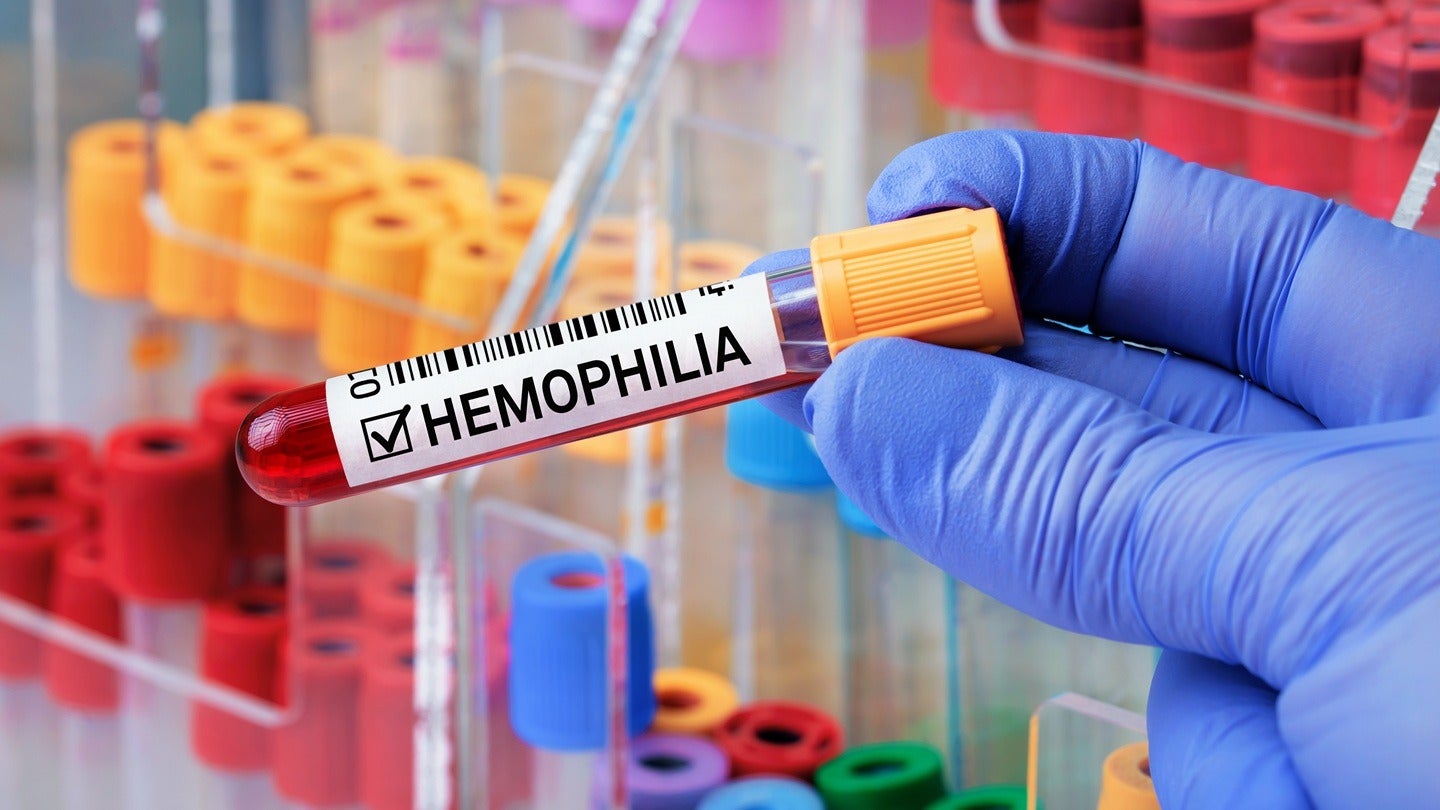
- Frehemgo® (denecmig) won a positive opinion from the European Medicines Agency’s Committee for Medicinal Products for Human Use recommending approval for the next-generation factor VIIIa mimetic bispecific antibody to treat hemophilia A, with or without inhibitors, in adults and children.
- Denecimig generated positive results in the Phase III FRONTIER5 trial (NCT05878938), showing that a direct switch to a subcutaneous denecimig pen injector from a vial and syringe injection system for a current Hemophilia A treatment emicizumab, marketed by Genentech as Hemlibra®, was well tolerated with no unforeseen safety concerns in adolescents and adults with hemophilia A.
- Sogroya® (somapacitan) also won a positive CHMP opinion for the human growth hormone analogue as a once-weekly treatment for children with idiopathic short stature (ISS) with persistent growth disturbance. The drug won FDA approval in 2020.
Leaders & Laggards
- BlossomHill Therapeutics (Nasdaq: BLSM) shares jumped 21% over two days, from $22.17 Tuesday to $26.82 Thursday, after the small molecule cancer drug developer announced positive updated data from the ongoing Phase I/II SOLARA trial (NCT06706076) assessing BH-30643 in non-small cell lung cancer (NSCLC) patients with secondary epidermal growth factor receptor (EGFR) resistance mutations such as EGFR C797S. In patients with EGFR C797S-positive resistance to prior EGFR inhibitor treatment, with or without concurrent T790M, BH-30643 showed a 45% objective response rate (18 of 40 patients) and an 88% disease control rate (35 of 40 patients). At the time of efficacy follow-up, 25 of 40 patients (63%) remained on treatment with a median follow-up of 6.9 months. BlossomHill presented the data at the International Association for the Study of Lung Cancer (IASLC) 2026 World Conference on Lung Cancer in Seoul.
- Xenon Pharmaceuticals (Nasdaq: XENE) shares tumbled 31% from $57.35 to $39.75 Friday, after the neuroscience-focused drug developer acknowledged that it voluntarily paused enrollment of new patients in two Phase III programs encompassing five trials assessing its potent KV7 potassium channel opener azetukalner—the three-program X-NOVA program in major depressive disorder (MDD), and the two-trial X-CEED program in bipolar depression—following an analysis of neuropsychiatric adverse events. “In a very small number of patients, we have seen an adverse event captured under the broad preferred term of psychosis,” Xenon chief medical officer Christopher Kenney, MD, told analysts on a conference call. Those events had not previously been seen in the Phase II X‑NOVA trial in MDD (NCT05376150), Xenon said, adding that the observed events, their rate of occurrence, and their severity, were consistent with the known safety and tolerability profile of azetukalner and its mechanism.
The post StockWatch: Novo’s 2030 Strategy Underwhelms Investors at Capital Markets Day appeared first on GEN - Genetic Engineering and Biotechnology News.
Apa Reaksi Anda?
 Suka
0
Suka
0
 Kurang Suka
0
Kurang Suka
0
 Setuju
0
Setuju
0
 Tidak Setuju
0
Tidak Setuju
0
 Bagus
0
Bagus
0
 Berguna
0
Berguna
0
 Hebat
0
Hebat
0