


















































%20and%20Batch%20Production%20Records%20(BPR).png)















The dental workforce is increasingly female: where are the leaders?
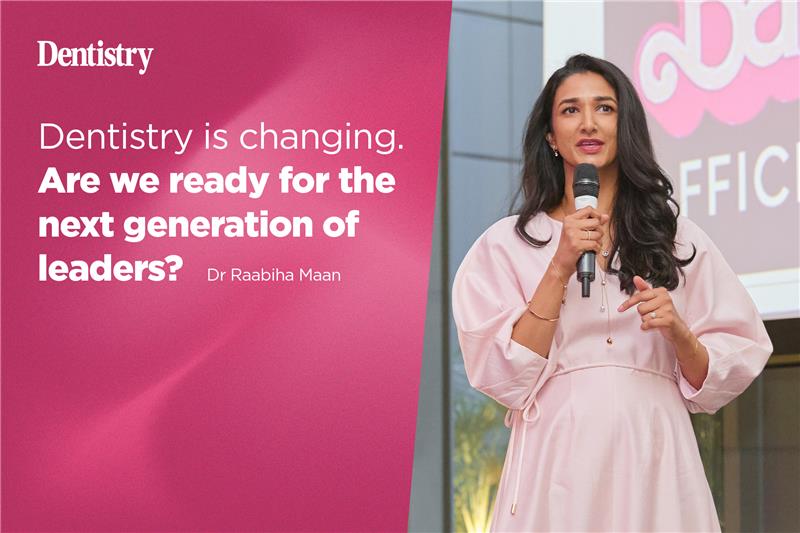
Raabiha Maan discusses changing demographics in dentistry: with so many women in the workforce, how can we ensure leadership evolves to keep pace?
Dentistry in the UK has undergone a significant demographic transformation over the past few decades.
Once considered a largely male-dominated profession, the reality today looks very different. Across clinics, hospitals and universities, women now play a central role in delivering dental care.
The face of dentistry is changing.
And with that change comes an important question for the profession: who will shape its future?
Leadership matters. It influences workplace culture, the sustainability of careers and the environments in which dental teams and patients thrive.
The workforce reality
Across the UK dental profession, the demographics of the workforce have shifted considerably.
Women now make up just over half of registered dentists in the UK (approximately 53%), according to the General Dental Council’s registration statistics.
When the wider dental team is considered, the proportion of women becomes even more pronounced. Across the dental register as a whole – including dentists and dental care professionals – around 78% of registered dental professionals are female.
Dental care professionals (DCPs) are overwhelmingly female, with more than 90% of this workforce made up of women. Dental nurses represent the largest professional group within the dental register and are almost entirely female (around 96-97%).
Taken together, the day-to-day delivery of dental care across the UK is largely provided by women.
The future workforce
Looking at the age profile of the profession reveals another important trend. Older cohorts of dentists remain predominantly male (over three quarters), reflecting the historical gender balance of the profession. In contrast, younger cohorts entering dentistry show a far more balanced and increasingly female demographic profile.
Dental schools reflect this change as well. Workforce and education analyses indicate that around 60% of UK dental students are female.
Taken together, these trends suggest that the future workforce of dentistry will continue to become increasingly female.
This raises an important question for the profession.
If the workforce is changing, how do we ensure leadership evolves alongside it?
The leadership gap
Despite this shift in workforce demographics, leadership roles do not always reflect the same balance.
Practice ownership, principal roles, senior management positions and industry leadership still do not fully mirror the proportion of women working within dentistry.
This is not about exclusion or competition. It is about representation and perspective.
Leadership shapes workplace culture, career progression and the sustainability of the profession itself.
As dentistry continues to evolve, ensuring leadership reflects the profession becomes increasingly important.
Why clinician leadership matters
Dentistry is also evolving in terms of how practices operate.
Corporate organisations play an important and growing role within the profession, and many provide strong support structures and opportunities for clinicians and teams.
However, whether leadership sits within independent practices or corporate organisations, clinicians themselves bring an important perspective to decision-making.
Those who understand the realities of clinical practice are often best placed to design workplaces that support teams, retain talent and deliver excellent patient care.
A personal reflection on leadership
If I am honest, leadership was not something I always associated with myself.
Like many women in dentistry, I spent years focusing on doing my clinical work well, supporting patients and colleagues, and juggling the many roles life brings.
Leadership often felt like something reserved for a certain type of person – someone more authoritative, more outspoken or more decisive.
But over time I realised something important.
Many of the qualities I once questioned in myself were the very things that helped me lead.
- Listening carefully
- Considering how decisions affect the wider team
- Caring deeply about the wellbeing of those around me.
These are not weaknesses. They are leadership strengths.
The strengths women often bring
Research across healthcare and leadership literature highlights several qualities that many women bring naturally to leadership roles.
These include:
- empathy and emotional intelligence
- strong communication and collaboration
- relationship building
- attention to detail
- patient-centred thinking
- resilience and adaptability
Many women in dentistry also juggle multiple roles – clinician, parent, partner, mentor and business owner.
Managing these responsibilities develops organisational and interpersonal skills that translate directly into leadership.
Rethinking traits we sometimes doubt
Interestingly, some qualities women sometimes perceive as weaknesses can become leadership strengths.
Questioning ourselves can lead to thoughtful decision-making and openness to feedback.
Sensitivity to others’ needs helps create psychologically safe teams.
A desire to see others succeed encourages mentorship and collaboration rather than competition.
In a profession built on teamwork, these traits can be incredibly valuable.
When perspectives complement each other
Leadership in dentistry does not need to look one particular way.
Some leaders are direct and decisive. Others are collaborative and reflective.
Men and women often bring different experiences and perspectives on leadership. When those perspectives complement each other, teams become stronger and organisations thrive. I have seen and experienced this first-hand in the practice I run with my husband and brother.
The goal is not to replace one leadership style with another, but to ensure diverse voices help shape the profession.
Turning conversation into action
Recognising the demographic shift within dentistry is only the beginning.
The real question is how the profession supports women to step forward into leadership roles.
For many women, the barrier is not capability but confidence.
This can be particularly true for mothers returning from maternity leave, who may feel they have stepped away from the profession’s momentum.
Yet motherhood often develops many of the very skills leadership requires: resilience, prioritisation, empathy, communication and the ability to manage complexity.
Rather than limiting leadership potential, these experiences can strengthen it.
Creating platforms and support
Supporting women in leadership requires practical action across the profession.
This may include:
- Mentorship programmes
- Leadership and business education
- Peer support networks
- Coaching and confidence-building opportunities
- Greater representation on conference stages and professional panels.
Communities such as the Dental Mums Network have been created to help provide some of these spaces – generating opportunities for mentorship, peer support and leadership development for women across the profession.
However, this is something the wider profession can also embrace.
Encouraging diverse voices to contribute to professional conversations ultimately benefits the entire dental community.
A reflection for the profession
If you are a woman reading this article, consider whether leadership is something you have ever allowed yourself to imagine.
Many of the qualities that make someone a thoughtful clinician, supportive colleague and caring mentor are often the same qualities that make strong leaders.
And if you are a man reading this, consider the role you can play in encouraging and supporting the women around you to step forward.
Leadership is not a threat to be guarded but an opportunity to be shared.
Dentistry is evolving: the opportunity now is to ensure its leadership reflects the people who make up its workforce.
The question is not simply whether women belong in leadership. The real question may be: how do we create a profession where more voices feel confident enough to step forward and help shape its future?
References
- General Dental Council. Registration statistical report 2024. London: GDC; 2024.
- General Dental Council. Registration statistical report 2023. London: GDC; 2023.
- Health Education England. Advancing Dental Care: Education and Training Review – Final Report. London: HEE; 2021.
- Gallagher JE, Clarke W, Eaton KA, Wilson NHF. Dentistry – a professional contained career in healthcare: an analysis of career expectations of dental students. Br Dent J. 2009;207(4):E9.
- NHS England. NHS Dental Statistics for England 2023–24. London: NHS England; 2024.
Follow Dentistry.co.uk on Instagram to keep up with all the latest dental news and trends.
Apa Reaksi Anda?
 Suka
0
Suka
0
 Kurang Suka
0
Kurang Suka
0
 Setuju
0
Setuju
0
 Tidak Setuju
0
Tidak Setuju
0
 Bagus
0
Bagus
0
 Berguna
0
Berguna
0
 Hebat
0
Hebat
0