











































Generating health through AI and human connection
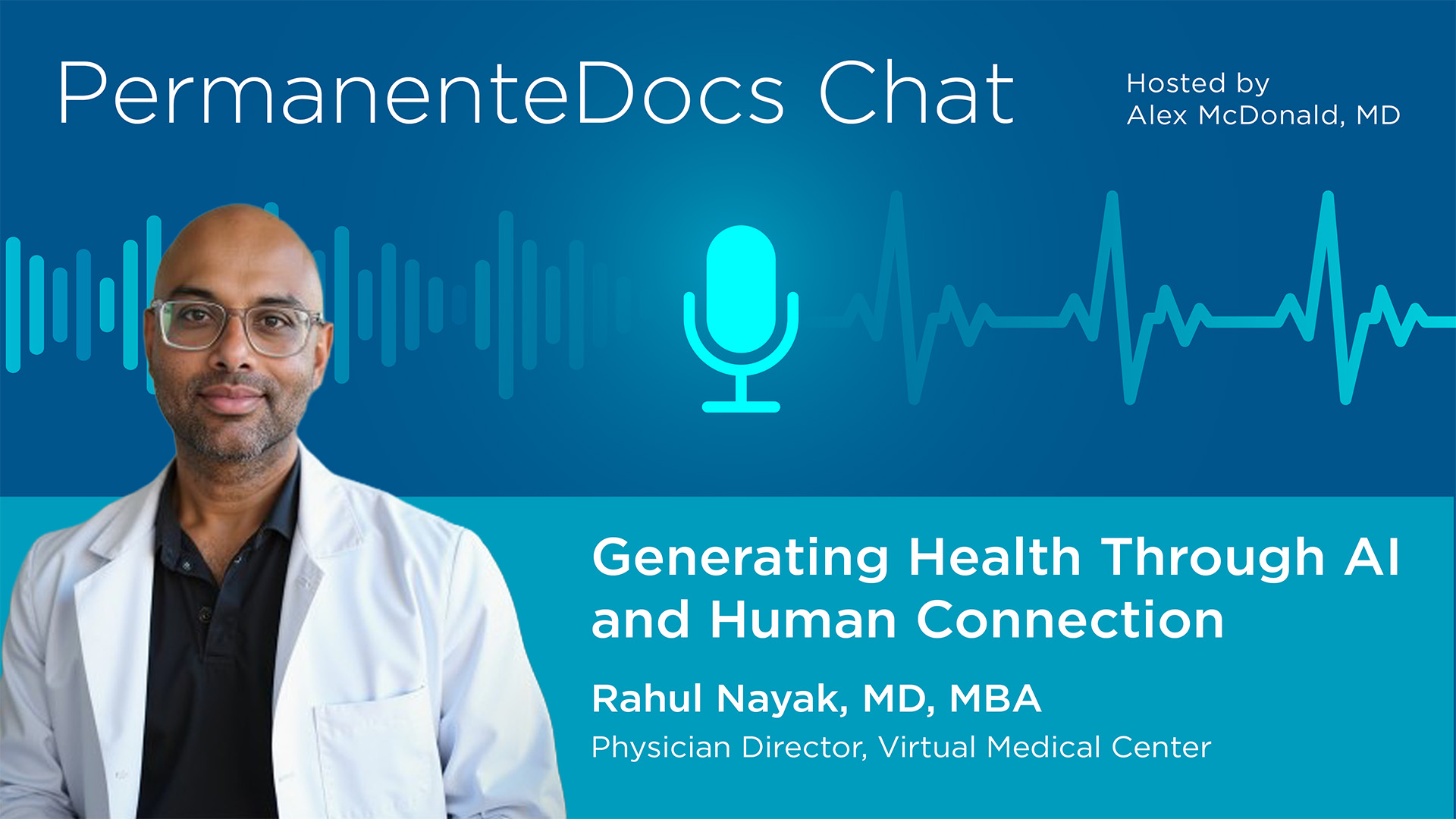



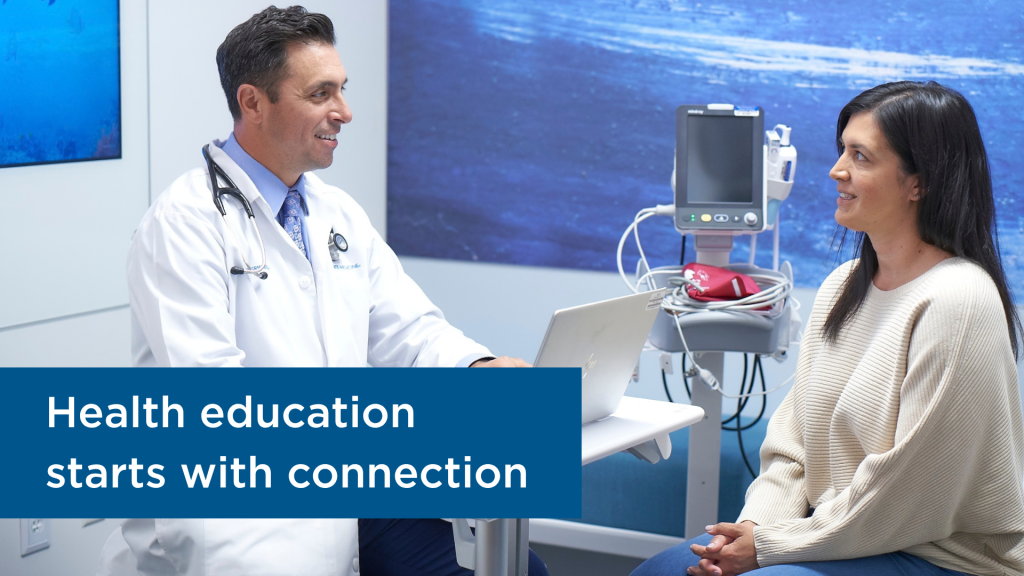
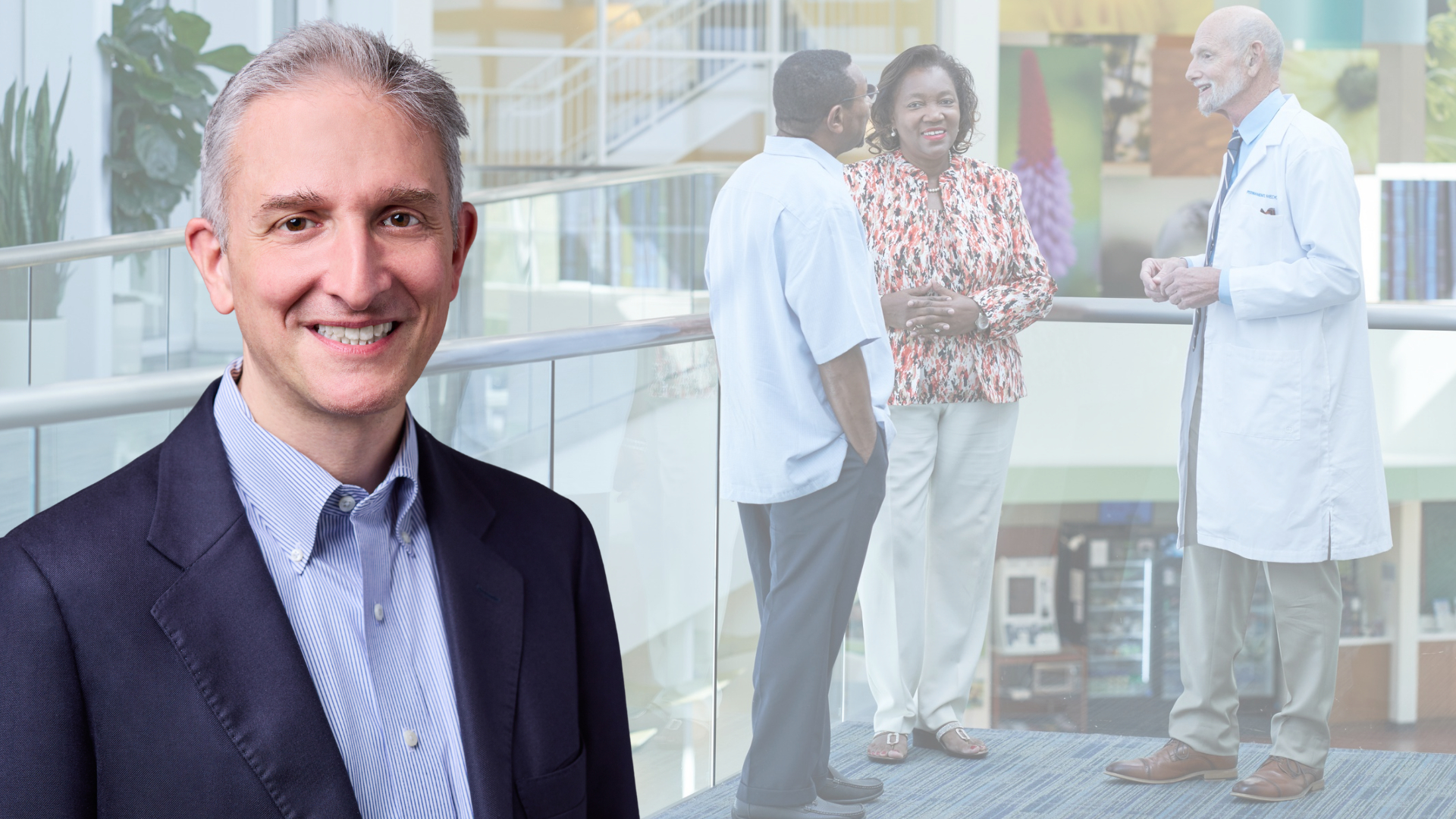
Rahul Nayak, MD, gastroenterologist and physician director of the Virtual Medical Center at The Southeast Permanente Medical Group, sees artificial intelligence as a way to make care more human, not less. He talks with Alex McDonald, MD, about how in this episode of PermanenteDocs Chat.
Dr. Nayak explains why the care model comes before the technology, how ambient AI helps physicians listen more closely and catch what they might otherwise miss, and what AI-supported care between visits could look like for conditions such as hypertension. Throughout, he returns to one principle: AI can raise possibilities, but physician judgment and the patient relationship stay at the core.
Scroll down to read the full transcript.
Podcast transcript
Transcript is autogenerated. Although edited for clarity, it should not be considered an exact replication of the podcast and may also be updated as needed.
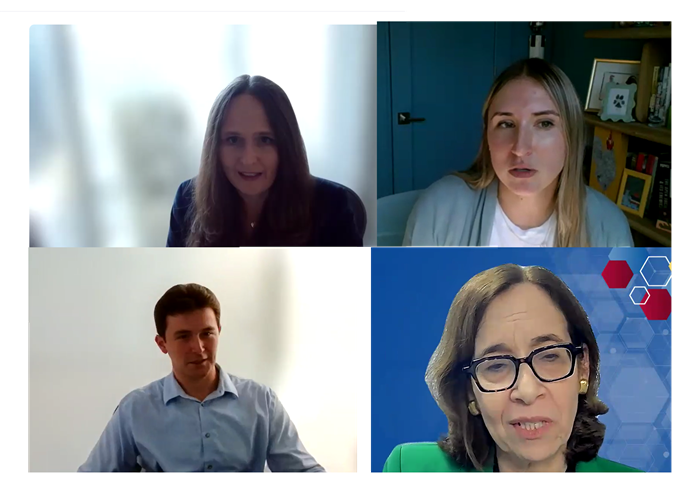
Alex McDonald, MD: Welcome everyone to today’s PermanenteDocs Chat. I’m your host, Alex McDonald, and we are talking about AI again. I know we’ve talked about this before, but it is a phenomenal field. It is expanding so quickly. And today we’re going to focus on how AI can really extend the reach and impact of our physicians. Our guest today is Dr. Rahul Nayak, who is a gastroenterologist and a member of The Southeast Permanente Medical Group and a director of the Virtual Medical Center there. So Dr. Nayak, welcome so much to the podcast.
Rahul Nayak, MD: Yeah, Dr. McDonald, thank you so much. I’m really excited to be here. This is, as you’ve said, a topic that we both talk about a lot and also end up maybe not talking about as perhaps tactically as we could as people look to see how it really impacts their day-to-day, but also their near future. So it’s an exciting time to be in the space.
AM: Absolutely. I guess just for timestamp, it’s September 2026. In six months, this may be completely obsolete, but who knows? It’s happening very quickly. Well, again, let’s jump in real quick here. Just before we start, tell us who you are and a little bit more about what you do to give us a background.
Meet Dr. Rahul Nayak: Gastroenterologist and Virtual Medical Center Director
RN: Yeah, so 60% of my time I spend practicing gastroenterology. It’s really a field that I thoroughly enjoy, even though at times I’m reminded by my wife that I’m a glorified plumber, which is fine. Totally cool, completely makes sense. The other 40% I spend in directing our virtual medical center, and it’s an honor to work with a team of physician leaders like Dr. Michael Bakheet and then our SSD team, Michelle Klevesahl and the remaining parts of our team, Kim Petty, who does a ton of the work that we need to get done to bring these sorts of tools and help integrate them into how we do our care. So I’ve been with TSPMG for 16 years ever since fellowship, and I joined the organization because the way we think about what our mission is to try and generate health for the populations of the communities that we live in really resonates with me.
And I got to come to a place where I don’t have to make any odd compromises. I can provide care for the people who are in front of me and do it in an environment with phenomenal colleagues.
Why designing the care model comes before the technology
AM: Excellent. Yes, I love it. I love it. I’m very like-minded here. So let’s talk about, again, AI and technology. And you’ve talked about the importance of designing the care model first before you then implement technology. Why is that distinction really important and what does that look like in clinical practice?
RN: So at the end of the day, oftentimes folks who are in technology feels like people see it as a magic wand that you wave it in the general direction of whatever operational problem you have and suddenly things will just get better. And at our core as an organization, we really thrive when we are able to design our care. So design the clinical care. An example of that would be if I want to get someone in for say an upper endoscopy, I could have them go to their primary care doctor. I could have them then go and be seen by a GI physician in clinic or a GI APP in clinic, and then I could have them go to a procedure. On the other hand, I know that certain people in certain populations, and this is where the design comes in, don’t need all those steps.
They maybe just need the procedure. And so if I can have them skip a couple of those steps, I open up all that access for other folks to be seen. I get this patient what they need when they need it by the right resource, so it’s the right care at the right time and the right place. And now I can put a piece of technology to enable that. So I can put in either structured decision trees, which allow a patient to go online, say, “I have these symptoms,” know what their risks are, know that they don’t have any contraindications to coming straight in for a procedure, and then be able to then bring them in to get that procedure done, finish their results, and then move their care to the next phase. And the enabling technology only occurs after I’ve designed that piece of care.
And so I think that’s really how it occurs in practice and oftentimes the practices that we are able to set up and do.
AM: No, I love that. I know right now in this day and age, there are a lot of companies and systems which are actually designing the care around the technology versus the care truly around the patient. And I love that right place, right time for the patient and not wasting a lot of resources. You also talk about how you’re really emphatic when we think about AI in clinical practice, it never makes the final diagnosis. It raises possibility, it gives prompts, it helps the doctor be better, but ultimately the physician judgment is still at the core of everything we do. Technology and AI doesn’t replace it and it’s not a non-negotiable design principle. Can you expand more on that?
RN: I look at it almost from my work a decade plus ago in safety. So we can demand perfection of a system. Demanding perfection of individual humans, that’s not really a thing that we can do. And that’s where some of the mismatch comes in, where people feel like they’re being asked to be perfect as though they were a machine. We don’t want that. That is not a concept that really makes sense and it’s not very humane, quite frankly, but we can design systems to be perfect. And so if I go back and think about how and what we do, there’s a lot of work that say we do on a day-to-day basis that we shouldn’t be doing, and that is the kind of work that we can absolutely find a way to take that load and give it to another person or AI or an algorithm.
And that is an opportunity, but we have to, one, design where that occurs, and then two, we have to be there so that we’re able to both develop, build, and create the core human relationship that you need because that is what care is. Care is a person and taking care of another person more than anything else. And that should come across even when we’re using our tools. When I think about what we do, when I think about what we do, we generate health more than anything else. We’re not here to sort of manage chronic illness. We’re here to either prevent it or help people live the best version of their lives. And so any set of tools that allows us to do that, even if we can’t be there all the time doing that, at least if we can help design that, that allows us to then take these pieces of technology, make them more human while also making the job more humane.
Because at the end of the day, every time we demand perfection of a human, it’s really, really almost a moral injury to them. Whereas demanding perfection of a system, that is what the system is for.
How AI helps generate health in an integrated care model
AM: Oh my gosh, you just blew up my mind right now. I think there’s so many things you just said which are brilliant. I love the idea of helping offload the physicians. We know we don’t have enough physicians. We know that being a physician has extreme risk of burnout and overload and using technology to help us do our job better and also maintain our mental and physical health is so critical. So put that aside. The other piece you hear, this concept of how do we generate health? How do we use technology to help generate health? And that is such a phenomenal concept. So we live in a world often which focuses on treating disease versus focusing on a health care system that really helps to generate health and preserve health.
And how does AI actually help do that work and what does an integrated capitated system, what does that look like versus in the traditional fee-for-service model where incentives may not always be aligned with generating health?
RN: Yeah, Alex, clearly there’s a lot there.
AM: We have 20 minutes. Go. No.
RN: I’ll take it in some sort of smaller chunks. When I think about how we do what we do, the core of it is that we are looking to generate as much value as we can per dollar. And that value is really determined by how the patient experiences the care as well as their outcomes. Those are the things that really matter, and then what it costs to do it. And so unlike other places, unlike other systems or unlike other financial models, the advantage of AI for us is it solves the core problem we have always had, is that it is very expensive to provide the kind of deeply personalized preventive care that ultimately helps generate health. And we have done it and we have done it in our outcomes nationally really demonstrate our dedication to that. But we could do more. We could do more for our populations, we could do more for our communities.
And the way you do more is by doing it as strategically and tactically as you can. And that really means layering these technology pieces in to help provide deeply personalized, extraordinarily timely, preferably proactive interventions to help people live their best life. And it sounds like pie in the sky, and yet in many ways, you look at our outcomes in cardiovascular health and in the work that we’ve done to prevent cancer, and you can see its manifestation. So the next version is not just we’re going to go and get the entire population to go get screened for colon cancer, which we will and need to keep doing, but also how do we start helping people with all of those other life goals? And so there’s going to be a lot of point solutions that are out there that come along to help individuals in those spaces.
And where we’re uniquely qualified is that we know so much about the folks who we get to take care of because we have their records. And in combination with that knowledge and these technology tools, we are then able to pull these things forward. So a good example is a pilot that we have expanded and are started running. It started in KP Washington, and that’s Dr. Trina Davis and Anuj Kapoor who have really led that work in the medical foundation along with one of our vendors who provides our ambient solution. And what they have done is combine our interest in finding and being more proactive in our appointments with patient medical care while making it easier to bill and fulfill and document what you’ve just done. So if someone has a care gap now and in our conversation we go and cover that care gap, it is now very easy for me to acknowledge it, talk to the patient about it, and then essentially fulfill it and move on.
And by doing that at every touch that we get, we have the opportunity to really close those sorts of things aggressively. It’s a completely different world than we would live in if we had to try and make sure that every single person did it every single time. Now we’re helping folks do it. You can still opt not to do it, totally fine. Do you know what I’m saying? But by the same token, this is sort of the trick that we, or not the trick, this is sort of the advantage that we have is because we can prioritize that as the time, prioritize the technology that goes behind it, and then do it and realize the value over the course of the time that we have folks with us.
How ambient AI gives physicians their time back
AM: I remember very clearly when I first joined Permanente back in 2012, I was talking to some physicians about the value and they talk about I’m one of the best doctors ever because I know the care gaps for my patients when they walk in, it’s listed there, they’re due for their flu vaccine and their mammogram and their colonoscopy and you name it. And I remember thinking, oh, this is so great. Everything’s sort of in one place and it helps me to be a better doctor. Now you amplify that times, I don’t know, a million or so when you start thinking about AI and a lot of these ambient technologies, it really has given, I’ll speak personally, it has really brought the joy back to practicing medicine. I can walk in the exam room and look at a patient in the eye as opposed to have my head stuck in a computer.
And that’s just one tangible aspect of how it really gives us our time back. It gives back our autonomy, it gives back our joy and practice with the ambient AI, which is only one dimension of all the amazing things that AI can do. So that’s my own two cents. I’m sure you have thoughts, but I also want to talk about the next iteration of that and the Care Signals program. And if you can talk about Care Signals, what that is and how it goes even beyond the initial tangible benefits that AI provides physicians.
What is Care Signals? Ambient AI beyond the clinical visit
RN: So I think the holy grail, if you will, of a clinic visit, just a clinic visit. Now we’re really talking about synchronous face-to-face or video. So in that sort of spectrum, when you think about that synchronous moment, what matters more than anything else is did you connect with the person, yes or no? Did they feel heard? Yes or no? Were you able to capture all of the elements and all of the things that that person said in order to integrate it into what your next set of plans and conversations with them were going to be?
The holy grail is sort of that. And the next step of that is when you had that conversation, if something was surfaced that you were not necessarily aware of or had not been thinking of, can it be brought to your attention enough so that you pay attention to it? And then the final piece is, as you’re having that conversation and you’re saying, we’re going to do the following six things and here’s the order and here’s why, and here’s what it is, does that get captured and put in and ordered already so that your job at the end of that visit is a little bit more of as an editor to review and then to hit send, the diagnosis come in, you don’t have to worry about that. The orders are already in, you don’t have to worry about that. But the first step of that is being able to pull out the things that you’re talking about, and that is what the first step of Care Signals is doing for us.
It’s saying, “You have talked about these things in this conversation, here are the diagnoses that would be associated with that and what you have said and talked about in that. Here are some of the pieces that are there. Do you want to include that or not?” Because that’s always a question. Do you want to include or not? Is it important enough for you to include it or not? And that’s what layers on. So that piece layers on then to the next step, which is being able to get us into ambient ordering, and then the next step, which is looking at how and why and what we activate our other systems to support people and follow up and support people in taking care of themselves in between the clinic visits, which is where most of the care takes place.
AI-supported care between visits: A hypertension example
AM: And that’s a great segue actually to my next question here is I guess what does right now and what could an AI-supported care journey look like for a patient between visits, between the average patient sees their physician twice a year, maybe they interact with the nurses or the health care team a little more frequently than that, but something like as basic as hypertension or any kind of chronic disease, what does that journey look like and how does AI help keep those touch points between those physician-patient interactions?
RN: Yeah, so I love this question. One, because it takes advantage of things we already do. So we already do remote patient monitoring for patients with hypertension at scale,
And it’s a very impressive program. So we could imagine, say, a case of hypertension, there’s multiple ways in which we could see AI and then our algorithm supporting that care. And so one way would be this, is I’m already providing the data to my health app about my hypertension management at home, my blood pressure at home, I’m not diagnosed as being hypertensive yet. If those numbers start rising, then you could theoretically, not even theory, you could practically see us reaching out and saying, “Hey, is something changed?
Is something going on? Have you changed the thing in your diet? Have you noticed any new symptoms?” Any of those could result in a, “You need to come in for a visit,” or, “Hey, maybe you should do this intervention in real time. Maybe you should cut back on salt in your diet.” And then you would see those numbers improve. And if those numbers improve, that person is essentially on what we would think of as a happy path. We don’t have to interact with them other than to say, “Congratulations, you’re doing great work.” Then if say the numbers sort of go back up, you could see us reaching out first with just a question saying, “Hey, is everything okay?” Second, perhaps a chatbot to have a deeper conversation. Then that information and all this information gets summarized in to your note when you go and see that patient when they come in to make a decision about, “Hey, what are we going to do next?” Because if there’s lifestyle issues and we haven’t addressed them, then we need to continue working on those.
Here’s what our plan is, here’s what the follow-up looks like, and here’s how we know you’re going to stay or go onto one of these plans. And so you start building in the continuous monitoring and the utility of that without having to overburden you as a clinician to have to see it all. So the flags are set by you, and then when they need to come in, access is much easier because you haven’t eaten up access with a bunch of other things that they didn’t need to necessarily come in to see and they didn’t want to come see you anyway. Every time we pull some patient out of their lives, what are we doing? If they got to see us, they got to see us and we should make it as easy as possible. But if they don’t, let’s meet their need, where they are and how we can in whatever way.
I think the other big piece that we’re going to see more and more generative AI is in partnership with us as we’re looking through and trying to understand complex cases and then cases over time. Because at the end of the day, health is something, at least in our system, that occurs over decades, and it would be great to be able to know here’s the intervention we need to take for this person that’s going to result in this benefit 10 years down the line. And we see that for prevention, but I would argue that there’s probably a number of other things where if we were able to be more proactive and had the resource to do, which now we do thanks to AI, we could get into those spaces and help people out in those times at those moments with that right technology and that right touch to get them to where they want to be.
Where AI helps and where care stays human
AM: I mean, that’s such a great concrete example there, talking about hypertension specifically, but I mean, that’s just, again, the tip of the iceberg. So I guess the next question I have for you is, so we know people like personalized care and we are becoming more personalized and more continuous in terms of utilizing some of these skills to help expand the work of physicians, but where does AI take things off the physician’s plate and where do things need to stay really distinctly human? Because we know patients do better when there is that longitudinal continuous relationship between their doctor and their patients. So where is that dividing line between we can let AI do this work for us versus when we need to step in and have that face-to-face or that human interaction?
RN: I don’t know. I think that’s a challenging question for a couple of reasons. I think that each physician is going to sort of draw that line differently. So in my own practice, I do a lot of my follow-up by email. My patient population has now gravitated towards that. I’ve been with the group long enough, 16 years, that people will opt into a practice that’s a little bit more like that, so they get a very timely response from their messages to me and they’re fine with that. Whereas there’s other people in my practice who are on the other side, they tend to bring people back a little bit more frequently because that is what their patients want and desire. But after that, I think to answer the meta question that you put out there, really the explicit question, I think that building relationships is the single most important thing we can do as humans.
And I think you can build the relationships through conversations in person. There’s a part that that needs to occur. That is still a thing.
Virtually through email communications, these are always a sort of, but it’s building that consistent relationship over time that really matters. AI can assist with that. For sure we found that for sure research that I think actually the Medical Foundation helped with, or the Federation helped with actually, looked at the fact that patients at times prefer the responses to come from ART, which is the automated response that is built into Epic because it feels more humane. What I would argue is that when we are able to speak to our patients in language that they understand and really connect with them, that is the thing that when AI helps us do that is doing us a huge favor. The piece where I think AI is going to continue to just come up to but not take over is when we have difficult conversations with people, I think when we have conversations that either include this is going to be a life-changing thing, or I need to convince you to do something life-changing.
And I think in many ways, those moments really are where all the relationship equity you build sort of come in and either people trust you or they don’t. And at the end of the day, it doesn’t matter how much technology we bring to medicine, it’s not perfect. And so that space is going to continue to be there. I think one of the big challenges that we continue to face is that people look at this in an all or none way. It’s either all AI or no AI. It’s either all human or no human. And that’s, I think, just not reality. I think there’s a period of transition and change, but at the end of the day, there’s something about people talking to people, which is where a lot of these changes and health changes certainly take place.
AM: Yeah, no, I think that’s so important. And I know that some of my patients just want to come in and just look at me eye to eye and have that conversation. Some of my patients are totally happy, just almost doing most of their care asynchronously through email in the portal. And so I think meeting the patient where they are and however they want to get care, and that’s going to change over time for the patient also. It’s not always going to be the same based on your comments about if it’s a life-altering diagnosis versus, “Hey, your cholesterol is a little high, eat better.” Anyway.
How ambient AI helps physicians
RN: So I think about it because for me, one of the things that our ambient solution has done is kept me from making a mistake, kept me from missing something, like an offhand comment from one of my patients about a change in their bowel habits, which led to a diagnosis of a cancer, offhand, just not the way I had asked the question. I didn’t ask it in the way that connected with them. It was sort of captured in the transcript as I was reading through it and in the summary, and I was like, “Yeah, I need to pay attention.” I reviewed that note with the patient. I was like, “I need to pay attention to that. I need to do a thing with it.”
So these tools are there to help us be better physicians in almost an older model, like a model where it was just you and the patient in a room. And I mean, let’s face it, when that model was really in existence, medicine was a lot less complex. And so now we have to be able to ingest all that complexity, make use of all the knowledge, but still keep that humanity. And I think that is where in many ways AI is helping us do that, which is now the complexity is not necessarily going to be hugely overwhelming and I can only focus on that. I can focus here on my patient and have some help bringing in that complexity to make that and bridge that sort of conversation.
When patients use AI: Handling AI-generated research in the exam room
AM: No, I love that summarization. I have a question here that I was just thinking about. Now, we have physicians who are using AI to help support us and do our jobs better. We also have patients using AI to look up everything known to man and come in with a list of diagnoses and tests and things like that, which some may be appropriate, some may certainly not be. And so are we just in an AI arms race, so to speak, I guess? And again, how do we make sure that we’re actually having human-human interactions as opposed to just AI versus AI, which I know has happens in several different domains in several different other fields? Yeah,
RN: So I love that. So I’ve always been a, bring all your research in. I
Love it. I love it when my patients do research. I love it when they come in having done reading. I love it mostly when they bring the resource in. When they come in and they’re trying to test me with it, I have a lot less. You’ve just set us up. We’re not in a real sort of trusting relationship at that point, and I can meet you there, but that’s the signal if you’re testing me like that, that’s where we’re at. So I love it. I don’t think it’s an AI to AI kind of conversation. Anyone who’s gone out there and used these tools knows that they are in many ways amazing, but in many ways they’re mathematical prediction tools of the next most likely word. So what ends up happening is in the hands of experts, they’re astounding. And so I am a board certified gastroenterologist.
So when I make a query about gastroenterology, my chance of making use of that tool at its highest possible level is very high. When I make that same level of query about say my knee that is bothering me, my orthopedic friends laugh at me as you would, you would laugh at me, and they laugh at me because 30 to 40% of it is just not worth anything. You know what it is. I don’t. And so some of the conversation when folks come in like this is just having that conversation like, “Hey, look, these things really make a lot of sense. This isn’t really based in something where we are going to be able to have a conversation that’s going to be meaningful because there’s no basis in science for it. Let’s talk about this, focus on this, and see how we can lean into this piece of information and this body of work that you’ve done and what you’re looking for and what you’re asking.” Because at the end of the day, people are asking to be cared for, and when they come in with a ton of stuff and are a little bit defensive, it’s because they have not been.
They have not been listened to, they’ve not been heard. And I find that one of my favorite things about ambient support is I no longer have to sacrifice getting everything down, reviewing all of their records, listening to them or my family. I don’t have to sacrifice these sets of things. My family and accuracy, because that’s the other thing that sacrifice when I walk out of a room without finishing my work. I don’t have to sacrifice those things. It’s phenomenal, and that makes it easier for me to do my job. It still takes a similar amount of time, but the mental load of that moment is something different. And then the way my patients experience it is radically different. I literally got hugged by this 85-year-old woman who was like, “That is the most closely someone has listened to me in any health care setting ever.” And I’m not really known as a listener, sort of a super touchy-feely provider.
Some of my colleagues are, they’re amazing. That’s not really who I am. And I was stunned because the tool really helped me connect with her.
AM: Yeah, that’s amazing. I love it. And I know just going back to your other point about AI and expertise, as studies have shown across different fields that using AI with that context and that knowledge and that expertise can be tremendously helpful, but if you don’t have that knowledge and that context, it can lead you astray very easily. And so I think that’s the important piece of encouraging patients to use their resources and look things up and get as much information as they can, but then they need to come to us as their physicians to help them sift through the noise to find the information which actually applies to them as an individual. So okay, this is a phenomenal conversation. We could go on and on all day, but we do like to keep these short and relatively high yield. Last question, which is my favorite question: What makes you most proud to be a Permanente physician?
What it means to be a Permanente physician
RN: So every day when I come in as a specialist, I get to take care of the person in front of me. If I were in private practice and I have no hate in my heart for my colleagues who have chosen that path, to a certain degree, they’re taking care of the person in front of them, but the actual book of business is a referring doctor. And I never feel that. I always feel like the patient in front of me is my patient because of that reason. And it’s just a different thing. It’s like my thing. It’s just my thing in the back of my head because I’m so just aware that this is a unique thing where I get to have my relationship with this person. I still talk to their primary doctor. I still have that kind of conversation and respect that relationship because it’s critical, but I’m there for only this person.
There’s no gray space on that. And it’s a blessing to be able to work in a space where there’s no gray space. If they need a procedure, they need a procedure, we give it to them. If they don’t need a procedure, I have that conversation. If they need the right medication, that’s the medication they get. And I don’t have to fight about it. It’s completely freeing. I practice medicine in an evidence-based matter in a group practice where I get to talk to phenomenal colleagues and my patients are amazing people and I get to learn about them and their lives. I mean, what’s more to ask for in terms of what I do and how I do it?
AM: Amazing. Well, very well said and a great way to end a great conversation. Well, thank you so much for your time. Really appreciate your thoughts and insights here, and I’m sure we’ll have lots more conversations in six months when everything’s totally different.
RN: Totally different, completely different. It’ll be great. I love how fast this stuff moves and it’s terrifying at the same time.
AM: Absolutely. And thanks for all of you out there listening. Please like and subscribe and make sure you leave comments if there’s someone you want to share or hear from in the future.
RN: Yeah, thanks for the time. I appreciate it.
The post Generating health through AI and human connection appeared first on Permanente Medicine.
Apa Reaksi Anda?
 Suka
0
 Kurang Suka
0
 Setuju
0
 Tidak Setuju
0
 Bagus
0
 Berguna
0
 Hebat
0