

























































Referral of urgent suspected cancer – getting it right!
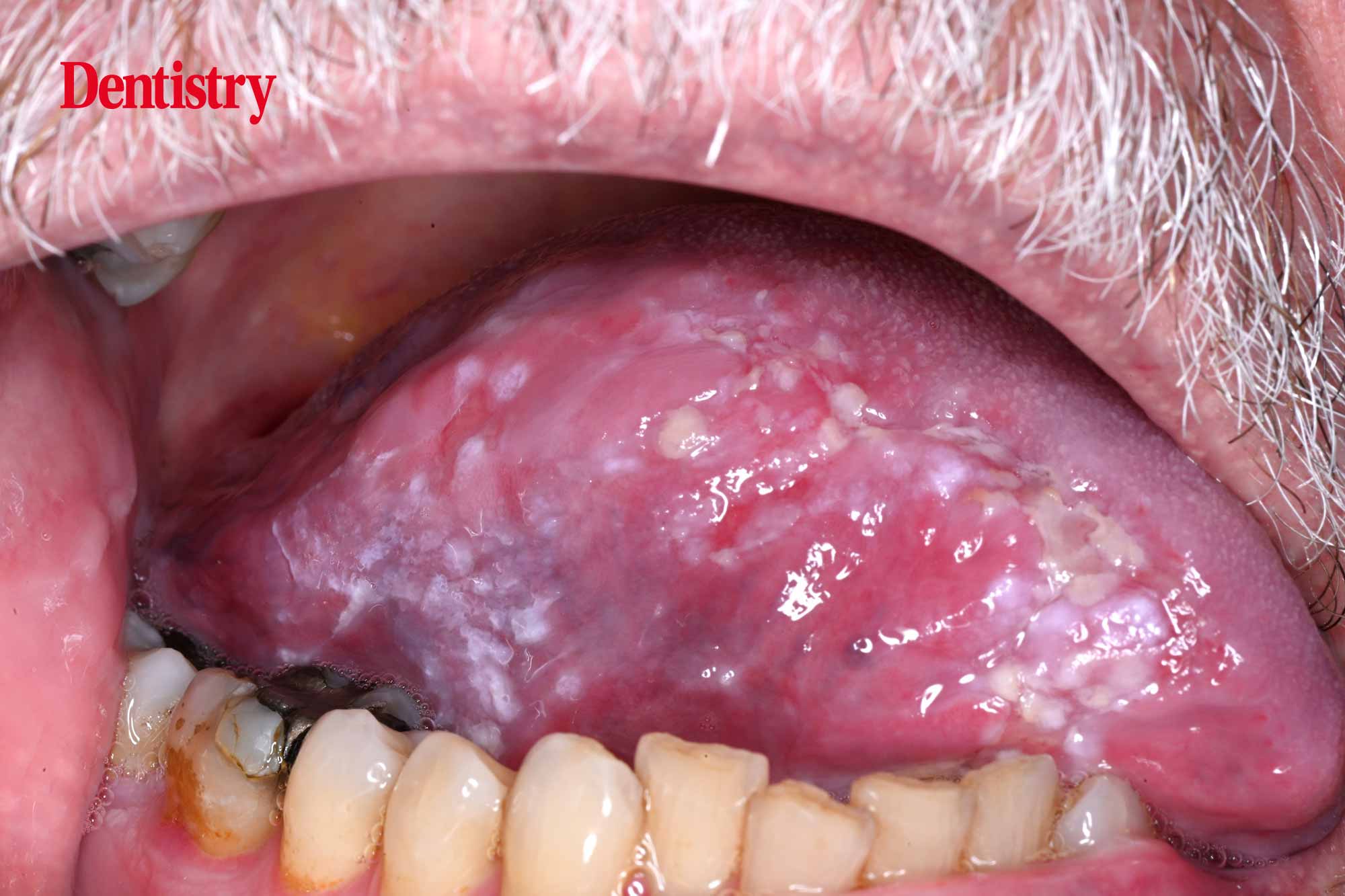
Mike Lewis explores the dental team’s role in recognising mouth cancer through systematic checks, clear records and timely referrals.
The incidence of mouth cancer in the UK is progressively increasing each year and has risen from approximately 3,000 cases in 1984 to more than 10,000 cases last year.
Unfortunately, despite advances in treatment that have improved the quality of life of sufferers, the overall five-year survival rate has remained the same at around 50%.
The size of the cancer at the time of initial diagnosis is the single most important factor that can improve the five-year survival. Tumours under 2cm in diameter with no spread to the neck (stage one) (Figure 1) can be treated relatively easily and are associated with an 80% five-year survival rate.
In contrast, larger tumours that are more than 4cm in diameter and have spread to the lymph nodes in the neck (stage four) (Figure 2) have a five-year survival of only 10%. Therefore, it is obvious that detection of a tumour when small in primary dental care combined with appropriate urgent referral to secondary care can save lives.
Every patient, every visit
All members of the dental team are trained to recognise soft tissue abnormalities in the head and neck. It’s crucial to perform a mouth cancer check on every patient at every visit.
This can be completed in less than two minutes using the Mouth Cancer Foundation’s 10 easy steps guide, which ensures a systematic assessment of the neck, face and mouth.
For the vast majority of patients, the check will reveal normal, healthy tissues, and this observation should be recorded in their notes. However, if an abnormality is detected then descriptive terms, such as ulcer, white patch, red patch or swelling, should be used to record the findings.
The term ‘lesion’ comes from the Latin word for ‘injury’ and as such should not be used in the notes since it has no descriptive benefit.
Any soft tissue change detected should be palpated to determine consistency. As a generalisation, firmness reflects the presence of a tumour while softness to palpation represents a benign inflammatory condition.
Finally, it is best practice to take a clinical photograph of the affected mucosa. A decision then has to be made as to whether the patient needs to be either reassured of the absence of any sinister condition and simply kept under review or referred to a specialist on an urgent suspected cancer (USC) pathway.
Urgent suspected cancer guidance
Guidance on the clinical features that fulfil the criteria for a USC referral are freely available online as part of the British Dental Association’s Head and Neck Cancer toolkit, developed in partnership with Cancer Research UK.
The National Institute for Health and Care Excellence (NICE) cancer guideline for use in England and Wales includes the following:
- Unexplained ulceration in the oral cavity lasting more than three weeks (Figure 3)
- A persistent and unexplained lump in the neck (Figure 4)
- A lump on the lip or in the oral cavity consistent with oral cancer (Figure 5)
- A ‘red’ or ‘red and white’ patch in the oral cavity consistent with erythroplakia or erythroleukoplakia (Figure 6).
In the guidelines for Northern Ireland and Scotland, there are additional ‘red flag’ factors, including a persistent hoarse voice, pain on swallowing and unexplained tooth mobility.
If the mouth cancer check indicates that a USC pathway is required then the patient should be informed that the examination has revealed a tissue change that is unlikely to be cancer, but it is advisable to get a specialist opinion. Therefore, an urgent referral needs to be made to the local oral and maxillofacial surgery or oral medicine service, who will arrange an assessment within two weeks.
It is important to reassure the patient that, overall, nine out of 10 USC referrals are found to be benign conditions.
The exact form for a USC referral and the process for its submission will depend on the geographical location of the patient and local regional NHS service. There are wide variations in the USC referral form and amount of information required, including the need for a photograph, within different areas of the UK.
The staff within a dental practice should be aware of the local arrangements for USC referral for their patients.
Improving knowledge
The confidence to differentiate a tissue change that suggests malignancy or alternatively represents a benign condition comes with clinical experience. Misinterpretation of a benign condition and an inappropriate USC referral causes unnecessary anxiety for the patient and increases pressure on secondary care clinics.
All dental professionals should undertake continuing professional development on the subject of mouth cancer. The Mouth Cancer Foundation provides a comprehensive resource of information to help dental professionals recognise mouth cancer. The charity is also a source of educational material for use by patients, particularly in November, which is Mouth Cancer Action Month in the UK.
Dental professionals should feel at ease discussing cancer with patients and routinely perform the check for mouth cancer. Any patient found to have an abnormality that fulfils the criteria for USC should be referred appropriately.
Create a free account for unlimited access — plus the Dentistry Bulletin delivered to your inbox.
Apa Reaksi Anda?
 Suka
0
 Kurang Suka
0
 Setuju
0
 Tidak Setuju
0
 Bagus
0
 Berguna
0
 Hebat
0