

















































%20and%20Batch%20Production%20Records%20(BPR).png)













What happens after Invisalign? A clinician’s guide to retention
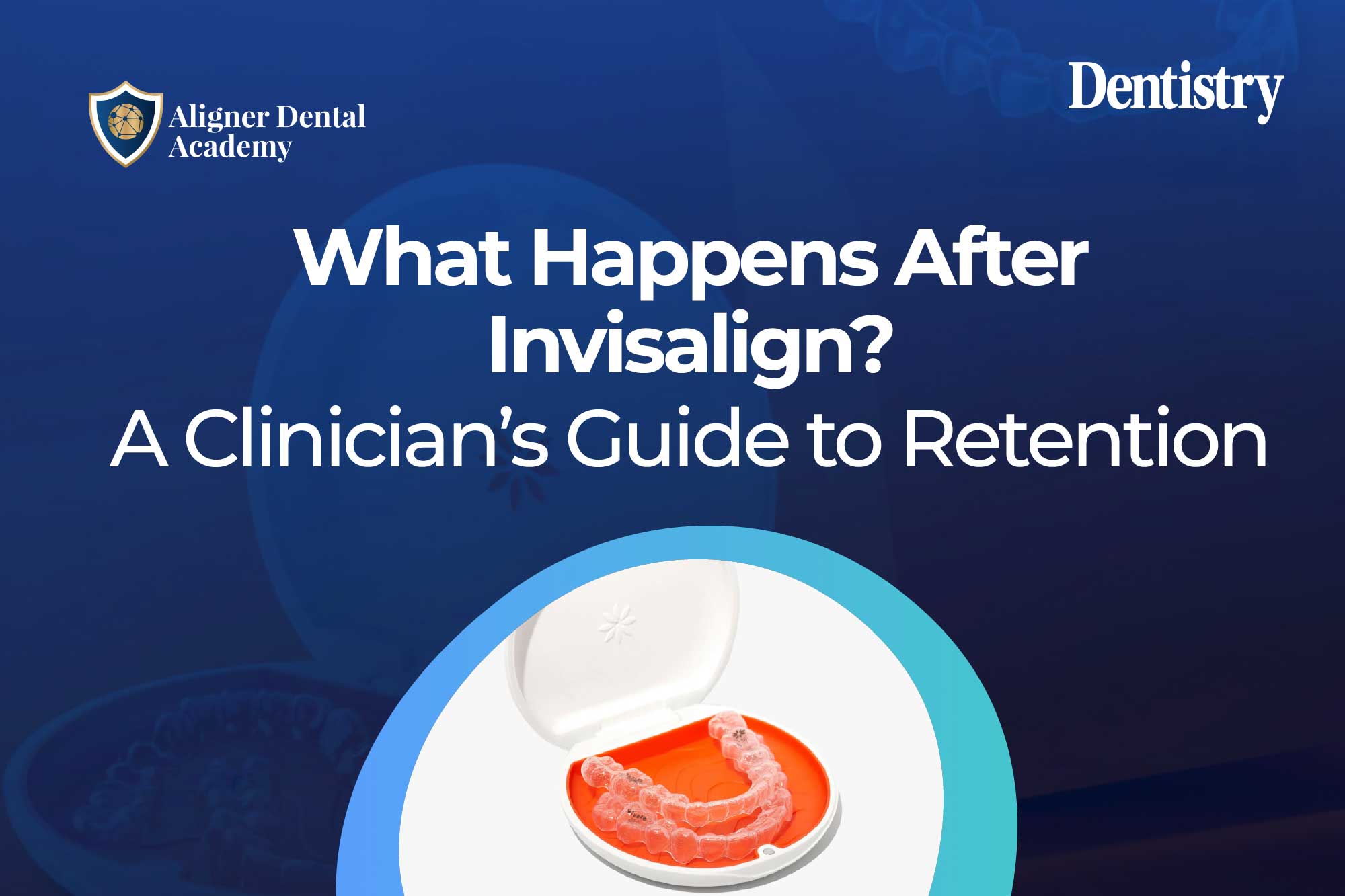
Retention is an integral part of Invisalign treatment – Aligner Dental Academy presents a guide to the different options and a practical post-Invisalign retention protocol.
When the last aligner comes off, the attachments are removed and the patient finally sees the result they have been waiting for. It is tempting to think the treatment is finished. Biologically, it is not.
The first few months after active orthodontic treatment are a vulnerable period. Periodontal and gingival tissues are reorganising, occlusal contacts are settling, and teeth remain susceptible to movement. Longer term, growth, ageing and normal dentoalveolar change continue throughout life (Littlewood et al, 2017). Retention is therefore not optional after Invisalign; it is part of the treatment.
Fixed, removable, or both?
Vacuum-formed retainers (VFRs) are a good foundation for retention following Invisalign. They retain the whole arch, are aesthetic and do not require bonded hardware.
However, there are situations where adding a bonded retainer makes clinical sense. British Orthodontic Society guidance has long recommended permanent retention following closure of generalised spacing or a midline diastema (BOS, 2013). There is also evidence that bonded retention can provide particularly good stability of the mandibular anterior segment.
In a five-year randomised controlled trial, Krämer and colleagues found only small post-treatment changes overall, but mandibular anterior alignment was more stable with a bonded canine-to-canine retainer than with a removable VFR: median irregularity increased by 0.1 mm with bonded retention compared with 0.6 mm with a VFR (Krämer et al, 2023). For a patient with a previously irregular lower anterior segment, that is clinically useful information.
A practical approach would therefore be VFR alone for many routine cases, but dual retention for cases where the consequences or likelihood of anterior relapse justify extra security.
The fixed retainer wires
This is an important conversation to have with patients.
Patients often assume that once a bonded wire is fitted, they no longer need their removable retainer. In reality, bonded retainers are not maintenance-free.
A 2023 systematic review and meta-analysis of 34 studies involving 3,484 patients estimated an overall bonded-retainer failure prevalence of approximately 35%. Failure increased with time, reaching more than 50% in studies with longer follow-up (Aye et al, 2023).
If a bond fails, the VFR can help maintain tooth position while the patient arranges a repair. If the patient has stopped wearing it, surprisingly rapid movement can occur before the failed wire is noticed.
For this reason, a practical dual-retention workflow is to place the passive fixed retainer first, then scan or take the impression over the bonded retainer so that the VFR is manufactured to fit accurately over it.
How many hours should the VFR be worn?
The early months deserve particular attention. In an RCT comparing mandibular VFR and bonded retention, most measurable post-treatment change occurred during the first six months (Krämer et al, 2020). This makes the first six to 12 months a sensible period for closer supervision.
The 2023 Cochrane review found the available comparisons between retention schedules to be of low certainty, and trials have not demonstrated a compelling clinical advantage for routine full-time wear over part-time wear (Martin et al, 2023; Iliadi et al, 2016).
A pragmatic protocol is therefore six months’ full-time wear of VFRs & then night-time wear as the baseline, increasing wear for patients who demonstrate instability.
Give patients a simple feedback mechanism: the retainer should remain passive.
If a patient misses several nights and the retainer suddenly feels tight, the teeth are telling them something. Advise more frequent wear until it becomes passive again. If it remains tight, no longer seats fully, or a tooth has visibly moved, review the patient rather than simply asking them to force the appliance into place.
If you bond a retainer, make it genuinely passive
Bonded retention introduces its own risks. A retainer can remain attached and still cause unwanted movement if it was active when bonded or subsequently becomes distorted.
‘Wire syndrome’ describes unexpected torque, inclination or other tooth movement associated with an apparently intact bonded retainer (Charavet, 2022). The clinical lesson is simple: do not just check whether the wire is still there, check what the teeth are doing.
At review appointments, inspect individual composite pads, wire integrity, anterior alignment, torque, periodontal health and occlusion.
There is also emerging evidence that technique matters. A 2026 systematic review and meta-analysis involving 1,481 patients found a significantly greater first-failure risk for directly bonded mandibular retainers compared with indirectly bonded retainers (HR 1.41) (Marei et al, 2026). For clinicians experiencing repeated mandibular retainer failures, laboratory- or digitally assisted indirect placement is therefore worth considering.
A practical post-Invisalign retention protocol
For most clear-aligner patients, the following provides a sensible, evidence-informed starting point:
- Provide removable retention in both arches. A full-coverage vacuum-formed retainer (VFR), such as Vivera, is a straightforward choice after aligner treatment and is familiar to the patient for six months full time and then night-time wear for life
- Add a bonded retainer when greater anterior security is desirable, particularly following closure of spacing or a diastema, significant rotations, substantial anterior tooth movement, or where even minor relapse would be problematic
- Use the removable retainer even when a fixed retainer is present. The bonded wire is additional security, not a replacement for the removable retainer
- Review retention early. A review during the first few months and again at approximately six to 12 months allows problems to be intercepted before significant movement occurs
- Teach patients that retention is lifelong. If they want their teeth to remain where treatment placed them, some form of retention needs to continue indefinitely.
This is deliberately simple. A retention protocol that patients understand and follow is more useful than an elaborate protocol that disappears into a drawer.
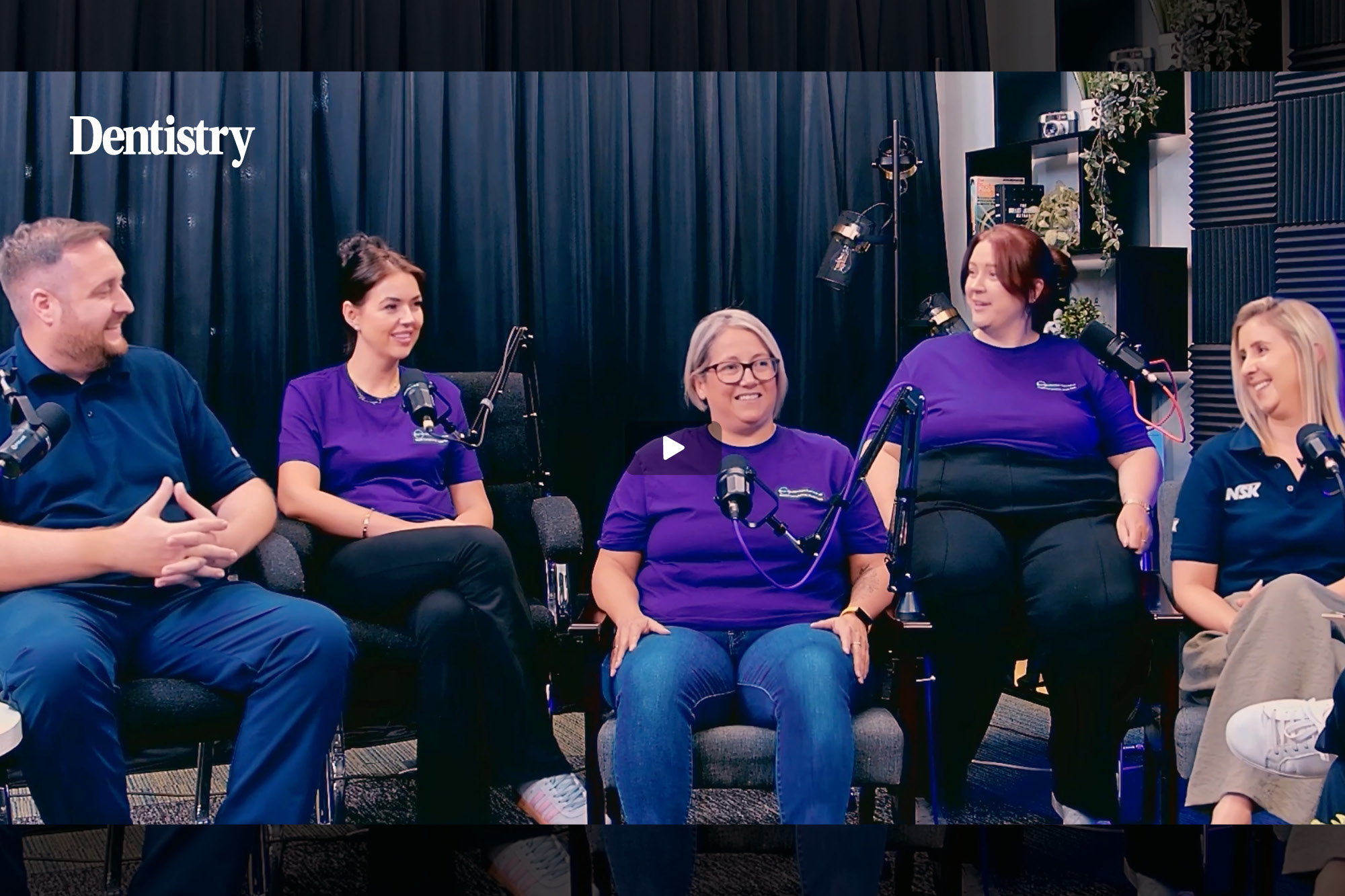
Here is a useful video guide by Aligner Dental Academy on Retention after Invisalign treatment.
Retention has no real finishing date
A patient’s teeth can move throughout life. The retainer is how you protect the result we have created.
The British Orthodontic Society advises long-term retention and explains that patients wishing to maintain tooth position may require retention for life (BOS, 2013). That discussion should occur at the start of Invisalign treatment, be reinforced at completion, and form part of written consent.
The Invisalign journey therefore does not finish with the last aligner. Active treatment creates the result; retention protects it. And perhaps the most practical rule of all is this: if a patient wants straight teeth for life, they should expect to retain them for life.
References
- Littlewood SJ, Kandasamy S, Huang G. Retention and relapse in clinical practice. Aust Dent J. 2017;62(Suppl 1):51–57.
- Martin C, Littlewood SJ, Millett DT, et al. Retention procedures for stabilising tooth position after treatment with orthodontic braces. Cochrane Database Syst Rev. 2023;5:CD002283. doi:10.1002/14651858.CD002283.pub5.
- British Orthodontic Society. Clinical Guidelines: Orthodontic Retention. British Orthodontic Society.
- Krämer A, Sjöström M, Apelthun C, Hallman M, Feldmann I. Post-treatment stability after 5 years of retention with vacuum-formed and bonded retainers—a randomized controlled trial. Eur J Orthod. 2023;45(1):68–78. doi:10.1093/ejo/cjac043.
- Aye ST, Liu S, Byrne E, El-Angbawi A. The prevalence of the failure of fixed orthodontic bonded retainers: a systematic review and meta-analysis. Eur J Orthod. 2023;45(6):645–661. doi:10.1093/ejo/cjad047.
- Iliadi A, Kloukos D, Gkantidis N, Katsaros C, Pandis N. Performance of clear vacuum-formed thermoplastic retainers depending on retention protocol: a systematic review. Odontology. 2016;104:237–247.
- Krämer A, Sjöström M, Hallman M, Feldmann I. Vacuum-formed retainer versus bonded retainer for dental stabilization in the mandible—a randomized controlled trial. Part I: retentive capacity 6 and 18 months after orthodontic treatment. Eur J Orthod. 2020;42(5):551–558. doi:10.1093/ejo/cjz072.
- Charavet C, Vives F, Aroca S, Dridi SM. “Wire Syndrome” following bonded orthodontic retainers: a systematic review of the literature. Healthcare (Basel). 2022;10(2):379. doi:10.3390/healthcare10020379.
- Marei MA, Failakawi LE, Alhouti FY, Alshamly MY, Mostafa OY. Effect of direct versus indirect bonding techniques on fixed retainer failure rates: a systematic review and meta-analysis. Cureus. 2026;18(2):e102821. doi:10.7759/cureus.102821.
- Fleming PS, Pandis N. Orthodontic retention: rationale and periodontal implications. Periodontol 2000. 2024. doi:10.1111/prd.12560.
- Regalado-Bazán CF, Espichan-Salazar AC, Arriola-Guillén LE. Comparison of relapse of orthodontic treatment following aligner versus conventional fixed appliance treatment: a systematic review. J Clin Exp Dent. 2024;16(5):e586–e594. doi:10.4317/jced.61520.
This article is sponsored by the Aligner Dental Academy.
Apa Reaksi Anda?
 Suka
0
Suka
0
 Kurang Suka
0
Kurang Suka
0
 Setuju
0
Setuju
0
 Tidak Setuju
0
Tidak Setuju
0
 Bagus
0
Bagus
0
 Berguna
0
Berguna
0
 Hebat
0
Hebat
0