
























































Homemade Gluten-free Flour Mix (Only 3 Ingredients!)


One of the easiest (only three ingredients!) and cheapest gluten-free flour mixes you can make. Homemade so you can make large batches, this is a fabulous all-purpose flour you can use in most baked goods. I substitute it 1:1 for regular wheat flour and it turns out beautifully every time.
This post contains affiliate links.
Why I Love This Homemade Gluten Free Flour Blend
It’s almost baking season! With the holidays coming up my baking is ramping up and so I feel it’s best we start with the basics and make sure you have an allergy-friendly, all-purpose, gluten-free baking flour to get you through this busy baking season!
I feel like gluten-free has such a bad rep. People tried eating something gluten-free ten years ago and had a bad experience and now they assume all things gluten-free are dense, dried out shells of baked goods.
I think people tend to forget that baking with wheat probably had its own learning curve too–we just weren’t around for it! And, thankfully–gluten-free baking is getting better and better every day. (That’s not to say I still don’t buy some packaged stuff and want to gag–hence why I do so much of my own baking!)
I have been using this gluten-free flour blend for over six years now, and I have ZERO reason to stray. It performs every single time–whether in bars, brownies, cookies or cakes. It’s moist, it’s not gritty and best of all, I can substitute it 1:1 for regular flour. Meaning, that if the regular recipe calls for 1 cup of flour, I simply measure out 1 cup of my flour blend.
I often feed non-gluten-free people my baked goods, and I frequently get a “THAT’S gluten free??!!”. So, I think this flour blend really does pass the test.
Why making your own gluten-free flour is worth it
I like making a homemade flour blend because I find this helps with the cost. It really is a bummer having to buy THREE flours to replace regular wheat flour. That’s just the way it is to get that same texture and performance. So, I try to do it as cheaply as possible. I see some gluten-free flour recipes that call for 4-6 ingredients and I just can’t do it!
I also like that I can make a large quantity, so that I have plenty on hand. There’s nothing more annoying than having to make a new blend every time you want to bake and have a craving you need to take care of.
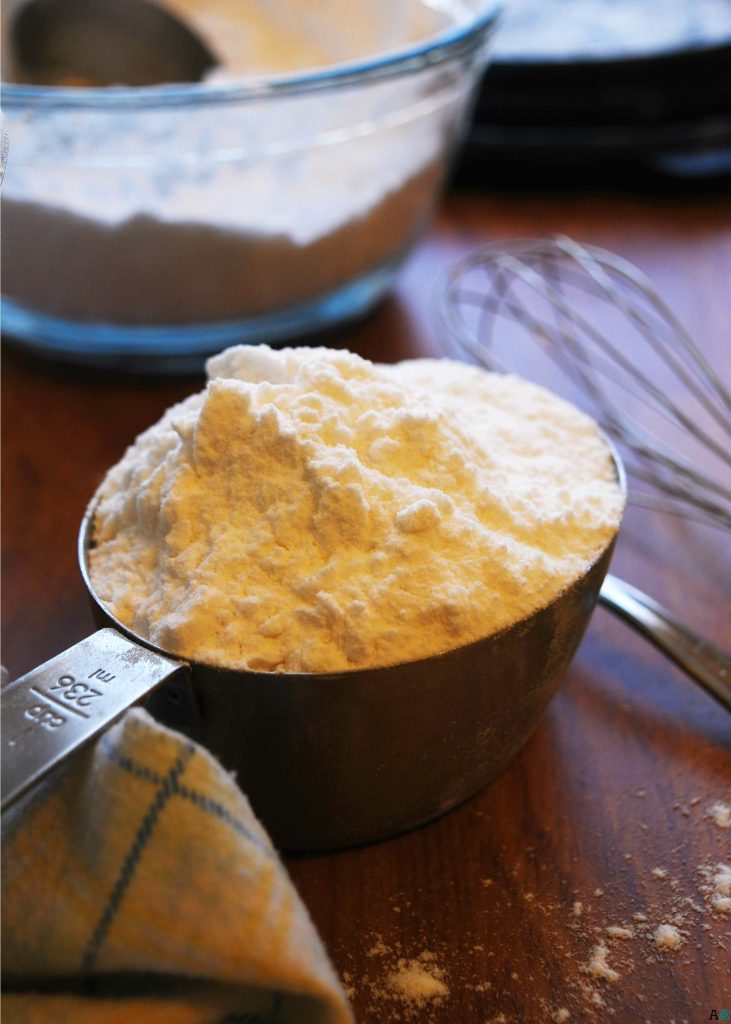
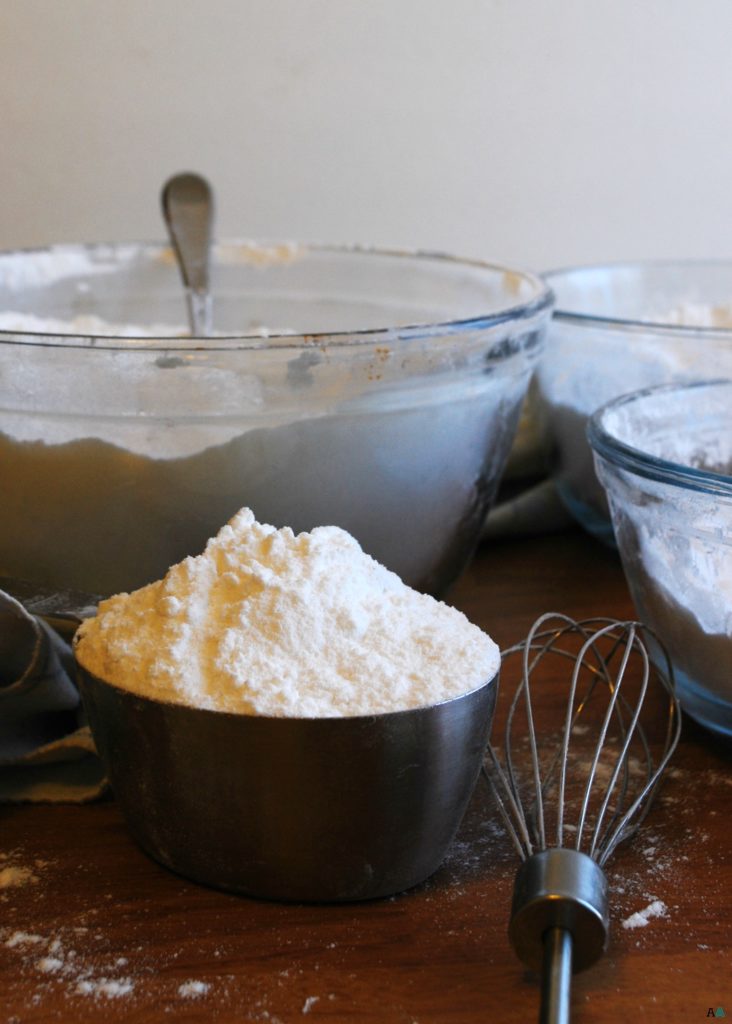
I keep my flours in glass jars with airtight lids (as seen in the pictures). I feel this helps them last longer and stay more fresh.
The nice thing with gluten-free exploding is that people have found that there are TONS of gluten-free flour substitutes: sorghum, buckwheat, millet, chick pea, coconut, fava and so on and so on. The problem I find with these is that they’re often harder to find, and often more expensive.
Can you sub out brown rice flour for white rice flour in your gluten-free flour blend?
Yes, I have found that both brown rice and white rice flour are quite interchangeable. I usually buy white as it’s the cheaper of the two, sometimes a bit “softer” in texture and often easier to find.
Is it cheaper to make your own gluten-free flour?
This is a tough question to answer, as prices fluctuate based on where you live in the US, and which brand you purchase of each component. There is a spectrum and there are places to buy components in bulk for cheaper, all the way to very expensive organic blends. It also depends on which gluten-free flour you’re comparing it to. There are generic brands like Walmart’s Great Value to very expensive specialty brands like King Arthur.
To make a comparison simple, let’s assume you purchase all Bob’s Red Mill components, to compare:
To make my flour, which makes 6 cups, I found these local prices and weights of each:
- 24 oz/680 g Bob’s Red Mill White Rice Flour from Albertson’s for $4.49
- 22 oz/623 g Bob’s Red Mill Potato Starch from Fred Meyer’s for $5.99
- 16 oz/454 g Bob’s Red MIll Tapioca Flour/Starch from Fred Meyer’s for $4.49
TOTAL: $14.97
The closest gluten-free blend I can find on the market is Divided Sunset for $6.98, and it makes only around 5 and 1/4 cups approximately.
At first glance, you would think buying the all purpose blend will be less expensive than making your own. But, you will have quite a bit of potato starch and tapioca flour leftover for your next batch(es), so it won’t take much more to make additional batches, so the price will level out a bit if you commit to making more batches (which if you bake a lot like me is easy to do.)
I also often buy my gluten-free flour components at a local store, Winco, which sells them in bulk and by the pound, so I save a bit doing it that way as well. Some people also subscribe to websites like Thrive which sometimes sell specialty foods at a discount.
Some people enjoy making their own because they cannot have xanthan gum, and most all purpose blends include this. Many all purpose blends often have a whole list of additional additives like vitamins and minerals, cellulose or psyllium husk or other grains which some people cannot have (like sorghum, oats or millet).
I like that my blend is so simple–just three ingredients–so even though the cost may be a bit more, it might be worth it to some people to make their own.
Plus, it is sometimes nice to have bags of single grains around that aren’t mixed with other things in case a recipe calls for a single grain (many recipes do). Like my tortilla recipe, which needs extra tapioca flour.
Ultimately, you have to choose what is best for your wallet and your health, and I hope if making your own gluten free flour blend is a desire of yours, that this recipe will help you.
What can I use in place of flour to make a recipe gluten-free?
Unfortunately, if a recipe calls for flour, you cannot omit it or replace it with another ingredient. If a recipe needs a grain, it will need a grain. And, you CAN NOT replace regular, wheat flour, with a single grain flour. For example, you cannot replace a regular recipe that calls for flour with something like brown rice flour. It takes multiple grains to try to mimic just typical wheat flour’s properties.
Thankfully, my flour blend can often be used in place of regular wheat flour. However, sometimes with gluten-free baking just swapping the flour out will not yield the best results. Sometimes there needs to be more or less liquid in the recipe, and that is why I never recommend someone just tweak a recipe that wasn’t meant to be gluten-free. It’s best to look up a tried and true recipe that has been tested so that someone else has gone to the time and expense to figure out how to make a recipe gluten-free. Sometimes it isn’t straight forward and people most often get upset when they try to recreate a recipe by only swapping the flour. Let us save you the hassle!
There are gluten-free flour blends out there for more complex things like breads (my flour blend works best for cookies, muffins, cakes and cupcakes). These have a more robust ingredient list and are more structured for things like that. Better Batter, King Arthur’s Measure for Measure and Bob’s Red MIll 1:1 Baking Flour might suit those needs better and can give you a good base if you’re wanting to do a straight swap out.
Why is it important that all the gluten-free flours are very finely ground?
If you do not purchase from companies that finely grind the components of their gluten-free flour, your end result can end up feeling grainy–which is a very unpleasant mouth feel. Think about how hard rice kernels are–which are a base for almost all gluten-free flours. If it isn’t milled and finely ground, you’re going to notice it in the finished good.
As you experiment more with gluten-free baking, you’ll find what brands you trust and which brands you feel have a superior bake and finish to your palette and liking. Remember that learning to bake gluten-free is a process and it’s normal and OK to have ups and downs. The ups will feel much sweeter when you’ve had a few fails. Those new recipes that work well will become cherished because they’re hard fought for.
Where can I find the ingredients for homemade gluten-free flour?
Speaking of finding them, here are the stores I often buy the ingredients to the my gluten-free flour recipe to:
- Sprouts
- Whole Foods
- Walmart (sometimes)
- Winco
- Smiths
- Maceys
- Natural Grocer
- Amazon
How to mix your gluten-free flour blend
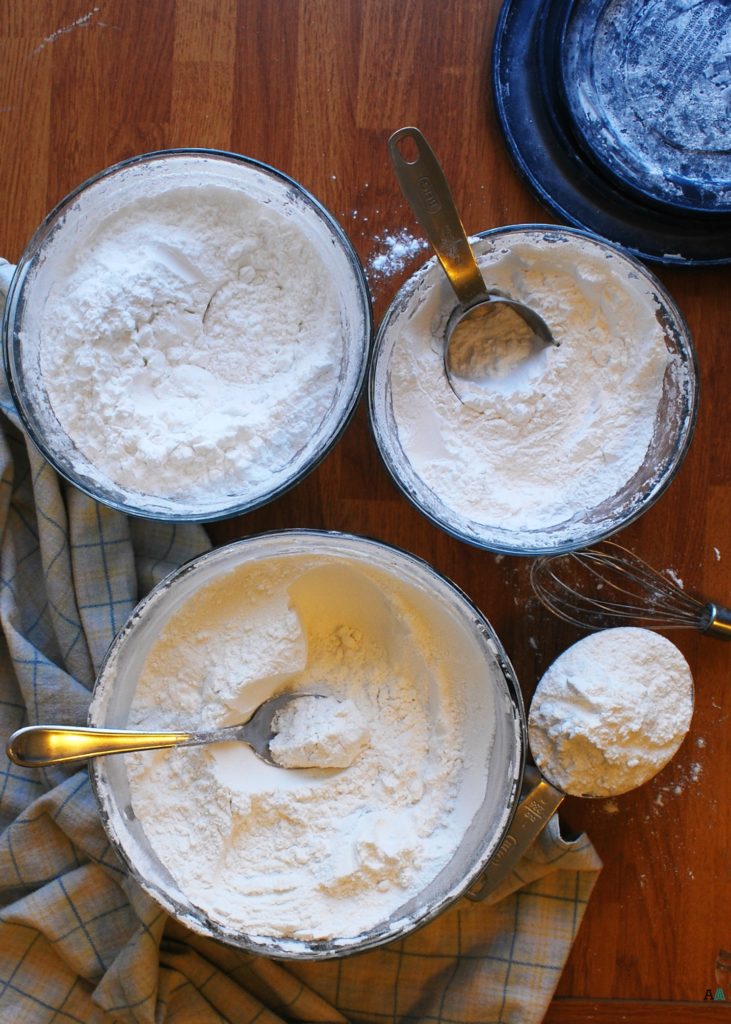
When making it, I measure out all of the ingredients into a large bowl, then I whisk them all to help distribute them evenly. Then, to also ensure it’s well-distributed, I put the lid on the bowl and shake it. Be sure to tap it heavily on the counter before opening it, or else you’ll have a cloud of flour everywhere! It never hurts to re-shake it (with the lid on) before using it just to be safe.
How do you measure gluten-free flour?
An important tip! When you are measuring gluten-free flour (and it’s counter-parts when making gluten-free flour) REMEMBER to take a large spoon and gently dump the flour into the measuring cup. Then, once it’s overflowing, take a knife and scrape off the excess, so you have a nice, clean, and even line with the measuring cup. You do not want to scoop or pack in the flour, as this will make the flour the wrong ratio and you won’t get the soft, just-like-wheat texture. See the video above on how to properly measure gluten-free flour.
I hope this helps you enjoy some of your old favorites and get back to baking!
**PLEASE NOTE: Gluten-free flour does not rise like regular flour. So, you’ll notice all of my recipes call for an ingredient, xanthan gum, which helps give the rise and airy-ness that regular flour typically has. I prefer to not include this in my blend, as each type of recipe needs its own amount and to ensure I’m getting the proper amount. If you’re unsure about swapping out gluten free flour for regular wheat flour, the rule of thumb is one teaspoon of xanthan gum for 1 cup of gluten free flour.**
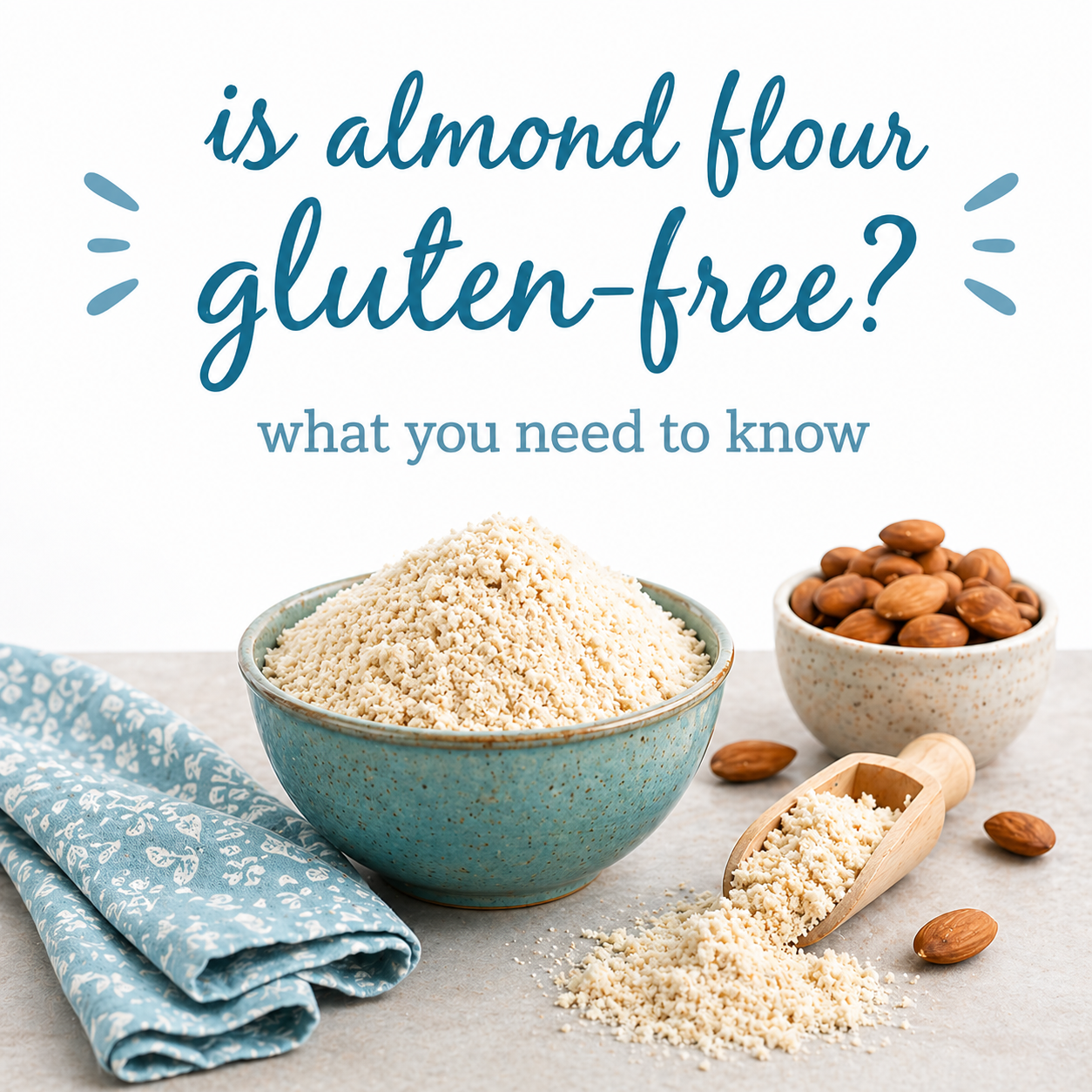
What is this gluten-free flour recipe made of?
This recipe is fantastic because it only has three ingredients. You only need:
- White rice flour or brown rice flour (I prefer white, but brown can work too)
- Potato starch (not potato flour)
- Tapioca flour/starch
Is potato starch the same as potato flour?
No. Potato starch and potato flour are not the same thing.
Is tapioca flour the same as tapioca starch?
Tapioca flour and tapioca starch are commonly used interchangeably.
Is there anything you shouldn’t make with this gluten-free flour?
While this DIY gluten-free flour blend is great for pancakes, muffins, brownies, bars, cakes and cookies I find that you need more specific ingredients when it comes to bread making. Be sure to find specific bread recipes and follow the instructions instead of replacing it with this blend. For example, my gluten free dairy free homemade bread requires a certain box mix, and my gluten free vegan breadsticks require yet another store bought blend.
What can you make with this gluten free flour?
Here are a few of our favorite gluten-free baking recipes, and ones that have raving reviews:
- The BEST gluten free vegan brownies
- Allergy friendly chocolate cupcakes
- Gluten free vegan chocolate sheet cake
- Gluten free baked chocolate donuts
- 20+ Allergy friendly muffin recipes
- Gluten free sugar cookies
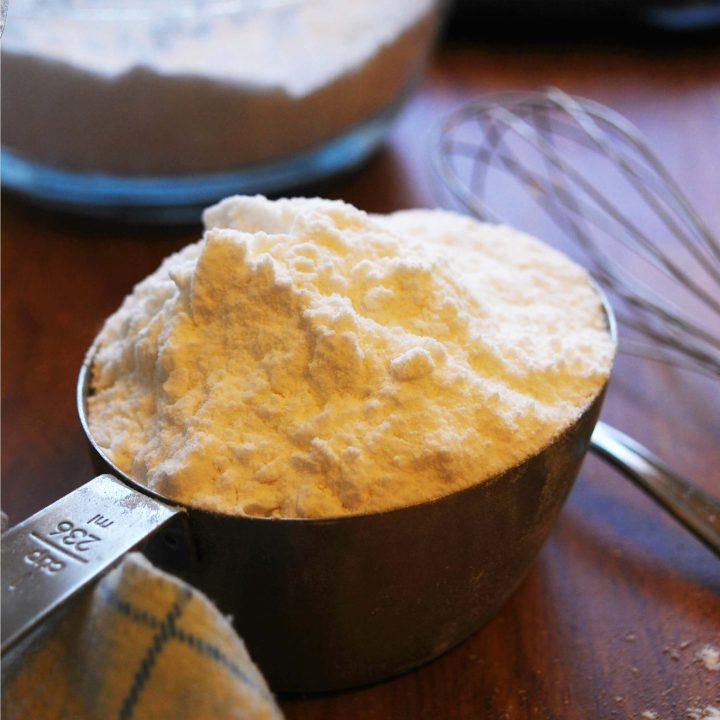
The BEST Homemade Gluten-free Flour Mix
One of the easiest (only three ingredients!) and cheapest gluten-free flour mixes you can make. Homemade so you can make large batches, this is a fabulous all-purpose flour you can use in any baked good. I substitute it 1:1 for regular wheat flour and it turns out beautifully.
Ingredients
Instructions
- Taking a large spoon, gently pour the ingredients into the specified measuring cups. Pour more than needed, making a domed measuring cup. Take the back of a knife, and scrape the excess off, leaving a clean, even line with the measuring cup.
- Measure each ingredient and pour into a large bowl.
- Whisk the ingredients to evenly distribute.
- Afterwards, put a lid on the bowl and shake to finish distributing it well.
- Tap the bowl on the counter before opening it, to ensure it has settled and you don't get a cloud of flour when you open it.
- This can keep in your fridge for several months, if air-tight (although mine never lasts that long!)
- If your flour has sat for a while, you'll want to re-whisk it to make sure the ingredients have not settled too much before using it in a recipe.
- Once this recipe is made, it can be swapped 1:1 with regular flour--keeping in mind you'll still need a leavening agent like xanthan gum (which all of my recipes include).
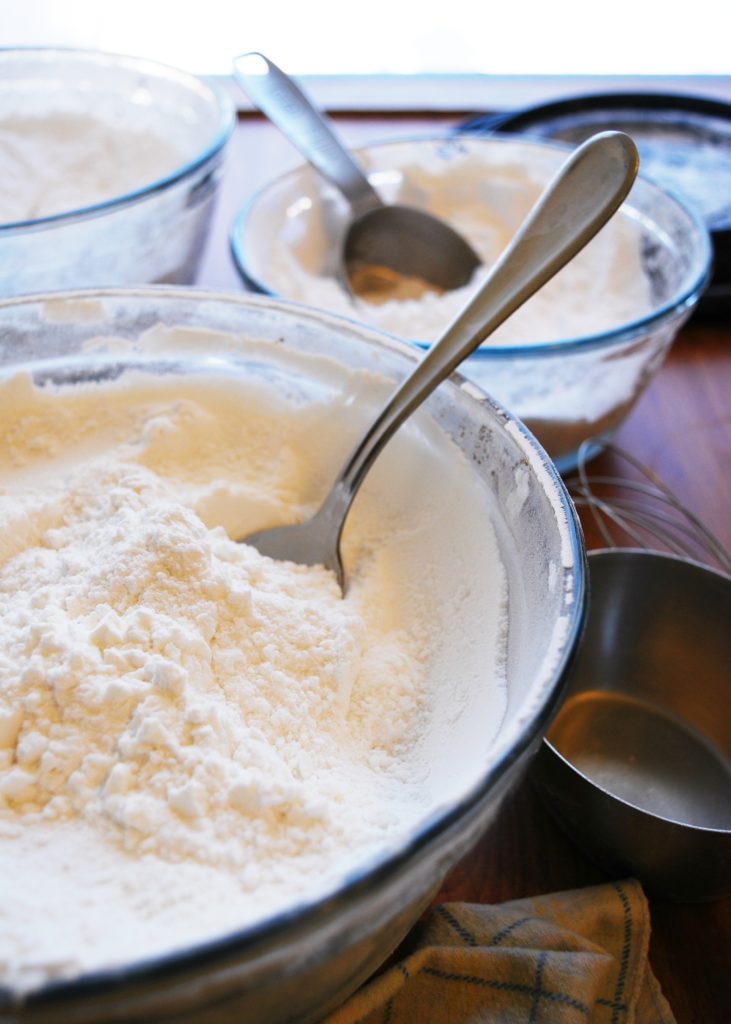
Taken from the baking genius, Cybele Pascal, in her cookbook “The Allergen-Free Baker’s Handbook“
Frequently Asked Questions
How should I store homemade gluten-free flour so it stays fresh?
For best results, keep your gluten-free flour mix in an airtight container or glass jar in a cool, dry place. If your kitchen runs warm or humid, store it in the refrigerator to extend freshness. It will stay good for several months when sealed properly—just whisk or shake the container before each use to redistribute the ingredients evenly.
Can I use this gluten-free flour mix for bread or yeast recipes?
This 3-ingredient flour mix works beautifully for cookies, muffins, cakes, and brownies, but it isn’t ideal for yeast-based breads. Those recipes typically need a flour blend with added structure and protein, such as sorghum or millet. For yeast breads, try a recipe specifically developed for bread baking—like the Gluten-Free Dairy-Free Bread on AllergyAwesomeness.com.
Don’t forget to pin it, so that you don’t lose it! Be sure to check out my other allergy-friendly Pinterest boards.
The post Homemade Gluten-free Flour Mix (Only 3 Ingredients!) appeared first on Allergy Awesomeness.
What's Your Reaction?
 Like
0
Like
0
 Dislike
0
Dislike
0
 Agree
0
Agree
0
 Disagree
0
Disagree
0
 Excellent
0
Excellent
0
 Useful
0
Useful
0
 Great
0
Great
0