



































































What Happens If the Nail Matrix Is Damaged


What the Nail Matrix Actually Does
Most people have never heard of the nail matrix, yet it controls almost everything about how your nails look and grow. Understanding nail matrix damage starts with knowing what the matrix actually does, and why it matters so much to the health of your nails.
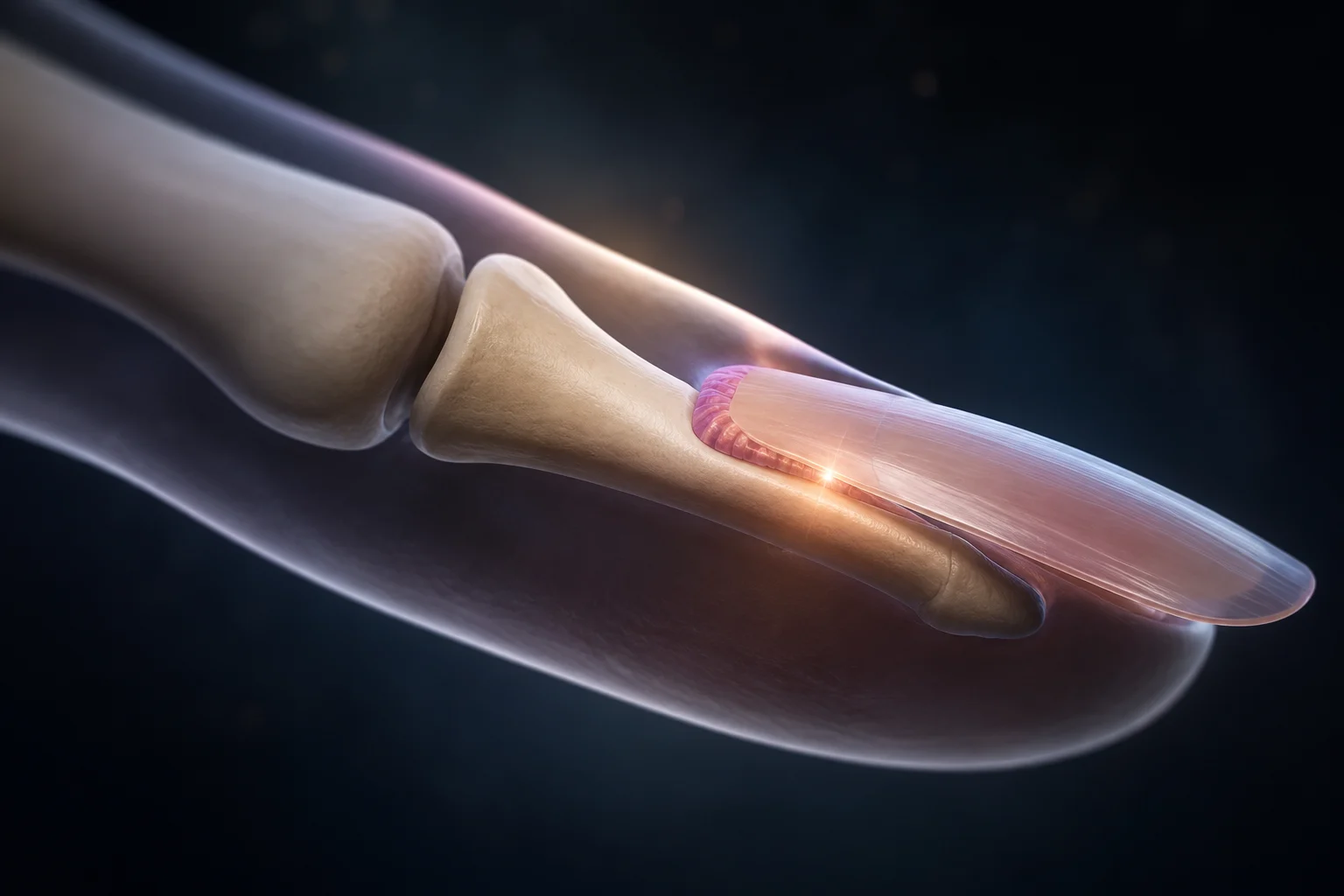
The nail matrix is the growth centre of the nail unit. It sits beneath the proximal nail fold, which is the fold of skin at the base of your nail, just behind the visible nail plate. You cannot see the matrix directly. It works quietly out of sight, continuously producing new nail cells. Fresh cells form and push older ones forward. That steady movement is what we recognise as nail growth.
The matrix does more than just grow nails, though. It also determines what your nails look like.
💡 Key Takeaway
The nail matrix produces every cell in your nail plate, so any trauma to the area can show up as ridges, white spots, or lasting deformity weeks later. Minor disruptions usually grow out, but more serious injury can permanently alter the nail plate. Protecting the proximal nail fold is one of the most important habits you can build for long-term nail health.


How the Matrix Shapes Your Nails
The size and shape of your matrix directly influence the size and shape of your nail plate. A longer matrix generally produces a thicker nail plate, because more cells contribute to its formation. A wider matrix produces a broader nail plate. The shape of the matrix also determines whether your nail has a deep C curve or sits relatively flat across the finger.
Have you ever wondered why your nails look so different from someone else’s? Or why no cosmetic treatment has ever changed their natural shape? The matrix largely sets these characteristics. No gel, no acrylic, no overlay changes the underlying architecture.
The matrix decides the blueprint.
What Happens If the Nail Matrix Is Damaged
Because the matrix produces every nail cell, any disruption to it will show up in the nail plate eventually. Even minor trauma to the proximal nail fold area, a knock, a pinch, or pressure at the base of the nail, can disturb the delicate matrix cells beneath. The result often appears as white spots, ridges, or grooves in the growing nail.
Here is where the timing gets confusing. Fingernails take approximately five months to travel from the matrix to the free edge. So if you bump that area today, you may not see any visible sign for several weeks. By the time damage appears in the nail plate, you might have completely forgotten the original cause.
If the trauma was temporary, the affected area grows out over time and the nail returns to normal.
This is also why changes in your nails after a service or injury are worth paying attention to, even if they appear long after the event itself.
Can the Nail Matrix Be Permanently Damaged?
Yes. And this is where nail matrix damage becomes a more serious concern.
More significant injury can permanently reshape the matrix, leaving a lasting ridge or deformity in the nail plate that never grows out. The nail plate reflects whatever the matrix produces. So when the matrix changes, the nail plate changes with it. In the most severe cases, complete destruction of the matrix in a particular area means it can no longer produce the corresponding portion of the nail plate at all.
This is why the proximal nail fold exists. That fold of living skin at the base of your nail acts as a protective barrier, shielding the matrix from everyday contact that could otherwise cause repeated disruption. It is not just a cosmetic detail.
Treating that area with care matters more than most people realise.
Nail Matrix Damage Symptoms to Watch For
Knowing what to look for makes it easier to connect a nail change to a possible cause. Common nail matrix damage symptoms include white spots in the nail plate and horizontal ridges or grooves running across the nail. Irregular texture that was not there before is another sign. These changes tend to emerge weeks after the original trauma, tracking the slow journey of the nail plate from matrix to tip.
Vertical ridges that run from base to tip are a separate matter. They generally relate to ageing rather than acute damage.
It is the horizontal disruptions that typically signal a specific event at the matrix level. If a ridge grows out and the nail returns to its previous appearance, the matrix recovered. If the change stays, the matrix sustained lasting injury.
The nail plate essentially records what the matrix has been through.
Why This Matters for Your Nail Routine
Understanding the matrix puts a lot of common nail advice into context. Nail professionals talk about being gentle around the base of the nail, avoiding aggressive cuticle work, and not pressing on the proximal nail fold. All of that centres on protecting the matrix. It is not an aesthetic preference. It is about preserving the structure that produces every nail cell you will ever grow.
The matrix also explains why nail plate thickness varies so much from person to person. If your nails are naturally thin, that reflects your matrix. If they are naturally broad or curved, that too is the matrix at work.
No product changes that fundamental biology.
Nail anatomy looks simple from the outside. But the more you understand what is happening beneath the surface, the clearer it becomes that protecting the nail matrix is one of the most important things you can do for long-term nail health.
That said, understanding the anatomy is only part of the picture. Knowing how to work around the nail unit carefully, and which techniques genuinely support nail health rather than compromise it, takes a little more depth.
If you want to build that understanding properly, the MyNailEra app is a great place to start. Era, your personal nail coach, guides you through verified learning content built on an expert-reviewed library, so you develop real confidence rather than guesswork.
The post What Happens If the Nail Matrix Is Damaged appeared first on NailKnowledge.
What's Your Reaction?
 Like
0
Like
0
 Dislike
0
Dislike
0
 Agree
0
Agree
0
 Disagree
0
Disagree
0
 Excellent
0
Excellent
0
 Useful
0
Useful
0
 Great
0
Great
0